



UNIFIL warns that escalating cross-border incidents, airspace violations, and rocket fire along the Lebanese–Israeli border are severely straining the fragile ceasefire established under UN Security Council Resolution 1701.
UNIFIL warns of escalating violations along the Lebanese Israeli borders
UNIFIL warns of escalating violations along the Lebanese Israeli borders
By The Beiruter | March 04, 2026

Reading time: 5 min
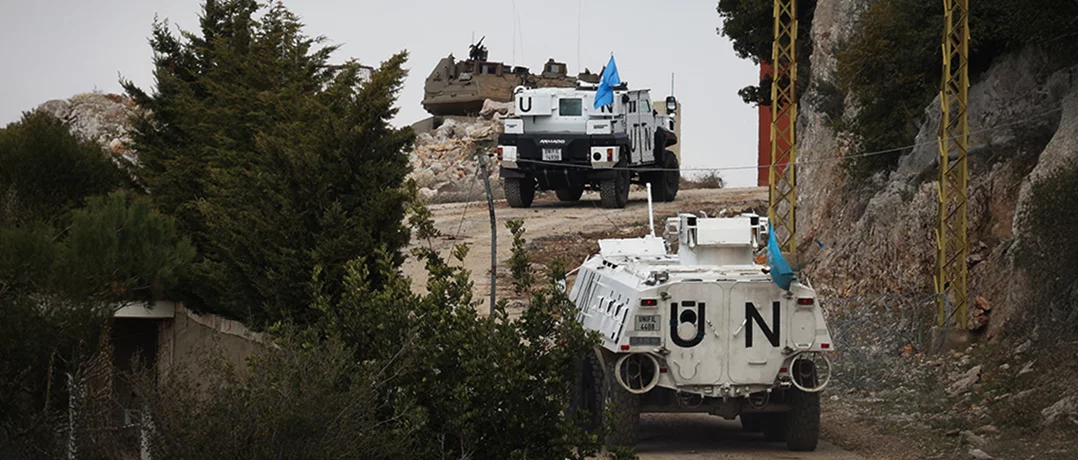
While tensions along the Lebanese Israeli border continue to mount, the international community is watching with growing concern as the fragile state of peace in the region comes under increasing strain. At the forefront of monitoring and documenting these developments is the United Nations Interim Force in Lebanon (UNIFIL), a multinational peacekeeping mission mandated under United Nations Security Council (UNSC) Resolution 1701 (2006) to support stability and prevent escalation between the 2 sides.
In an exclusive interview, UNIFIL spokesperson Dany Ghafari provides a firsthand account of the rapidly deteriorating situation on the ground. From repeated cross-border incursions and airspace violations to a surge in rocket fire and airstrikes across the Blue Line, Ghafari outlines the scope of violations recorded by UNIFIL peacekeepers and underscores the urgency of the mission’s calls for restraint. His remarks offer a rare and authoritative window into the realities facing both civilians and peacekeepers in one of the world’s most volatile border zones.
Violations of Resolution 1701 and ground incidents
Ghafari warned that the situation along the Lebanese-Israeli border is rapidly deteriorating, citing repeated violations of UNSC Resolution 1701 and a growing number of cross-border incidents.
According to Ghafari, UNIFIL peacekeepers observed Israel Defense Forces (IDF) soldiers crossing into Lebanese areas near Markaba, Al Adeisse, Kfar Kela, and Ramyah before returning south of the Blue Line. He further noted that since the last conflict and the understanding on the cessation of hostilities, the IDF has maintained 5 positions and 2 “buffer zones” inside Lebanon, in violation of Resolution 1701.
At the same time, information has circulated suggesting that Israeli forces may have entered Lebanese territory and remained in certain locations. However, Ghafari stressed that UNIFIL has not yet confirmed these reports and is currently working to verify them. “The situation is an ongoing process,” he said, emphasizing that UNIFIL will continue monitoring developments on the ground.
Escalation in fire and airspace breaches
Over the past 2 days, in addition to dozens of rockets and missiles fired into Israel and claimed by Hezbollah, UNIFIL has recorded several airstrikes and hundreds of incidents of firing across the Blue Line, as well as 84 airspace violations. These violations include both fighter jets and unmanned aerial vehicles (drones). Ghafari explained that this figure is based on what UNIFIL’s radar systems detected, noting that the actual number could potentially be higher.
“All of these incidents constitute serious violations of Security Council Resolution 1701,” Ghafari said, stressing that every action currently taking place along the border falls within that category. He also expressed deep concern over the rapid escalation, warning that the launch of rockets and drones toward Israel, as well as airstrikes and cross-border firing, pose a serious threat to regional stability.
UNIFIL’s monitoring and coordination role
Despite increasingly difficult security conditions, the UNIFIL continues to monitor developments along the Blue Line and document violations of Resolution 1701. Peacekeepers remain deployed in their positions and carry out their regular operational duties while closely observing events along the border. They continue to record developments and submit reports through official channels to United Nations (UN) headquarters in New York, as reflected in the mission’s statements.
UNIFIL also remains in constant contact with both the Lebanese Armed Forces (LAF) and the Israeli military, as well as with the “Mechanism,” as part of ongoing efforts to reduce tensions and prevent further escalation. The liaison and coordination channels between UNIFIL, the LAF, and the IDF operate around the clock, facilitating the exchange of messages and notifications aimed at preventing misunderstandings and containing the situation.
Commitment amid dangerous conditions
Despite extremely challenging circumstances, peacekeepers continue to carry out their mandated tasks under Resolution 1701 and will keep reporting developments to the Security Council. Through their continued presence, patrols, operational activities, and community engagement, UNIFIL peacekeepers demonstrate their enduring commitment to peace and security in the region.
Ghafari stressed that UNIFIL remains steadfast in its mission to support stability, promote de-escalation, and assist in extending Lebanese state authority, while maintaining close engagement with local communities and partners on the ground. At the same time, the mission continues to take all necessary measures to ensure the safety and security of its peacekeepers.
A warning against further escalation
Describing the current situation as extremely dangerous, Ghafari warned that the escalation could lead to a new conflict similar to previous ones; an outcome that would not serve the interests of civilians living on either side of the Blue Line.
“The escalation must stop,” Ghafari said. “If it continues, the situation could move out of control, and that is something that must be avoided.”
The picture he presents is one of a region teetering on the edge. With hundreds of cross-border incidents, dozens of airspace violations, and unconfirmed reports of ground incursions within a matter of days, the fragility of the ceasefire framework established under Resolution 1701 has rarely appeared more evident.
Yet amid the escalation, UNIFIL remains a critical stabilizing presence, maintaining open channels of communication, continuing its patrols, and reporting developments to the Security Council. Ghafari’s warning is clear: the current trajectory is unsustainable, and without an immediate halt to hostilities on all sides, the risk of a full-scale conflict with devastating consequences for civilians on both sides of the Blue Line becomes very real.
As UNIFIL continues to stress, the only viable path forward is one grounded in dialogue, de-escalation, and a firm commitment to the international legal frameworks designed precisely to prevent situations like this from spiraling beyond control.
-
-

-
The Beiruter
-
