



As UNIFIL prepares to withdraw from southern Lebanon, questions remain over who owns its sites, how they will be handed over and who may control positions near the Israeli-held “Yellow Line.”
UNIFIL's withdrawal.. Who will take over its positions?
UNIFIL's withdrawal.. Who will take over its positions?
By Tony Attieh | November 06, 2026

Reading time: 4 min
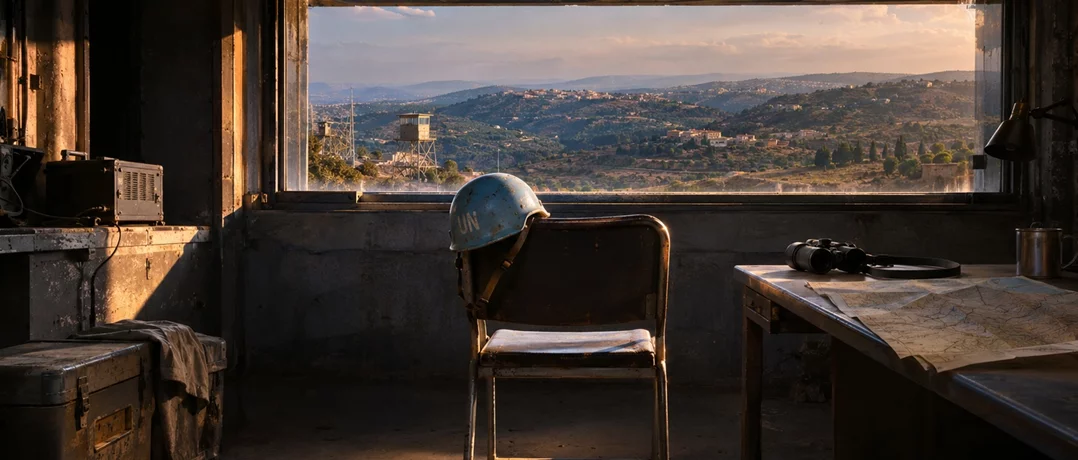
As UNIFIL's mission approaches its end, a 48-year chapter in the history of southern Lebanon is drawing to a close. Over the decades, the international forces have become an inseparable part of the lives, daily routines and collective memory of the people of the South.
It will not be easy for residents, particularly those who have neither opposed UNIFIL nor attacked its personnel, to adjust to mornings, afternoons and evenings without the sight of Polish, Finnish, Italian, Spanish, French, Irish, Ghanaian and other international patrols that came from across the world and converged in southern Lebanon. The UN convoys will no longer pass through their towns and villages, and the familiar exchanges of greetings between residents and patrol members, which over the years fostered familiarity, affection and hospitality, will come to an end. Nor will the human relationships, friendships, and cultural, social and developmental interactions that grew out of this presence continue in the same way. It will be strange to see the headquarters in Naqoura, which for decades stood as one of the most prominent symbols of the international presence in the South, emptied of its soldiers, vehicles and workshops.
This departure will also reopen a property and security file of considerable importance. What will happen to the land and properties occupied by international forces for decades, and who owns the facilities and equipment built on them? Who will actually take control of these sites, particularly those located in the "Yellow Line" area, amid the Israeli military presence?
These questions become even more significant given the strategic value of some UNIFIL positions, which are situated on elevated hills overlooking sensitive border roads and routes.
Who owns the land?
To understand the complexities of this issue, it is necessary to establish the legal status of the land occupied by international forces. These sites are divided between private properties belonging to Lebanese citizens and public land provided by the Lebanese state.
In a statement issued on April 11, 2011, UNIFIL clarified that the Lebanese government, through the army, is responsible for providing the land and arranging lease agreements for private properties. It is also responsible for paying the rent, rather than the United Nations. The international forces also pledged to restore the properties to their original condition or compensate for any damage in accordance with the applicable agreements.
These arrangements are based on the 1995 Status of Forces Agreement signed between Lebanon and the United Nations. Article 16 stipulates that the Lebanese state must provide headquarters, camps and premises at no cost to the United Nations, while the land remains Lebanese property, even though the sites fall under United Nations authority throughout their period of use.
These legal arrangements are not limited to a few isolated cases. UNIFIL positions are spread across extensive areas of southern Lebanon, some of which belong to dozens of private owners. In Naqoura, the headquarters is partially located on privately owned properties, while the Italian and Chinese contingents' positions in Chamaa occupy land belonging to Lebanese citizens.
In Kfar Shouba, five positions stand on properties belonging to 18 citizens. Meanwhile, the Spanish battalion's headquarters in Ebel El Saqi occupies approximately 400 dunums, part of which falls within the cadastral boundaries of Blat. The properties it occupies belong to around 40 individuals.
As the withdrawal date approaches, questions are being raised over rental payments and compensation, as well as the fate of buildings, fortifications and permanent structures. Their ownership transfer will be determined by the contracts and handover arrangements and will not automatically pass to the Lebanese Army. Military and technical equipment, meanwhile, remains subject to its original ownership rights and the arrangements governing its withdrawal or transfer.
Who will take over the positions after the withdrawal?
However, resolving the legal and property-related issues does not necessarily mean that all UNIFIL positions can be handed over to the Lebanese state or that the land can be returned to its owners.
There is a distinction between positions located in areas where the Lebanese Army is deployed and exercises its authority, where handover is expected to take place according to agreed arrangements, and those situated within the "Yellow Line" area.
This raises an issue addressed in a briefing published by the UK House of Commons Library on September 24, 2026. According to the briefing, around half of UNIFIL's positions were located, based on September data, in areas under Israeli control, making the transfer of some of them to the Lebanese state extremely difficult.
In this context, a UN source points to the possibility that the Israeli army could seize around 30 UNIFIL positions along the Blue Line after they are evacuated, noting that the international forces intend to dismantle these positions without destroying them.
