



Saudi Arabia, Türkiye, and Pakistan signed the Mecca Joint Defense Agreement, establishing collective deterrence, expanded defense cooperation, and a new regional security framework.
Unpacking the Mecca joint defense pact

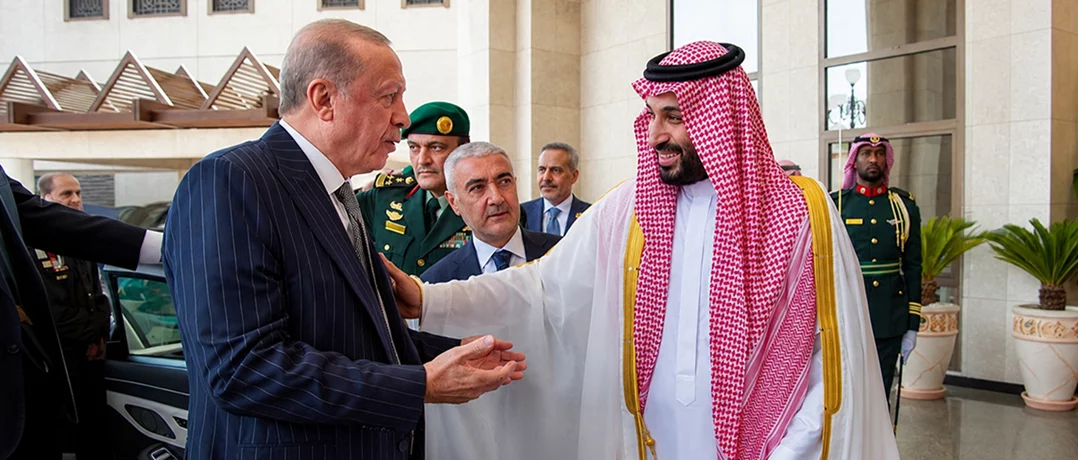
The Kingdom of Saudi Arabia (KSA), Türkiye, and Pakistan have signed the Mecca Joint Defense Agreement, establishing a new trilateral framework for defense cooperation and collective deterrence. The agreement was signed on Friday during a summit held in the holy city of Mecca, bringing together Saudi Crown Prince and Prime Minister (PM) Mohammed bin Salman, Turkish President Recep Tayyip Erdoğan, and Pakistani PM Shehbaz Sharif.
The accord formalizes a long-discussed defense partnership between the three countries and introduces a mutual defense clause stating that an armed attack against one signatory will be considered an attack against all. Alongside the defense provisions, the summit also addressed bilateral relations and regional developments at a time of continuing instability across the Middle East.
The Mecca Defense Summit and the signing of the agreement
The agreement was concluded during the Mecca Defense Summit, hosted by Saudi Arabia following invitations extended by King Salman bin Abdulaziz. The three leaders met to discuss regional security, bilateral cooperation, and broader international issues before signing the defense pact.
According to the joint statement issued after the summit, the agreement is founded on the historical ties, strategic interests, and long-standing cooperation between Saudi Arabia, Türkiye, and Pakistan. The document states that its principal objective is to strengthen collective deterrence and expand defense cooperation across multiple sectors.
A central provision of the agreement establishes that any armed attack against one of the three member states will be regarded as an attack against all of them; similar to Article 5 of the North Atlantic Treaty Organization (NATO). The statement also highlights the shared objective of contributing to regional and international peace, security, and stability.
Main provisions of the agreement
The Mecca Joint Defense Agreement provides a framework for expanding military and security cooperation between the three countries.
According to official statements, the agreement includes:
- Collective deterrence against external aggression.
- Recognition that an armed attack against one member constitutes an attack against all three.
- Expansion of defense cooperation across military institutions.
- Joint projects in the defense industry.
- Cooperation in counterterrorism efforts.
- Greater coordination between the armed forces of the participating countries.
- Development of defense capabilities and strategic readiness.
The agreement also reaffirms the right of states to self-defense under Article 51 of the United Nations (UN) Charter.
While the agreement establishes the principle of collective defense, the official statement does not publicly specify the operational or legal mechanisms governing military assistance between the three countries.
Moreover, the agreement brings together three countries with complementary capabilities. Saudi Arabia contributes significant financial resources, a central role in global energy markets, and considerable diplomatic influence in the Arab and Islamic worlds. Türkiye possesses one of NATO’s largest armed forces and an increasingly advanced domestic defense industry, particularly in areas such as unmanned aerial systems, electronic warfare, and military technology. Pakistan contributes a large, experienced military and remains the only Muslim-majority country with nuclear weapons, although officials have stated that the agreement is not connected to nuclear cooperation.
Official statements by the three governments
Following the signing ceremony, officials from the three countries issued statements describing the objectives and nature of the agreement.
Turkish President Recep Tayyip Erdoğan stated that the agreement is based on the principle of “collective deterrence” and aims to enhance security and defense cooperation, promote joint defense-industrial projects, and strengthen cooperation in combating terrorism. He also said the agreement is not directed against any country and remains open to other states seeking peace and stability in the region; recent reports suggested that Egypt may well seek to join the pact.
Pakistani PM Shehbaz Sharif described the agreement as a milestone in cooperation between three countries linked by mutual trust and common interests. He stated that signing the agreement in Mecca, near Islam’s two holiest sites, gives it historical and symbolic significance while reflecting a shared commitment to protecting the security of the participating states and serving their peoples.
Saudi Defense Minister Prince Khalid bin Salman said the agreement establishes a long-term defense partnership that strengthens deterrence, coordination, and integration among the three countries while contributing to regional and international security.
Saudi Foreign Minister (FM) Prince Faisal bin Farhan stated that the agreement reflects the depth of the strategic relationship among the three countries and represents an important stage in their defense cooperation, aimed at addressing common security challenges.
Saudi clarifications on the nature of the pact
Saudi officials stressed that the agreement is intended solely as a defensive framework.
Rayed Krimly, Saudi Arabia’s Deputy Minister for Public Diplomacy, stated that the agreement does not represent an effort to establish a military bloc or a sectarian alliance. He also said it is not linked to nuclear ambitions (given that Pakistan is already a nuclear power while KSA has recently reached an agreement with the United States to facilitate the Kingdom’s own civilian nuclear program) or an arms race but is focused on developing sustainable defense capabilities.
Krimly further noted that the agreement does not replace existing bilateral or multilateral defense arrangements maintained by the participating countries and does not affect Saudi Arabia’s broader regional or international partnerships.
Therefore, the agreement is not intended to threaten any country or escalate tensions between regional states.
Background to the agreement
The Mecca Joint Defense Agreement follows several years of expanding defense cooperation among the three countries.
Saudi Arabia and Pakistan previously announced a bilateral mutual defense agreement in 2025. Earlier in 2026, Turkish officials confirmed that discussions were underway regarding Ankara’s participation in a broader trilateral framework. Thus, military cooperation among the three countries has developed through defense training, arms procurement, technical cooperation, and exchanges between military institutions.
Türkiye has expanded its domestic defense industry over the past decade and has become a significant exporter of military equipment, including unmanned aerial systems. It has stated that locally produced defense equipment now satisfies approximately 80% of the country’s military requirements.
Meanwhile, Pakistan has maintained long-standing military cooperation with Saudi Arabia through training programs, defense collaboration, and security assistance, while KSA has become an important customer for Turkish defense product. This is especially true following the rapprochement between Riyadh and Ankara since 2022.
Furthermore, the agreement was signed during a period of heightened instability in the Middle East. Since the outbreak of the conflict involving Iran, the United States (U.S.), and Israel earlier this year, regional security conditions have changed significantly. This has prompted regional actors to find alternative security guarantees based on their own capabilities, instead of merely relying on foreign assistance.
Hence, the Mecca Joint Defense Agreement establishes a new trilateral framework which commits the three countries to collective deterrence, while simultaneously describing the pact as defensive in nature. Signed amid continuing regional instability, the agreement represents the formalization of an evolving security relationship between the three states.
-
-

-
The Beiruter
-
