



Widespread protests and economic collapse are testing Iran’s leadership, as reports of a possible contingency exit fuel uncertainty.
Unrest in Iran could push Khamenei towards Moscow exit
Unrest in Iran could push Khamenei towards Moscow exit
By The Beiruter | January 06, 2026

Reading time: 3 min
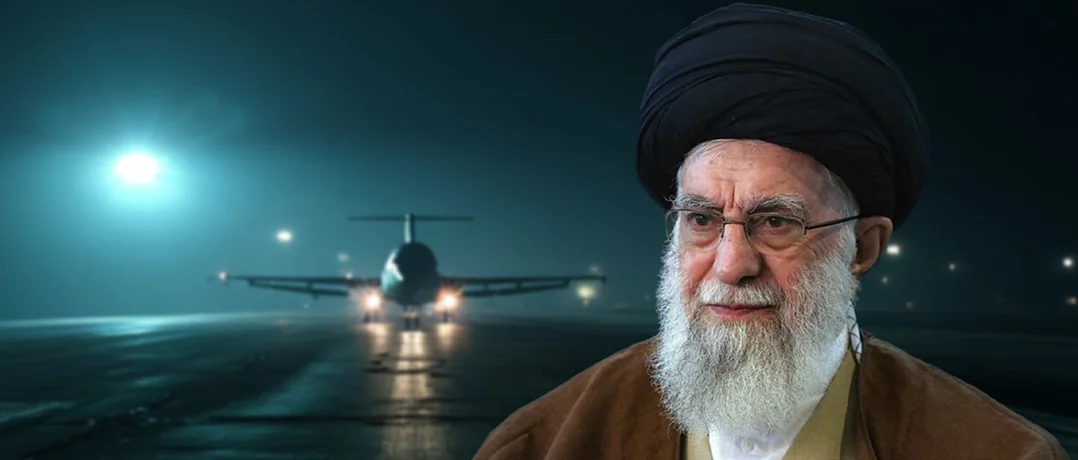
Iran is confronting one of its most serious internal challenges in years, as widespread protests fueled by economic collapse and political anger continue to spread across the country.
Amid this turmoil, a report cited by British media has claimed that Supreme Leader Ayatollah Ali Khamenei has prepared a contingency plan to flee to Moscow should his security forces fail to contain the unrest. While unconfirmed, the report has intensified debate about the durability of Iran’s political system at a moment of unprecedented regional and international pressure.
Allegations of a “Plan B”
According to the intelligence assessment shared with The Times, Khamenei would leave Tehran with close family members and key aides if the regime’s grip weakens significantly. Moscow is reportedly viewed as a safe destination, reflecting the deep strategic ties between Iran and Russia.
The scenario echoes the 8 December 2024 flight of Syria’s former president Bashar al-Assad to Russia following the collapse of his rule, a precedent that has sharpened speculation about Tehran’s own contingency planning.
Iranian authorities have not acknowledged the report and state media have remained silent. Nevertheless, the mere circulation of such claims underscores the seriousness of the crisis facing the Islamic Republic. This comes as domestic, regional and international pressure have mounted against Tehran (including potential Israeli and even American strikes against the regime and its allies in the Middle East), as well as the recent capture of Venezuelan President Nicolás Maduro (a key ally of Iran) by the United States Delta Force.
Scale and nature of the protests
Demonstrations have reportedly erupted in more than 170 locations across 25 provinces, making them among the most geographically widespread protests in Iran’s recent history. Human rights monitors say fatalities and hundreds of arrests have already been recorded, although the true scale remains difficult to verify due to strict media restrictions and limits on journalists’ movement.
Despite stern warnings from Khamenei, who described demonstrators as “rioters,” protests have persisted. Videos circulating online suggest continued public defiance even as security forces attempt to reassert control.
The immediate trigger for the unrest has been Iran’s collapsing economy. The rial (Tehran’s currency) has lost much of its value, inflation hovers around 40%, and basic goods have become increasingly unaffordable. Recent changes to fuel subsidies, which raised gasoline prices, further strained households already under pressure from renewed international sanctions linked to Iran’s nuclear program.
While economic grievances sparked the demonstrations, political anger quickly surfaced. Longstanding resentment toward corruption, repression, and lack of accountability has deepened since the 2022 protests following the death of Mahsa Amini in police custody, leaving a legacy of unresolved public outrage.
In conclusion, whether or not reports of an escape plan prove accurate, they reflect a broader reality: Iran’s leadership is facing simultaneous economic, social and geopolitical crises. The outcome of the current unrest will depend on the regime’s ability to manage internal dissent without further isolating itself internationally. For now, uncertainty dominates, as Iran stands at a crossroads that could reshape both its domestic politics and its role in the region.
-
-

-
The Beiruter
-
