

The US has begun withdrawing troops from Syria, marking a major shift in policy after nearly a decade of involvement.
US begins withdrawal from Syria

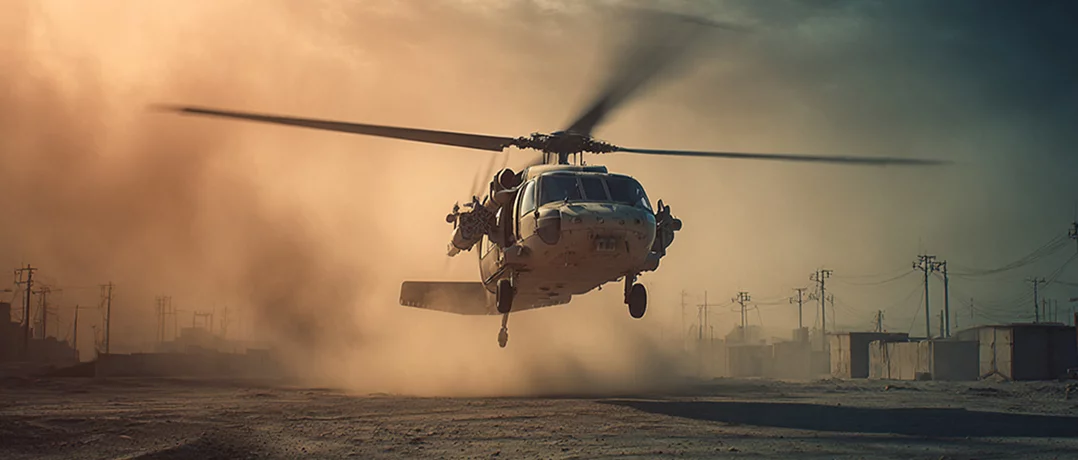
The United States (US) has begun withdrawing its remaining troops from Syria, marking what could become the end of nearly a decade of direct American military involvement in the country.
According to informed sources, Washington has initiated procedures to pull out all approximately 1,000 troops still stationed in Syria. The move represents a major shift in US policy and reflects changing security dynamics on the ground, as well as broader regional calculations.
Withdrawal underway from key bases
American forces have already completed their withdrawal from the al-Tanf garrison, located near the Syrian-Jordanian-Iraqi border triangle, as well as from the al-Shaddadi base in northeastern Syria earlier this month. Remaining positions are expected to be vacated over the next 2 months.
US Central Command (CENTCOM) described the repositioning as part of a “deliberate and conditions-based transition.” A senior administration official highlighted that American forces remain capable of responding to any resurgence of ISIS, but that a large-scale presence is no longer considered necessary.
American troops have been deployed in Syria since 2015 as part of the international coalition formed to combat the Islamic State in Iraq and Syria (ISIS); which later rebranded under the name Islamic States (IS). Over the years, US forces partnered primarily with the Kurdish-led Syrian Democratic Forces (SDF), providing air support, training, and logistical assistance that proved instrumental in dismantling ISIS’s territorial control.
Shifting security landscape in Syria
The withdrawal decision stems partly from evolving realities within Syria itself. The Syrian government has reasserted control over much of the territory, including ones previously held by Kurdish-led forces, significantly altering the operational environment.
From here, Washington believes that the Syrian government is now prepared to assume primary responsibility for counterterrorism operations within its borders. This assessment follows a US-brokered arrangement aimed at integrating SDF elements into the Syrian armed forces, a step presented as a move toward consolidating state authority and national unity after years of fragmented governance.
However, the transition is not without risks. Some US and foreign officials have cautioned that reducing the American footprint could weaken fragile ceasefire arrangements and potentially create conditions for extremist groups to regroup. Concerns have also been raised about the possibility of friction with Syrian government forces, particularly after a December 2025 incident in which 2 American soldiers and a civilian translator were killed in an attack attributed to a Syrian security element reportedly harboring extremist views.
Separate from Iran-related military posture
US officials stressed that the Syria withdrawal is not linked to the ongoing American military buildup elsewhere in the Middle East. Amid heightened tensions with Iran and uncertainty surrounding nuclear negotiations, Washington has reinforced its regional presence with additional naval and air assets.
Despite the broader regional tensions and Iranian warnings of targeting US forces in the event of military strikes, administration officials maintain that the Syria decision reflects a reassessment of mission requirements rather than a retreat from regional security commitments.
A long chapter nearing its end
The US military role in Syria evolved over time. Early diplomatic pressure was applied against the Assad regime since 2011, with explicit calls on former President Bashar al-Assad to step down as well as the recalling of ambassadors from both sides.
Following the former regime’s chemical weapons attacks near Damascus in 2013 (leaving over 1,400 fatalities), the Obama administration had backed down from its previous promises to act with force should such “red line” be crossed. Instead, a US-Russia deal was brokered to merely dismantle Syria’s chemical weapons arsenal.
Consequently, American troops were effectively mobilized in 2014 after the rise and expansion of ISIS and its influence in the region, prompting Washington to lead an international coalition and deploy around 2,000 soldiers in an attempt to defeating the terrorist group.
However, as Trump ascended to the presidency during his first term (2016-2020), the US began launching significant and intense military airstrikes against regime forces and ISIS alike, which contributed to the eventual downfall of the latter terrorist group. This perceived success prompted Trump to announce the willingness to withdraw all US troops from Syria in 2019. This aspired goal seems more possible than ever today after the fall of the Assad regime and the rise of a new government in the country, which Washington views as a strategic partner.
Thus, the current withdrawal suggests that Washington believes its primary objectives in Syria (particularly the territorial defeat of ISIS) have largely been achieved. While the United States retains the capacity to conduct counterterrorism operations if necessary, officials argue that maintaining a sizable ground presence is no longer justified. On the other hand, the aforementioned move revives an old-new American false step in its foreign policy towards the region. Previous US withdrawals have left power vacuums, inviting competing state and non-state actors (often extremist ones) to maneuver and occupy the resultant void. This was the case in Lebanon in 1984 (following terrorist attacks on the multinational force deployed amid Israel’s invasion in 1982), Iraq in 2011 (which contributed to the rise of ISIS), Libya (after the overthrow of Muammar al-Qaddafi, leaving a country struggling with civil war and division), and Afghanistan in 2021 (which saw the Taliban return to power; the very group Washington fought to overthrow in 2001). Hence, some fear that a similar scenario could potentially unfold in today’s Syria, especially as extremist cells and groups continue to operate and launch attacks in the country.
In conclusion, the planned withdrawal of US troops from Syria signals a significant recalibration of American engagement in the country. While framed as a conditions-based transition reflecting improved local security dynamics, the move carries strategic implications for Syria’s fragile internal balance and the broader Middle East. Whether this shift will consolidate stability or create new uncertainties will depend on the durability of ceasefire arrangements, the effectiveness of Syrian-led counterterrorism efforts, and the evolving regional landscape.
-
-

-
The Beiruter
-
