



The US has opened its largest consulate in Erbil, reinforcing ties with the Kurdistan Region while signaling long-term strategic, economic, and diplomatic commitment amid regional instability.
US strengthens ties with Kurdistan with new consulate
US strengthens ties with Kurdistan with new consulate
By The Beiruter | December 07, 2025

Reading time: 3 min
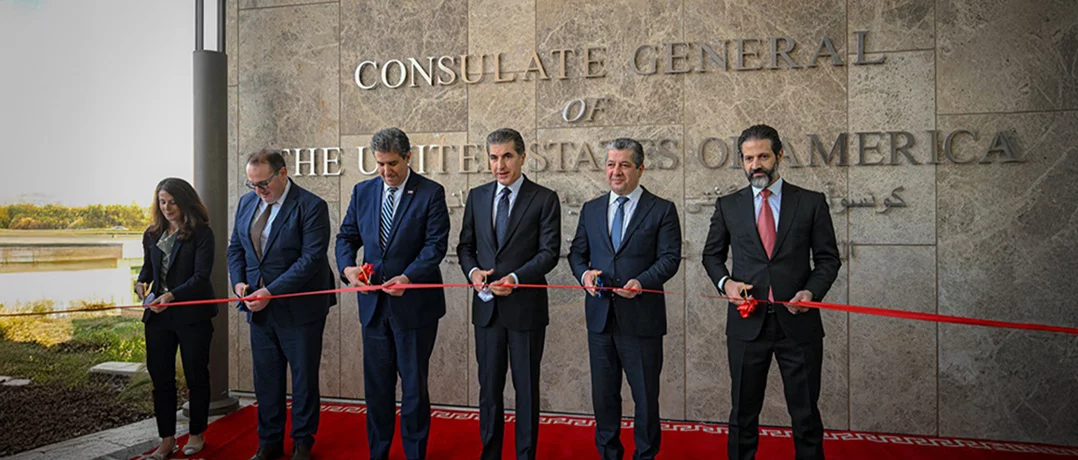
In a striking display of long-term commitment, the United States (US) has officially opened a massive new consulate in Erbil, the capital of Iraq’s semi-autonomous Kurdistan Region.
Costing nearly $800 million and spread over 206,000 square meters, the facility is now the largest US consulate in the world. Beyond its impressive size, the complex stands as a powerful political and strategic message at a time of shifting alliances, lingering instability, and renewed regional tensions.
A strategic move in a changing landscape
The inauguration ceremony was led by US Deputy Secretary of State Michael Rigas and attended by senior Kurdish leaders, including President Nechirvan Barzani and former KDP President Masoud Barzani.
The event was far more than symbolic. It came as the Washington continues to reorganize its military presence in Iraq following its long campaign against the Islamic State (IS), formerly known as Islamic State in Iraq and Syria (ISIS), and under agreements with the central government in Baghdad.
Rigas described the new consulate as a “secure platform” that would advance Washington’s interests while supporting a sovereign and stable Iraq. His message was clear: despite troop reductions elsewhere in the country, the US intends to maintain a strong diplomatic and strategic foothold in the north.
Warning signs and rising tensions
The inauguration also took place against a backdrop of continuing threats to infrastructure and regional stability. Only days earlier, a drone strike targeted the Khor Mor natural gas field, triggering widespread power outages. Although no group claimed responsibility, US officials pointed fingers toward Iran-backed militias operating inside Iraq, accusing them of undermining Iraqi sovereignty and security.
Rigas publicly urged both the Iraqi federal government and Kurdish authorities to “disempower and dismantle Iran-aligned militias that continue to engage in violent and destabilizing activities and only serve to harm Iraqi sovereignty.” His remarks underscored growing frustration in Washington over the political influence and military power of these factions.
Boosting economic and diplomatic cooperation
Beyond security, the new consulate is designed to enhance economic, educational, and commercial cooperation between the United States and the Iraqi Kurdistan Region. American companies have already made significant investments in Kurdish energy projects, and Erbil is increasingly viewed as a gateway to broader Iraqi markets.
Recent trade delegations from the US have included major corporations in technology, finance, and consumer goods. Rigas also praised the Kurdish administration’s efforts to revive the Iraq-Turkey oil pipeline, calling the move essential for regional energy stability and economic renewal.
The massive compound will provide space for trade offices, visa services, diplomatic meetings, and development programs, while also housing residential areas for staff and security personnel.
To conclude, the opening of the Erbil consulate marks a defining moment in American-Kurdish relations. While the Middle East continues to face uncertainty, Washington’s investment sends a strong signal that it sees the Kurdistan Region as a reliable partner and a key pillar of stability in northern Iraq. As political tensions rise and power dynamics shift, the new consulate stands not only as a diplomatic mission, but as a long-term statement of presence, partnership, and purpose.
-
-

-
The Beiruter
-
