



The US withdrawal from Syria’s al-Tanf base signals a strategic shift toward flexible operations, with troops redeployed to Jordan while counterterrorism coordination in Syria continues.
US withdraws from Tanf base in Syria

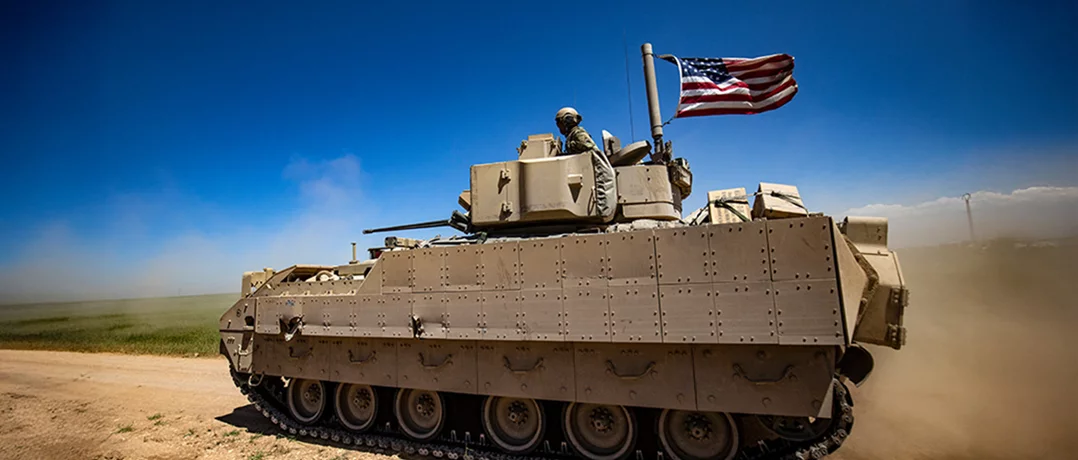
The reported withdrawal of United States (US) forces from Syria’s al-Tanf base marks a significant development in Washington’s military posture in the Middle East. Established as a critical component of the international coalition against the Islamic State in Iraq and Syria (ISIS), the base has long held strategic, political, and security importance.
The redeployment of American troops to Jordan signals not merely a tactical military adjustment but reflects broader geopolitical shifts following the transformation of Syria’s political landscape after the fall of Bashar al-Assad on 8 December 2026. While the move raises questions about the future of counterterrorism operations and regional alliances, it also underscores Washington’s evolving strategy toward maintaining influence in Syria without sustaining an extensive ground presence.
Factors behind the withdrawal
According to Syrian military sources, the US withdrawal from al-Tanf was conducted gradually over a 2-week period, with equipment and personnel transferred to a nearby base in Jordan. Syrian government forces have reportedly been deployed to fill the security vacuum left by the American departure. However, US troops are expected to continue coordinating operations related to al-Tanf from Jordanian territory, suggesting that the move represents a repositioning rather than a complete disengagement.
One of the principal drivers behind the withdrawal is the shifting political reality in Syria. Following the collapse of the Assad regime in 2024 and the rise of a new government under interim President Ahmad al-Sharaa, Washington has recalibrated its regional strategy. Syria’s decision to join the international coalition against ISIS further facilitated closer cooperation between Damascus and Washington, reducing the necessity of maintaining certain independent military positions on Syrian soil.
Continued counterterrorism concerns
Despite ISIS’s territorial defeat in 2019, the organization remains a persistent security threat. Insurgent cells continue to operate in Syria’s vast desert regions, carrying out sporadic attacks targeting both Syrian and coalition forces. A notable example occurred in December when a gunman attacked American personnel near Palmyra, resulting in the deaths of 2 US soldiers and a civilian contractor. The attack prompted retaliatory US airstrikes against ISIS targets across central Syria, highlighting the group’s enduring operational capability.
The United States has also been engaged in relocating approximately 7,000 suspected extremist detainees from facilities previously controlled by Kurdish forces in northeastern Syria to detention centers in Iraq. This transfer aims to stabilize detention operations and reduce the burden on local security forces while maintaining oversight of extremist networks.
Following the withdrawal from al-Tanf, American troops are now primarily stationed at the Qasrak base in Syria’s Hasakeh province. From there, US forces continue to support intelligence gathering and counterterrorism missions in coordination with local and regional partners.
Regional and geopolitical implications
The redeployment from al-Tanf reflects a broader shift in US military doctrine from maintaining fixed bases toward adopting more flexible and network-based operational structures. By relocating troops to Jordan while preserving coordination mechanisms inside Syria, Washington appears to be balancing cost reduction with the need to sustain strategic influence.
For Jordan, the repositioning strengthens bilateral security cooperation with the United States and enhances border protection efforts, particularly against smuggling networks and extremist infiltration. For the Syrian government, assuming control of al-Tanf represents a symbolic and practical step toward reasserting sovereignty over national territory. However, the continued US operational role from neighboring Jordan suggests that Damascus will still operate within a framework shaped by international security coordination.
At the same time, regional actors such as Iran and allied militias are likely to interpret the withdrawal as an opportunity to test the limits of their operational reach in southern Syria. Whether the US redeployment reduces deterrence capabilities or simply restructures them will depend largely on Washington’s ability to maintain intelligence superiority and rapid response capacity from its remaining positions.
The strategic importance of al-Tanf
Located near the tri-border junction of Syria, Iraq, and Jordan, al-Tanf has served as one of the most strategically positioned military outposts in the region. Established in 2016, the base was initially designed to train Syrian opposition fighters and support operations against ISIS strongholds across eastern Syria and western Iraq. Over time, however, its function expanded beyond counterterrorism.
Al-Tanf sits along the M2 highway, a key transit route connecting Iran to the Mediterranean through Iraq and Syria. By maintaining control over this corridor, US forces were able to disrupt Iranian logistical supply lines used to transport weapons and personnel to allied groups across Syria and Lebanon. The base thus played a dual role, serving both counterterrorism objectives and broader efforts to contain Iran’s regional influence, a priority shared by several US allies, particularly Jordan and Israel.
Despite its relatively small size, housing approximately 200 American soldiers, the installation provided high-value intelligence, surveillance, and reconnaissance capabilities. Its proximity to the Syrian desert also made it an important platform for monitoring ISIS activity, as remnants of the group continue to operate through insurgent tactics.
In conclusion, the withdrawal of US forces from Syria’s Al-Tanf base represents a significant milestone in the evolving dynamics of the Syrian conflict and the broader Middle Eastern security landscape. While the redeployment reflects changing political realities and strategic recalibration, it does not signal the end of American involvement in Syria. Instead, it illustrates Washington’s transition toward a more flexible and adaptive military presence aimed at sustaining counterterrorism operations, supporting regional stability, and safeguarding its strategic interests.
-
-

-
The Beiruter
-
