Modern war names have become strategic tools that shape perception, redefine narratives, and influence how conflicts are understood and remembered.




Modern war names have become strategic tools that shape perception, redefine narratives, and influence how conflicts are understood and remembered.

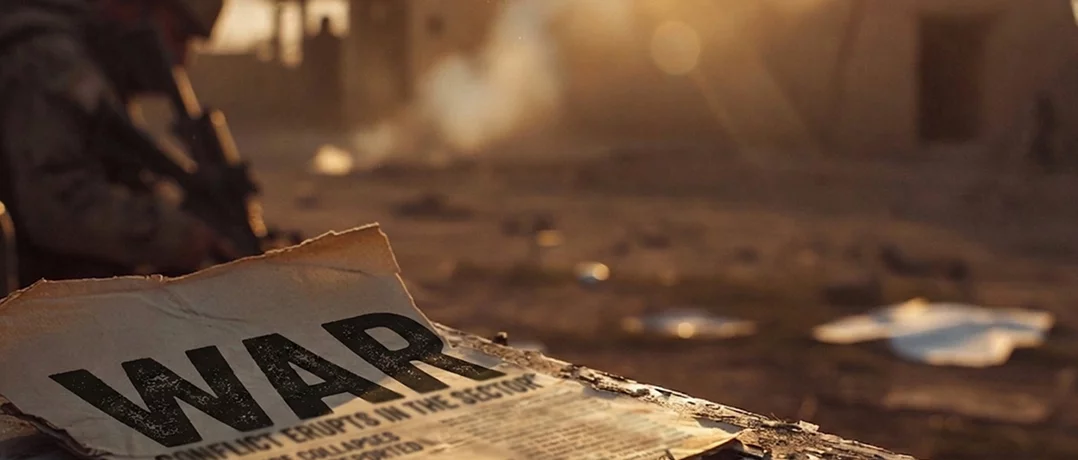
“Epic Fury.” “Roaring Lion.” “True Promise 4.”
Wars today no longer arrive unnamed. They enter the world already packaged, compressed into phrases that sound closer to myth than military doctrine. In recent confrontations involving the United States, Israel, and Iran, the language has been unmistakable: fury, lions, promises.
These are not neutral descriptions. They frame the war before it is understood.
There is no global authority that names wars. Instead, names emerge through a layered process shaped by states, military institutions, political leaders, media ecosystems, and, ultimately, by the outcome of the war itself. What survives is not necessarily what is first said, but what proves most effective.
War names are rarely descriptive. They are positional. A name can recast an offensive as defense, soften defeat, or assign blame before facts settle. In this sense, naming is not a secondary act. It is part of the war.
This is particularly evident in recent conflicts. Israel has repeatedly named its operations in Gaza with terms such as “Protective Edge” and “Guardian of the Walls,” both of which frame military action as defensive necessity. Palestinian factions, in turn, have responded with names like “Al-Furqan” and “Sword of Jerusalem,” invoking religious symbolism and moral struggle. These are not competing translations. They are competing realities. Each side is not simply describing the same war differently; it is asserting what the war is.
The way wars are named today reflects a broader shift. Naming has become a deliberate act shaped by military communication units, political leadership, and strategic messaging. In a real-time media environment, a name must travel quickly. It must be memorable, repeatable, and emotionally charged.
This is why modern war names draw from religion, mythology, and spectacle. Terms like “Al-Aqsa Flood” and “True Promise” carry religious weight. Names like “Roaring Lion” and “Iron Swords” invoke power and symbolism. Others, such as “Epic Fury” or “Grapes of Wrath,” rely on emotional intensity and cultural reference. It was not always like this.
Historically, war names were far more functional. They answered basic questions. Where was the war fought? The Vietnam War, the Korean War, the Crimean War. Who fought it? The Russo-Japanese War, the Russo-Ottoman War. How long did it last? The Six-Day War, the Thirty Years’ War, the Hundred Years’ War. These names described. They located the conflict in space, time, or diplomacy.
More importantly, reveal a deeper shift. A single war is no longer guaranteed a single name.
Few regions illustrate this more clearly than the Arab–Israeli conflict. The war of 1948 is remembered in Israel as the War of Independence, the foundational moment of statehood. In the Arab world, it is the Nakba, the catastrophe, a term that captures displacement, loss, and rupture. The same war carries two meanings that cannot be reconciled.
The pattern continues in 1967. Israel refers to the conflict as the Six-Day War, emphasizing speed, efficiency, and military success. In the Arab world, it is the Naksa, the setback, a term introduced by Egyptian President Gamal Abdel Nasser in the aftermath of defeat. Naming, in this moment, became a form of political management.
In 1973, the divergence became even more pronounced. In Israel, the conflict is the Yom Kippur War, defined by the timing of the attack on a sacred day. In Egypt, it is the 10th of Ramadan War, tied to the Islamic calendar. In Syria, it is the October War of Liberation, framed as a struggle for recovery and dignity. Each name re-centers the war around a different identity.
At times, naming is not simply reactive but strategic. Leaders do not just fight wars; they frame them. In 1956, the conflict involving Britain, France, and Israel became widely known as the Suez Crisis. Gamal Abdel Nasser, however, called it the Tripartite Aggression, shifting the narrative from instability to accusation. The war was no longer a crisis to be managed, but an act of violation to be condemned.
Decades later, Saddam Hussein employed a different strategy. Following Iraq’s defeat in 1991, he initially minimized the conflict by referring to it as a battle. He later elevated it into the “Mother of All Battles,” an attempt to transform military failure into symbolic defiance. The name did not reflect reality. It attempted to reshape it.
Not all wars, however, are named in the moment. Some acquire their names only later, once their place in history becomes clearer. What is now known as World War I was, at the time, widely referred to as the Great War or the European War. It only became the “first” after a second global conflict made numbering necessary.
Even the term World War II was not immediately fixed. It circulated before the war fully unfolded and competed with more ideological alternatives such as “War for Civilization.” In the end, the simplest formulation prevailed.
The Cold War offers another variation. The term was introduced by George Orwell in 1945, before the geopolitical standoff it would come to describe had fully taken shape. It gained traction later, once policymakers adopted it as a way to define a conflict that was global, ideological, and continuous, yet not directly fought between its principal actors. In this case, the name preceded the reality.
In other instances, history intervenes even more dramatically. The Wars of the Roses, the fifteenth-century English dynastic conflicts, were not known by that name at the time. They were understood as civil wars. The now-familiar term emerged centuries later, shaped by literature, particularly Shakespeare, and later popularized through nineteenth-century historical writing. History did not just record the wars. It renamed them.
Naming can also collapse multiple conflicts into a single narrative. The wars in Korea, Vietnam, and Afghanistan are often treated as distinct events, yet they are frequently grouped under the broader framework of the Cold War. Similarly, the U.S. invasions of Afghanistan and Iraq are often subsumed under the label “War on Terror,” transforming separate conflicts into a continuous campaign. Naming, in these cases, does not distinguish. It compresses.
The fighting along Lebanon’s southern border has taken on the scale and characteristics of a war in its own right.
And yet, it has no single, settled name. It is variously described as a “Lebanon front,” or “Israel–Hezbollah conflict”. None of these labels has clearly taken hold.
This uncertainty is not unusual. Wars are often named only once their meaning becomes clear. In 2006, the term “July War” took hold in Lebanon because it reflected both the timing and the perceived outcome of the conflict. The name endured because it made sense of the war.
Today, no such consensus exists. If this were to become the last major conflict in the Middle East, it would not only reshape the region. It would demand a name that defines an ending. But whether such a name ever exists will depend, as always, on who gets to write the story.