



War in Lebanon raises concerns over essential supplies, though current stocks of food, fuel, medicine and wheat remain sufficient for weeks to months.
War escalates: How long can Lebanon’s supplies last?
War escalates: How long can Lebanon’s supplies last?
By Jessica Habchy | March 04, 2026

Reading time: 4 min
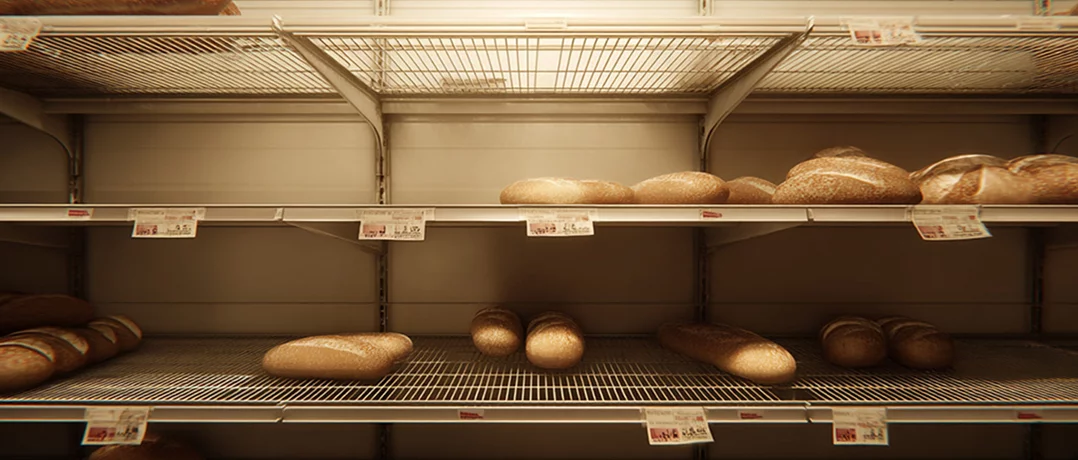
Lebanon has entered a new and more violent phase of war, reviving urgent concerns about how sustained instability could disrupt daily life and, most critically, access to essential goods.
Heavily dependent on imports for wheat, fuel, medicine and most food products, the country's supply chain stability rests largely on the continued operation of the Port of Beirut, maritime shipping routes, air freight and functioning domestic transport networks. Any disruption to these channels could swiftly ripple across markets already strained by years of economic crisis.
Against this backdrop, pressing questions emerge: How long can existing stockpiles sustain demand? How are the key sectors prepared for further logistical or security disruptions? And are fears of price spikes and black-market activity justified particularly as families flee conflict zones for safer ground?
The Beiruter spoke with syndicate heads and government officials across the food, fuel, pharmaceutical and economic sectors. Their answers offer a cautious but not yet alarmed assessment.
Food supplies sufficient for four months
Despite scenes of consumers rushing to supermarkets particularly in areas affected by displacement food stocks remain stable, according to Nabil Fahd, head of Lebanon's Supermarket Owners Syndicate.
Fahd said supermarket shelves currently hold approximately one month's supply of goods, while importers maintain reserves sufficient for up to three months, bringing total available coverage to roughly four months.
Import operations are continuing and have not been significantly disrupted, he added. In the event of a temporary interruption in import flows, locally manufactured goods could meet between 40 and 50 percent of market demand though the availability of raw materials held by local producers would then become the determining factor.
There are no immediate signs of price increases, Fahd said, as most shipping channels remain operational despite the conflict. He cautioned, however, that costs could rise in the coming months if freight rates climb or if the security situation deteriorates further.
Bakeries operating at full capacity
As in previous crises, queues have re-emerged outside bakeries across Lebanon. The rush to purchase bread appears driven less by immediate need than by fear of potential shortages, a familiar psychological reflex in a country long accustomed to instability.
Tony Seif, head of Lebanon's Bakers Syndicate, said bakeries and mills are operating at high production capacity and have not been directly affected by the current escalation.
There is no bread crisis in Lebanon.
Seif told The Beiruter that wheat reserves are sufficient for approximately two months. An 8,000-ton shipment has recently been unloaded at the Port of Tripoli, and another vessel is expected within days, further reinforcing available stock.
He described the previous round of hostilities as a practical test for the sector. No shortages emerged then, he said and maintaining open roads remains critical to ensuring that wheat and flour continue to reach all regions of the country.
Fuel stocks cover up to one month
The return of bakery queues has been mirrored by lines at petrol stations, as motorists seek to secure fuel amid rising tensions.
George Brax, head of the Fuel Station Owners Syndicate, said fuel stocks remain substantial both at retail stations and among importing companies. Imports have not stopped or been significantly disrupted, he said, and additional vessels are expected in the coming days.
Current reserves, he added, are sufficient to cover between three weeks and one month of consumption.
Brax urged motorists to refuel at a normal pace and avoid panic-driven behavior. At the same time, he warned of the potential re-emergence of black-market activity, noting that periods of instability historically create openings for exploitation. He called on authorities to maintain strict oversight and enforcement.
Pharmacies urge responsible purchasing
Whenever security tensions escalate, access to medication becomes an acute concern for Lebanese households already accustomed to chronic medicine shortages.
Dr. Abdel Rahman Marqabaoui, head of Lebanon's Pharmacists Syndicate, said importers currently hold approximately three months' worth of pharmaceutical stock, while domestic manufacturers maintain an additional three months' supply. Raw materials for local drug production, he added, are sufficient for up to eight months.
There is no medicine shortage in Lebanon.
Marqabaoui acknowledged, however, that distribution from importing companies has slowed due to current logistical conditions. He urged citizens not to stockpile medicines and called on pharmacists to limit sales to one month's supply per patient to ensure equitable access across the population.
He also highlighted the resilience of Lebanon's domestic pharmaceutical sector, which covers approximately 80 percent of over-the-counter medicines available in the local market.
Government steps up market oversight
As public concern grows over both availability and potential price manipulation, the Ministry of Economy and Trade says coordination with sector representatives is continuous.
Dr. Mohammad Abou Haidar, Director General of the Ministry of Economy and Trade, told The Beiruter that communication between the ministry and relevant syndicates remains constant covering stock levels, incoming shipments and retail sales activity.
So far, there is no fear of shortages as long as crossings remain open.
Abou Haidar said stock at the import level is sufficient for approximately three months, while retailers hold around one month's supply. He noted that displacement from certain towns has led to the temporary closure of some points of sale, while supplies have been reinforced in other regions resulting in a redistribution of stock according to need.
On petroleum derivatives and domestic gas, he said there are no immediate concerns. Import approvals continue to be processed electronically to avoid logistical delays.
Monitoring is carried out daily across the supply chain from importers to wholesalers and distributors with particular attention to essential goods, he said. A recent ministerial circular instructed inspectors to intensify efforts against hoarding and unjustified price increases
The current phase requires firm action to prevent the exploitation of this crisis.
Abou Haidar warned against what he called "crisis traders" opportunists seeking to inflate prices amid widespread displacement and heightened public anxiety.
Resilience tested, vigilance required
Lebanon has weathered economic collapse, a catastrophic port explosion and successive rounds of armed conflict and its supply networks have, each time, been pushed to the edge. The picture that emerges from conversations with syndicate heads and government officials is one of relative short-term stability, underpinned by fragile conditions that could shift rapidly.
Food reserves cover four months, medicines eight months for raw materials, and fuel enough for several weeks. Bakeries are running at full capacity. Import channels, for now, remain open. By the metrics that matter most to ordinary Lebanese families, the situation is not yet critical.
But Lebanon has been here before and the lessons of past crises are clear. Supply stability is only as durable as the security situation that surrounds it. A sustained blockade of maritime routes, sustained road closures or an escalation that directly targets critical infrastructure could overturn these reassuring figures within days. The black market, as officials themselves warn, is never far from the surface when fear sets in.
The government's commitment to daily oversight and enforcement against price gouging is a necessary signal. Whether state institutions possess the capacity, and political will, to follow through under sustained pressure remains an open question, as it always has in Lebanon.
For now, the supply chains hold. But in a country where stability is perpetually provisional, holding is never the same as safe.
-
-

-
Jessica HabchyJournalist
Focusing on economy and social affairs.
-
