



As the war intensifies, Lebanon’s cultural heritage, from ancient archaeological sites to public libraries is facing growing damage while authorities race to protect historic landmarks and support displaced communities.
War puts Lebanon’s cultural heritage at risk

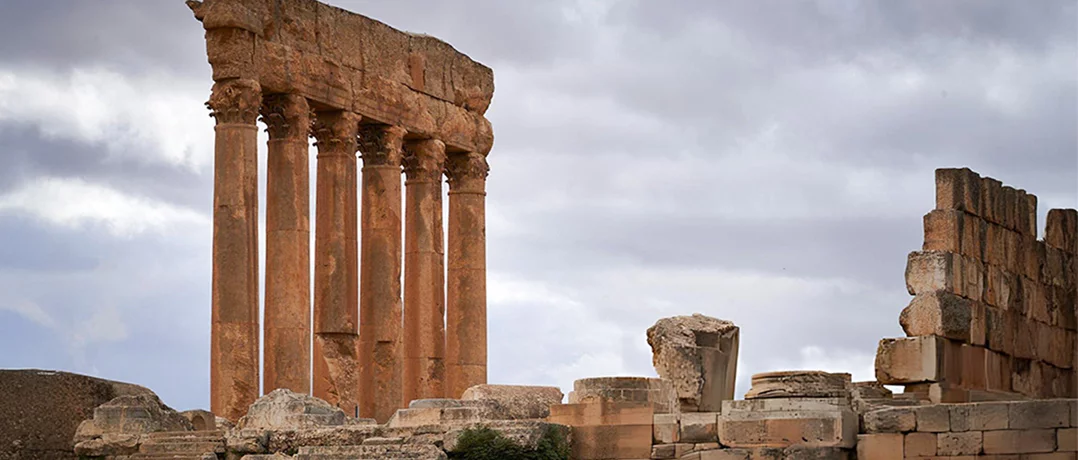
From ancient Phoenician ports to medieval fortresses and community libraries, the war’s impact is extending far beyond military targets. Damage has already been recorded across several cultural sites, while institutions meant to preserve knowledge and memory have been partially or completely destroyed.
The Ministry of Culture tells The Beiruter that the government is now working on two parallel fronts: protecting Lebanon’s historical heritage from further damage and addressing the social consequences of war, particularly for displaced children. “From the first day of the war on Lebanon, I contacted UNESCO’s director-general to stress the need for the strict application of the 1954 Hague Convention for the Protection of Cultural Property in the Event of Armed Conflict,” the source says.
The convention, adopted after the devastation of World War II, obliges combatants to avoid damaging cultural heritage and to protect historically significant sites during military operations.
For Lebanon, a country dense with archaeological remains spanning thousands of years, the stakes are unusually high. “We are deeply concerned with this convention because Lebanon has countless archaeological sites across its territory,” the ministry explains. “Some areas and locations have been more affected by the war than others.”
Southern fortresses under the shadow of war
One of the most concerning incidents occurred near the Al-Bass archaeological site in Tyre, part of a UNESCO World Heritage zone known for its Roman necropolis and monumental ruins.
“It is now well known what happened in the city of Tyre,” Salameh says. “A location adjacent to the Al-Bass archaeological site was bombed, which led to the death of more than ten people and damage to the area.” The attack also affected ongoing cultural infrastructure projects. “Part of the museum we are working to complete in the city was damaged,” he said.
Further south, the ministry is also closely monitoring a historic chain of medieval fortifications known as the Castles of Jabal Amel, which include sites such as Beaufort Castle (Al-Shaqif), Chamaa, Arnoun, and Deir Kifa.
“There has been significant military violence around these sites,” the source said. “We are following the situation through archaeologists who remain present in those locations.”However, the security situation has already forced at least one withdrawal. “There is one site we had to leave for security reasons, that is the Chamaa site.” Such withdrawals illustrate the challenges of protecting cultural heritage in active conflict zones, where archaeologists and preservation specialists often operate close to military frontlines.
Invoking international protection
In an attempt to strengthen protection for heritage sites, the ministry has turned to international mechanisms designed specifically for wartime.
The ministry has marked key historical locations with Blue Shield emblems, internationally recognized symbols used to identify protected cultural property during armed conflicts. “We placed the Blue Shield markers on archaeological sites so that the opposing side would recognize them and respect the convention,” the representative explains.
According to the minister, 34 Lebanese archaeological sites have already been granted enhanced protection status under international heritage frameworks since the 2024 war on Lebanon. “For that reason, the Ministry of Culture has sent one of its advisers to UNESCO to try to convene a special meeting of the heritage committee,” the source explains. “We have prepared a list of 30 additional sites that we want to secure enhanced protection for.”
Public libraries and programs for displaced children
Beyond archaeological landmarks, the war has also damaged several public libraries across Lebanon. According to the ministry, around 11 public libraries have been affected, with three completely destroyed.
About ten others were partially destroyed or left abandoned because residents were displaced from those areas. The ministry says it is attempting to document the damage despite ongoing security challenges. Work is ongoing as much as possible, taking into consideration the security conditions, to monitor the damage that has occurred,” he said.
Alongside preservation efforts, the ministry is launching programs aimed at children displaced by the conflict, many of whom have been forced to stop attending school. Starting Monday, the ministry will begin implementing activities for displaced children through public libraries.
The source expressed that the programs will initially be carried out in cooperation with 12 public libraries across Lebanon, with plans to expand them further. “The ministry will try to extend these programs to around 50 libraries affiliated with or recognized by the ministry,” he tells The Beiruter.
Preparing for post-war reconstruction
Despite the ongoing conflict, cultural authorities say they are already thinking about the recovery phase. “The ministry is aware of the dangers that threaten our great cultural heritage,” our source explains. “We are trying to provide it with the greatest protection and to monitor any damage that may occur, so that we can begin the reconstruction process immediately once this war ends.”
-
-

-
The Beiruter
-
