

As protests shake Iran, Washington weighs military pressure against Tehran, facing the risk that any strike could strengthen the regime, trigger regional escalation, or undermine the very protesters it claims to support.
Washington and Tehran on the brink of war

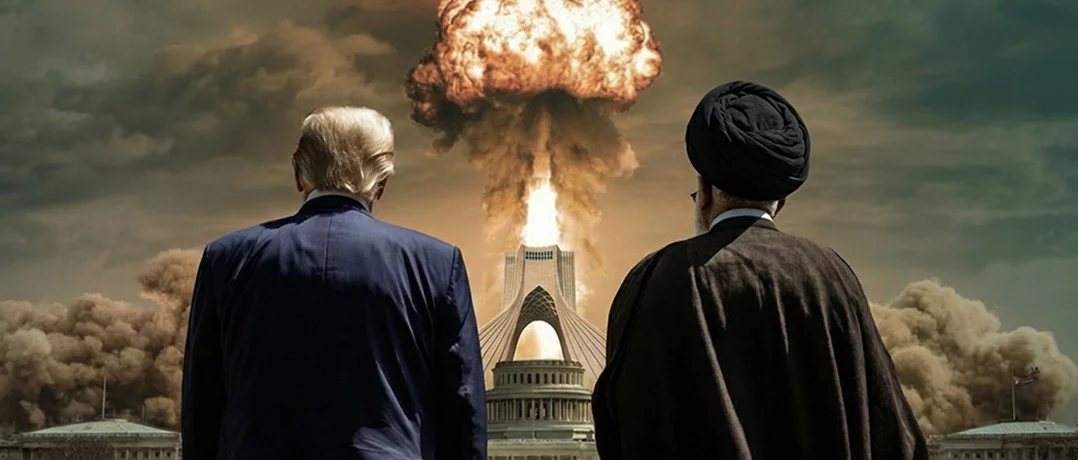
As mass protests continue to shake Iran amid deep economic distress and political repression, the United States (US) finds itself once again weighing the option of military intervention. President Donald Trump has openly hinted at the possibility of a new strike against Iran, framing it as an act of solidarity with hundreds of thousands of Iranians who have taken to the streets.
Yet behind the rhetoric lies a complex strategic dilemma: how to pressure the Iranian leadership without unintentionally strengthening it, igniting a regional war or alienating the very protesters Washington is aiming to support.
Military analysts, diplomats and regional actors increasingly agree that any American move against Iran would differ fundamentally from last summer’s limited strikes on nuclear facilities. This time, the stakes are higher, the targets more politically sensitive and the risks of miscalculation far greater.
The Iranian landscape is broiling
Iran’s rapidly unfolding internal dynamics can be summarized through a widening and increasingly dangerous gap between the ruling regime and large segments of society. This divide is not only about the scale of the unrest, but about how its causes and meaning are defined. Opponents view the crisis as the result of years of economic mismanagement, entrenched corruption and the dominance of unaccountable military and security institutions over key sectors of the economy, compounded by the high costs of Iran’s regional policies.
The authorities, however, quickly shifted from limited acknowledgment of grievances to framing the unrest as a foreign-backed conspiracy involving the United States and Israel. Firm interventions by the Supreme Leader Ayatollah Ali Khamenei reflected a perception of an existential challenge to the system and signaled a move from containment to decisive confrontation. This approach has provided political and institutional cover for security agencies to act forcefully, with the primary objective of preventing the unrest from expanding, deepening or evolving into a direct challenge to the ideological foundations of the Iranian state.
From nuclear sites to internal power structures
Unlike previous operations that focused on Iran’s nuclear infrastructure, a strike intended to support popular protests would likely target the regime’s internal instruments of control. Meaningful pressure would require targeting command centers linked to the Islamic Revolutionary Guard Corps (IRGC), the Basij militia and elements of Iran’s internal security apparatus.
These forces are central to suppressing unrest, but they are also deeply embedded within urban areas. Many of their headquarters and operational centers are located in densely populated neighborhoods, dramatically increasing the likelihood of civilian casualties. This reality presents a strategic paradox: an operation designed to weaken the regime could instead hand it a propaganda victory.
In this regard, even unintentional civilian deaths could rapidly shift public sentiment inside Iran. Protesters demanding reform may recoil at foreign bombardment, allowing Tehran to recast itself as a victim of external aggression rather than an oppressor of its own people.
Furthermore, experts caution that directly targeting Iran’s top political leadership would bring limited military benefit. After years of Israeli and covert operations, Iranian officials have learned to disperse and conceal key decision-making hubs. Striking the homes or offices of senior figures may carry symbolic weight, but it is unlikely to cripple the regime’s operational capacity.
Instead, some analysts suggest a different pressure point: the economic empire of the IRGC. Estimates indicate that the Guard controls between one-third and two-thirds of Iran’s economy through a vast network of companies, construction projects, ports and energy assets. Targeting these interests (financially or physically) could disrupt elite cohesion and force commanders to prioritize personal survival over regime defense.
This approach aims to fracture the regime from within, redirecting the attention of IRGC leaders toward protecting their wealth and families rather than suppressing protests.
The weapons likely to be used
Any American strike is expected to prioritize speed, precision and minimal exposure of US forces; a key demand of President Trump. While B-2 bombers led last year’s attacks, Washington would rely more heavily this time on long-range cruise missiles launched from submarines and naval vessels positioned far from Iran’s coastline.
Additional options include air-launched missiles fired from fighter jets or strategic bombers operating outside Iranian airspace, as well as armed drones. Free-fall bombs and short-range munitions are widely seen as too risky, given Iran’s air defenses and the proximity of targets to civilian areas. Cyber-attacks represent another notable tool that Washington might resort to.
Regional fallout and retaliation risks
Iran has already issued blunt warnings to regional states hosting US bases, including the Kingdom of Saudi Arabia (KSA), the United Arab Emirates (UAE), Türkiye and Qatar. Tehran has signaled that any American strike would be met with retaliation against US assets across the Middle East.
This threat has prompted precautionary measures. Washington has begun withdrawing some personnel from key bases, including al-Udeid in Qatar, the largest US military facility in the region. Israel, meanwhile, has raised its alert levels, preparing for potential Iranian or proxy attacks should hostilities erupt by opening its underground bunkers.
Israeli analysts widely believe that any US action would trigger a response not only against American targets but also against Israel, either directly or through allied groups such as Hezbollah or the Houthis. This prospect has pushed the region into a state of heightened readiness, with air defenses on high alert and diplomatic channels working quietly to prevent uncontrolled escalation. In this regard, informed sources claimed that diplomats have sought guarantees from Hezbollah that it would not conduct such a military gamble; however, with no guarantees given explicitly, its participation remains vague.
Diplomacy still on the table?
Despite the military posturing, uncertainty remains. President Trump has stated that he wants any action to be swift and decisive, avoiding a drawn-out conflict. Yet senior advisers have reportedly been unable to guarantee that a strike would lead to rapid regime collapse or even meaningful political change.
At the same time, diplomatic channels have not fully closed. Iran has denied plans for mass executions and insists the situation is under control, while warning that it will not tolerate foreign intervention. For Washington, the challenge lies in balancing deterrence with restraint, pressure with plausibility.
Moreover, Trump recently stated that he has been informed that the “killing” in Iran has stopped and the anticipated executions of arrested protesters will not take place. This statement raised doubts regarding Washington’s possible de-escalation, giving room for diplomacy to yield the intended results. However, it is usually when de-escalatory signals are sent that a potential escalation seems evermore greater. This was evident during the 2023-2024 Israel-Hezbollah armed conflict and the 12-Day War between Israel and Iran (with US participation), whereby both Tel Aviv and Washington resorted to the element of surprise to severely impact their adversaries’ capabilities and moral. Such scenario might well be the case today.
In conclusion, while Washington may see intervention as a way to support protesters and weaken an embattled regime, the realities on the ground suggest far more ambiguous outcomes. Civilian casualties, regional retaliation and unintended political consequences could easily undermine American objectives. In a landscape where military targets and civilian life are deeply intertwined, precision alone may not be enough. Whether the coming days bring escalation or restraint, one fact remains clear: any decision on Iran will reverberate far beyond its borders, reshaping regional dynamics in ways that may prove difficult to control.
-
-

-
The Beiruter
-
