



Mounting deployments, strategic signaling, and debate over a potential US ground operation against Iran raise questions about escalation, its consequences, and limits of hard power in shaping long-term political outcomes.
Washington’s looming ground offense in Tehran

Mounting military deployments, ambiguous political signaling, and growing speculation about a potential ground operation have brought renewed focus to the trajectory of the ongoing confrontation between the United States (US) and Iran.
Recent remarks by US President Donald Trump, including the possibility of seizing Iran’s Kharg Island, have intensified concerns that Washington may be preparing to expand its campaign beyond air and naval operations.
As American forces continue to build up across the region, the central question is no longer whether escalation is possible, but whether it is imminent, and what such a move would mean strategically, politically, and globally.
Exclusive insights from Colonel (Ret.) Abbas Dahouk
In assessing the feasibility and consequences of a potential ground offensive, exclusive insights to The Beiruter from Abbas Dahouk, former Senior Military Advisor for Middle East Affairs at the US Department of State and President of HyphenPoint LLC, provide a grounded strategic perspective.
Dahouk argues that while a US ground offensive could generate meaningful tactical effects, particularly against hardened or strategic targets, it would not fundamentally alter the political trajectory of the conflict by itself. Iran, he notes, has spent decades preparing for such a scenario, structuring its security apparatus to absorb external shocks rather than rely on conventional battlefield victories. As a result, localized military success would not easily translate into lasting political change, and expectations of rapid strategic transformation or regime collapse would be misplaced.
Dahouk further highlights the severe operational constraints imposed by Iran’s geography and military doctrine. Iran represents one of the most challenging environments for large-scale ground warfare: its terrain favors defenders, its urban centers complicate maneuver operations, and its doctrine prioritizes attrition, dispersion, and asymmetric retaliation. Even overwhelming US superiority would not eliminate the threat of sustained missile strikes, drone attacks, and irregular warfare. According to Dahouk, the true cost of such an offensive would emerge over time (through logistical strain, rising casualties, and strategic distraction), raising the risk of long-term exhaustion rather than decisive victory.
On the regional level, Dahouk highlights that escalation would be inevitable rather than incidental. Iranian retaliation, whether direct or through proxy networks, would likely intensify, targeting Gulf energy infrastructure, maritime routes, and critical civilian systems. Such actions would draw multiple regional actors into the conflict, transforming it into a broader confrontation with immediate implications for global energy markets and security. In his assessment, a ground offensive would not contain the conflict, but would rather expand it.
Kharg Island and the logic of strategic seizure
At the heart of current discussions lies Kharg Island, the critical hub through which the majority of Iran’s oil exports pass. The suggestion that the United States could “take” Iranian oil reflects a broader strategic logic: depriving Tehran of its primary revenue source could weaken state capacity and force concessions.
From a military standpoint, targeting Kharg Island offers a limited and clearly defined objective compared to a full-scale invasion. It aligns with a strategy of coercion rather than occupation; seeking leverage without committing to prolonged ground warfare. Such a move could undermine Iran’s economic resilience and its ability to finance military operations.
However, this approach assumes that economic pressure alone can compel strategic capitulation. Historical experience suggests otherwise. States facing existential threats often adapt rather than concede, particularly when sovereignty is directly challenged. As a result, the seizure of Kharg Island, while tactically appealing, risks triggering broader escalation rather than delivering decisive outcomes.
Military build-up: Expanding operational options
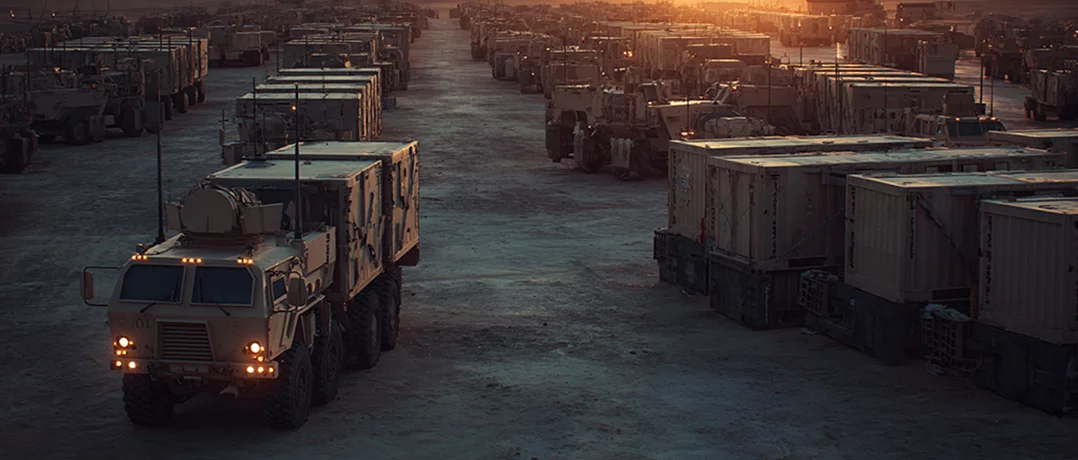
The credibility of potential US escalation is reinforced by a notable military build-up. The deployment of Marine Expeditionary Units, additional airborne forces, and long-range strike capabilities reflects a deliberate effort to expand operational flexibility. These forces are designed not only for deterrence but also for rapid offensive action, including amphibious assaults and air-mobile operations.
Such preparations suggest that Washington is positioning itself for multiple contingencies, ranging from limited raids and targeted seizures to more complex ground engagements. The presence of elite units capable of rapid deployment indicates that any decision to escalate could be implemented with minimal delay.
At the same time, this build-up serves as a signaling function. By increasing its military footprint, Washington aims to pressure Iran into reopening strategic waterways and re-engaging diplomatically. This dual-purpose strategy, combining coercion with signaling, reflects an effort to shape the strategic environment without immediately committing to full-scale war.
Strategic ambiguity and political messaging
Despite growing speculation, the feasibility of a ground invasion of Iran remains highly contested. Iran’s size, geography, and population present formidable challenges. Unlike previous US interventions, there is no clear staging ground for a large-scale assault, and the logistical demands of sustaining such an operation would be immense.
Current US troop levels in the region, estimated at just over 50,000, are insufficient for a comprehensive invasion. Even limited operations, such as seizing strategic islands or conducting targeted raids, would require significant reinforcement and expose American forces to substantial risks.
Moreover, Iran’s military strategy highlights asymmetric warfare. Its capabilities in missile strikes, drone operations, and naval disruption allow it to impose costs on superior forces without engaging in conventional battles. This asymmetry complicates any attempt to achieve rapid, decisive outcomes through ground force alone.
Hence, the current phase represents a pivotal moment in US-Iran relations. The combination of military build-up, strategic ambiguity, and escalating rhetoric suggests that Washington is preparing for a range of scenarios, including limited ground operations. While such actions may yield tactical gains, they are unlikely to produce decisive political outcomes and may instead trigger broader regional escalation and long-term strategic strain.
Ultimately, the challenge lies in aligning military means with political ends. Force can create leverage, but it cannot guarantee sustainable outcomes. The greater danger is not only in escalation itself, but in entering a conflict without a clear and achievable strategy for bringing it to a close.
-
-

-
The Beiruter
-
