



The legal and constitutional dilemma surrounding Hezbollah’s status in Lebanon, arguing that its military and political structures are inseparable and challenging the state’s ability to enforce sovereignty under existing law.
Weapon, doctrine, power: Inside Hezbollah's legal status
Weapon, doctrine, power: Inside Hezbollah's legal status
By Dr. Elie Elias | March 05, 2026

Reading time: 4 min
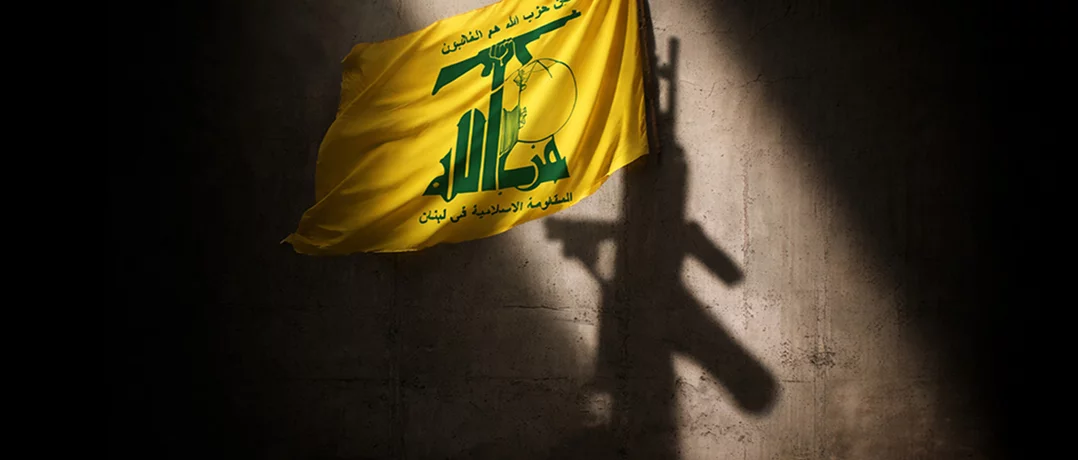
The Lebanese government’s recent decision to consider Hezbollah’s military actions unlawful is not a routine administrative development. It is a structural moment in the country’s long struggle over sovereignty and the monopoly of force.
By formally addressing the armed dimension of the organization, the state has implicitly reopened a foundational question that has remained deliberately unresolved for decades: can Hezbollah’s military apparatus truly be separated from its political identity?
At first glance, the issue may appear tactical - a disagreement over military escalation or security management. In reality, it is constitutional.
The speech delivered yesterday by Hezbollah’s Secretary-General only sharpened this dilemma. Rather than signaling any readiness to align with the government’s decision, the speech reaffirmed the organization’s intention to continue the war and openly blamed the Lebanese government for attempting to restrict its military activities.
In doing so, Hezbollah once again positioned its armed strategy above the authority of the Lebanese state, framing the government’s decision not as a matter of national sovereignty but as a political error.
Legal status or political myth?
Lebanon’s Council of Ministers theoretically possesses the authority to suspend or dissolve associations that violate public order or operate contrary to national law. Yet before examining enforceability, a more basic legal question must be asked: is Hezbollah, in the legal sense, a political party at all?
Lebanon does not have a dedicated law regulating political parties. They fall under the 1909 Ottoman Law on Associations. Legally, a political party is simply a civil association. Its founders must notify the Ministry of Interior of its establishment, submit a formal declaration outlining objectives, administrative structure, headquarters, and funding sources, and comply with ongoing reporting obligations - including annual budgets and updates of leadership structures. The state does not grant permission; it merely takes formal notice through what is known as “knowledge and notification.”
Hezbollah has never submitted such a formal declaration. It has never provided a founding statement detailing its objectives, leadership, or membership. It does not disclose its annual financial statements or funding sources. It does not notify authorities of administrative renewals. It does not permit security inspection of its premises as authorized under Article 18 of the Associations Law.
If one were to imagine the content of a hypothetical declaration, it would necessarily include objectives such as importing and manufacturing weapons, maintaining secret arms depots, conducting cross-border military operations, coordinating intelligence exchanges with foreign states, receiving undeclared foreign funding, and operating independent telecommunications networks outside state oversight. Such purposes would immediately trigger Article 3 of the Associations Law, which prohibits the formation of associations founded on unlawful objectives or those undermining state sovereignty, and allows for their dissolution by decree of the Council of Ministers.
Furthermore, since Hezbollah has never formally notified the state of its establishment, it would - under a strict reading of Article 6 - qualify as a prohibited “secret association.”
From a purely legal standpoint, independent of political justification or ideological claims, Hezbollah’s structure does not align with the regulatory framework governing lawful political entities in Lebanon. The paradox is striking: the most powerful “party” in Lebanon, which frequently invokes the logic of state legitimacy, does not meet the legal definition of a party under the state’s own law.
Yet legality alone does not explain the deeper structural problem.
A movement born armed
To understand why separation between the military and political dimensions remains so contentious, one must return to Hezbollah’s origins.
Hezbollah was not a political party that later developed an armed wing. Nor was it a militia that gradually entered politics. It was conceived from the outset as a unified religious-political project.
The 1979 Iranian Islamic Revolution institutionalized the doctrine of Wilayat al-Faqih, fusing clerical authority with state power and promoting an outward-looking revolutionary mission. Lebanon, fractured by civil war and reshaped by the 1982 Israeli invasion, became a strategic arena for that expansion.
Iran’s Revolutionary Guard deployed to the Bekaa Valley. Training and funding followed. But the decisive factor was clerical mobilization.
The Association of Muslim Scholars in Lebanon, established in 1982, served as a foundational religious-political incubator. It emerged from coordination among Lebanese, Palestinian, and Iranian clerics inspired directly by Tehran’s revolutionary institutions. Some participated in conferences organized by the Revolutionary Guard under the banner of the “World Day of the Oppressed,” where the objective was not merely resistance, but the construction of an Islamic political alternative aligned with the Iranian model.
Mosques became centers of mobilization, reflecting the Khomeinist conviction that religion and governance are inseparable. The aim was not reform of Lebanon’s political system, but transcendence of it.
This approach sharply diverged from Lebanese Shia leaders such as Imam Musa al-Sadr and later Imam Muhammad Mahdi Shamseddine, who sought empowerment within Lebanon’s pluralistic framework rather than its structural replacement.
From this clerical-revolutionary environment - and with direct IRGC support - Hezbollah was born.
The weapon was not an accessory. It was doctrinal. Political participation, including entry into Parliament in 1992, did not represent transformation but institutional expansion. The military and political dimensions were conceived within the same ideological architecture.
This historical formation explains why today’s governmental attempt to isolate the armed component encounters structural resistance. The military apparatus is not external to Hezbollah’s political identity. It is embedded within it.
The state’s sovereignty test
Legally, the state may classify armed actions as unlawful. Institutionally, enforcement is another matter. Any attempt to dissolve, suspend, or redefine the organization’s status would confront entrenched social networks, parliamentary representation, and autonomous military capacity.
In a context of regional escalation, legal decisions in Beirut cannot be divorced from battlefield realities.
The debate, therefore, is not merely about compliance with the 1909 Associations Law. It is about sovereignty, institutional coherence, and the historical legacy of a revolutionary project implanted within Lebanon’s state structure.
When the government draws the line, it is not only challenging an armed organization. It is confronting a forty-year-old architecture in which ideology, weapons, and political participation were designed to function as one.
The question now is not whether the legal argument exists. It clearly does. The question is whether the Lebanese state possesses enough political cohesion and institutional capacity to dissolve Hezbollah.
-
-
-
Dr. Elie EliasUniversity Lecturer & Political Historian
-
