

Amir Karimi rejects Trump’s claims that weapons for Iranian protesters were diverted by Kurds, framing them as unverified, politically sensitive allegations that risk escalating regional tensions and mischaracterizing peaceful protest movements.
Weapons to Iran protesters that never arrived

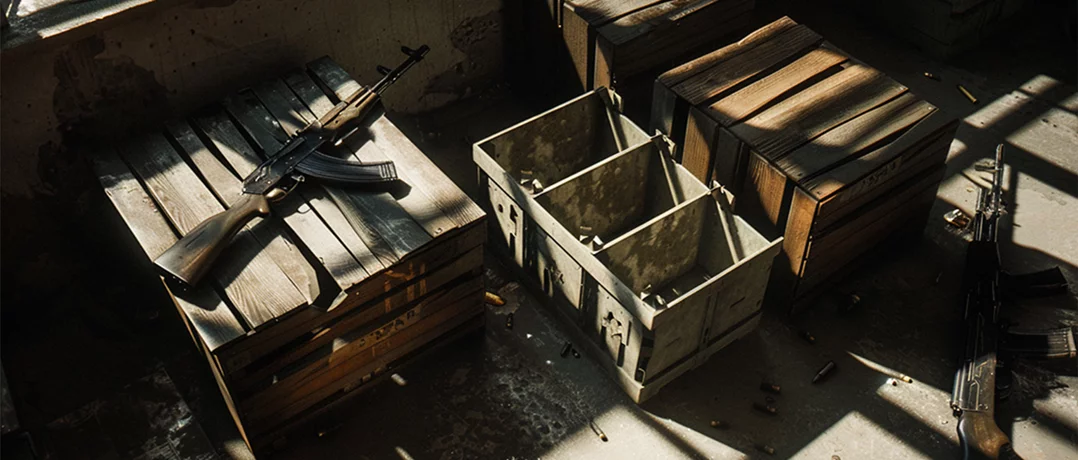
Recent remarks by United States (US) President Donald Trump have ignited controversy after he claimed that Washington attempted to covertly supply weapons to Iranian protesters through Kurdish intermediaries, however failed to reach their intended target group as the Kurds withheld them to themselves.
In this context, The Beiruter reached out to Amir Karimi, the co-president of Free Life Party of Kurdistan (PJAK), to better understand the validity of these claims and their significance.
Kurdish groups reject the allegations
In response to Trump’s remarks, Kurdish groups have categorically denied any involvement in the alleged transfer or retention of weapons. Free Life Party of Kurdistan (PJAK), in particular, has distanced itself from the claims.
In an interview with The Beiruter, Amir Karimi stressed that the group has no knowledge of such activities. When asked whether Kurdish groups had kept weapons intended for Iranian protesters, Karimi stated that the question should be directed to Trump himself, noting that the accusation, even if vague, unfairly places political pressure on Kurds.
Karimi further clarified that PJAK has no connection to the matter, stressing, “we have no information about this subject,” and reiterating that any such claims should be verified by the US. However, Karimi added, “what is clear is that we, as the PJAK, have no connection whatsoever to this issue.”
He also warned that
The generalization of Kurdish involvement could lead to political repercussions and unjust targeting of Kurdish communities.
Regional tensions and broader implications
The controversy surrounding Trump’s remarks also reflects broader regional tensions, particularly involving Kurdish populations across the Middle East. Kurdish groups have long been viewed through a security lens by Iran, which has frequently accused them of separatist or destabilizing activities.
Karimi suggested that Iranian strikes on Kurdish regions are driven by 2 main factors:
First, Iran is attempting to export its internal crises beyond its borders. In this context, it is accusing political movements and the Kurdistan Regional Government and launching attacks against them.
Second, it relates to Iran’s view of the Kurdish issue in the region. Iran has always approached the Kurdish issue from a security perspective and tries to label Kurds as terrorists and confront them with military language.
This dynamic contributes to ongoing instability in regions with significant Kurdish populations and complicates efforts to separate legitimate political grievances from security concerns.
Impact on the Iranian protest movement
Another key issue raised by Trump’s claims is whether the alleged arming of protesters, or even the perception of it, could have influenced the trajectory of the protests.
Karimi strongly rejected the idea that the protests were an armed movement, highlighting that they were a democratic expression of public dissatisfaction rather than an insurgency.
We know very well that even if those rumors were true, the internal protests in Iran were a democratic popular movement, not an armed uprising.
Karimi thus warned that spreading unverified claims about foreign involvement could provide justification for harsher crackdowns by the Iranian government, including arrests, imprisonment, and executions.
The contextual background
According to Trump, the US sought to provide arms to Iranian protesters during the wave of demonstrations that erupted over deteriorating economic conditions and the rising cost of living. He stated that “we sent guns to the protesters, a lot of them,” while suggesting that Kurdish intermediaries may have retained the weapons instead of passing them on.
It is worth noting that Iranians had taken to the streets against their regime prior to the eruption of the US-Israel-Iran armed conflict. The protests themselves were among the largest Iran has witnessed in decades and were largely driven by economic hardship exacerbated by long-standing US sanctions. Meanwhile, Iranian officials had accused protesters of violence, describing them as “rioters,” “saboteurs,” and “terrorists,” and had reportedly executed several individuals on charges of acting on behalf of foreign adversaries.
Whether Kurds received arms or not, their role seems not a marginal one. How they intend to play such a role, however, remains ambiguous and pending on the developments that will unfold both in Iran and the region as a whole.
-
-

-
The Beiruter
-
