



Lebanon’s latest rains bring cautious relief after years of drought, but stark regional disparities, climate volatility and economic strain continue to leave farmers and policymakers grappling with an increasingly fragile agricultural sector.
Welcome rains, but Lebanon’s agriculture remains on alert
Welcome rains, but Lebanon’s agriculture remains on alert
By Christiane Tager | February 03, 2026

Reading time: 4 min
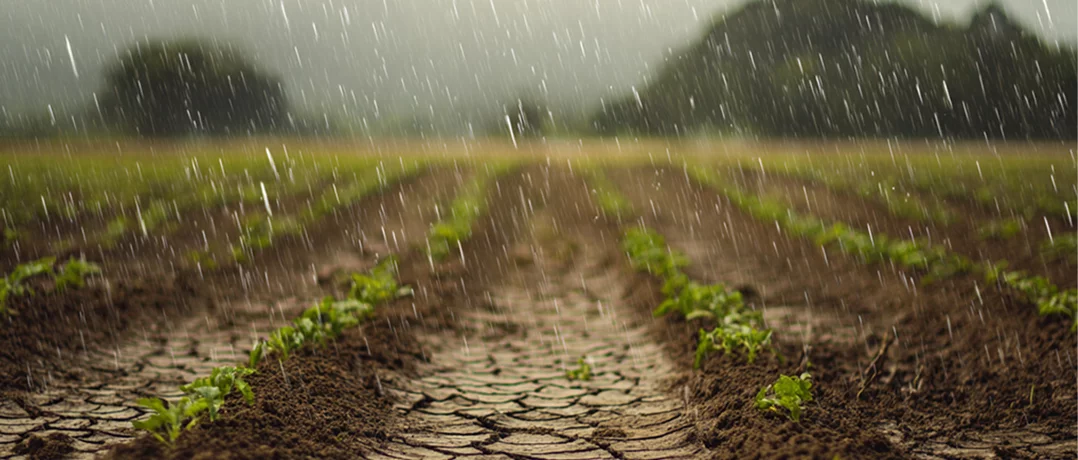
After a year marked by severe drought, recent rainfall across Lebanon has been broadly welcomed by agricultural authorities and producers. While the precipitation offers much-needed relief, its impact on the country’s fragile agricultural sector remains uneven, underscoring the vulnerability of farming to increasingly erratic climate patterns.
Lebanon, a Mediterranean country traditionally reliant on winter rainfall and mountain snowfall, has endured several consecutive years of below-average precipitation. These conditions have strained agriculture a sector that accounts for approximately 3.1% of GDP and provides employment to nearly 8% of the local workforce at a time when the broader economy is already under acute pressure.
Rainfall arrives “at the right time”
According to Nizar Hani, Lebanon’s Minister of Agriculture, recent rainfall has been “excellent so far” and, crucially, has arrived “at the right time,” he told The Beiruter. He added that snowfall plays a vital role in replenishing groundwater reserves, which are essential for irrigation and water availability during the dry summer months.
“The timing matters as much as the volume,” the minister stressed, expressing hope that precipitation would continue steadily rather than stop abruptly, as has often been the case in recent years.
Despite the positive outlook, Hani acknowledged that rainfall levels remain below long-term historical averages, although they are significantly higher than last year, which was characterized by exceptionally severe drought.
Climate data corroborate this assessment. Annual rainfall declined from 747.5 mm in 2023 to approximately 662.6 mm in 2024, compared with a historical average of around 704.8 mm between 1901 and 2024. While the improvement over last year is notable, it is not yet sufficient to fully offset accumulated water deficits.
Sharp regional disparities persist
According to data published by Lebanon’s Agricultural Research Directorate, no rainfall was recorded during the past 24 hours, up to the morning of Monday, February 2, 2026, highlighting the increasingly irregular nature of the current rainy season.
Since the start of the season, rainfall accumulation has varied sharply across regions. The wettest areas include Qleiaat–Kesrouan (789 mm), Kfarchakhna–Zgharta (579.8 mm) and Fanar–Beirut (501.8 mm). By contrast, the Bekaa Valley continues to lag significantly behind, with Qaa recording just 148.5 mm and Zahle–Fayda 244.8 mm, reinforcing concerns over water availability in Lebanon’s main agricultural heartland.
Compared with last season, several regions have registered a marked increase in precipitation, in some cases exceeding 200%, notably in Qleiaat–Kesrouan, Kfarchakhna–Zgharta and Hasbaya. However, other areas, particularly along the coast, such as Tyre, remain below their usual seasonal averages.
Overall, despite localized improvements, current rainfall totals remain below long-term annual averages in most regions, underlining a persistent rainfall deficit and stark regional disparities that continue to complicate planning for farmers and policymakers alike.
Farmers welcome rain, fear the wind
On the ground, reactions among farmers reflect cautious optimism. A major producer of bananas, oranges and avocados in southern Lebanon described the rainfall to The Beiruter as “largely beneficial” after years of chronic water shortages.
However, he warned that strong winds accompanying recent storms had caused some fruit to fall prematurely from trees, reducing short-term yields. “Rain is always positive,” he said, “but wind can be damaging when it coincides with critical stages of production.”
The producer remains hopeful that February and March will bring further precipitation, which could support crop development and partially compensate for earlier losses. He also noted that rainfall levels in 2023 were better than this year so far, reinforcing the need for sustained precipitation over the coming months.
Snowfall, he added, is particularly valuable, as it contributes to the long-term recharge of aquifers, a key buffer against increasingly frequent droughts.
Structural vulnerabilities persist
Despite recent improvements, Lebanon’s agricultural sector continues to face deep structural challenges. Prolonged drought episodes in recent years have left reservoirs depleted and groundwater levels under stress, particularly in inland regions such as the Bekaa Valley, where irrigation is critical for agricultural output.
Climate variability, marked by alternating periods of drought and intense rainfall events is expected to intensify as climate change accelerates. This volatility complicates planning for farmers, increases production risks and amplifies pressure on already limited water resources.
These challenges are compounded by the country’s broader economic crisis, which has driven up input costs, reduced access to financing and weakened farmers’ capacity to invest in climate-resilient infrastructure.
Recent rainfall has undoubtedly brought welcome relief after a prolonged dry spell. Yet the situation remains fragile. Total precipitation levels are still below historical norms, and adverse weather patterns including strong winds and uneven rainfall distribution continue to weigh on productivity.
If the coming months confirm a sustained and well-distributed rainfall pattern, some of the sector’s long-standing constraints could ease. For now, however, Lebanon’s agriculture remains at a crossroads, navigating between climatic vulnerability, structural weakness and cautious hopes of recovery.
