



Will the collapse of the U.S.-Iran truce push Lebanon toward renewed conflict, or preserve the fragile status quo amid mounting regional tensions?
What awaits Lebanon beyond the U.S.-Iran 60-day truce
What awaits Lebanon beyond the U.S.-Iran 60-day truce
By The Beiruter | August 17, 2026

Reading time: 6 min
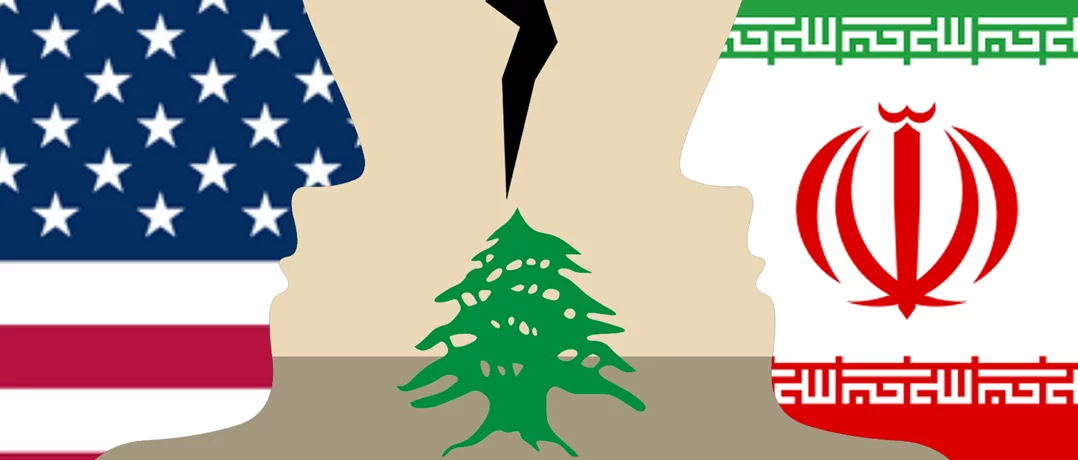
The expiration of the 60-day deadline established by the United States (U.S.)-Iran Memorandum of Understanding (MoU), commonly known as the “Islamabad Understanding,” marks a decisive and critical turning point in the region as a whole. Signed on 17 June 2026, the agreement sought to halt direct military confrontation between Washington and Tehran while creating a framework for negotiations on the Iranian nuclear program, sanctions relief, maritime security, and broader regional issues. However, as the deadline expires without a comprehensive agreement or an officially confirmed extension, hopes for a sustainable diplomatic breakthrough are rapidly fading.
For Lebanon, the renewed regional confrontation, coupled with the recent escalatory Israeli military operations in southern Lebanon, threatens its security, stability, and the aspired outcomes from the ongoing direct negotiations with Tel Aviv.
The potential impact on Lebanon
Despite Lebanon being explicitly referenced in the U.S.-Iran Memorandum of Understanding, the agreement had only a limited practical impact on developments inside the country.
In his interview with The Beiruter, retired Lebanese Brigadier General Naji Malaeb stated that Lebanon firmly decided to pursue with the American-sponsored ceasefire framework with Israel rather than on any security guarantees provided through the U.S.-Iran understanding. Consequently, he believed that neither the agreement nor its expiration fundamentally altered Lebanon’s security environment.
In reality, the continued Israeli military operations in southern Lebanon challenged the notion that the understanding provided meaningful protection for the Lebanese front. Throughout the implementation period, Israeli strikes and military activities persisted, while Iran refrained from publicly responding to or condemning these actions. For Malaeb, Tehran’s silence demonstrated that the agreement did not translate into tangible security guarantees for Lebanon.
Nevertheless, the broader strategic implications of the collapse of U.S.-Iran diplomacy remain significant. Malaeb argued that Washington’s long-term objective extends beyond managing tensions with Tehran and includes eliminating the military presence of Iran and its allied armed groups along the Mediterranean. Within this broader strategy, Israel has been afforded considerable operational freedom to continue military pressure against Hezbollah’s infrastructure in southern Lebanon, while the Lebanese state has committed, at least in principle, to ensuring that all weapons ultimately fall under the exclusive authority of state institutions.
The principal disagreement concerns the sequencing of implementation rather than the objective itself. Beirut maintains that a complete Israeli withdrawal from occupied Lebanese territory would create the political and security conditions necessary for addressing Hezbollah’s weapons through state institutions and national dialogue. Conversely, both Washington and Tel Aviv argue that Israeli forces should not withdraw before Lebanon demonstrates concrete progress in eliminating armed groups operating outside the state's authority. This divergence places the Lebanese government in an increasingly difficult position. As a result, the current deadlock is likely to persist, with Israel continuing military operations, the U.S. maintaining pressure for implementation, and Lebanon seeking to avoid both renewed war with Israel and domestic conflict.
From Malaeb’s perspective, therefore, the expiration of the U.S.-Iran understanding is unlikely to produce an immediate deterioration in Lebanon’s security situation. Rather than representing a turning point, it reinforces the status quo: a fragile de-escalation between Washington and Tehran, continued Israeli military pressure in southern Lebanon, and an unresolved political dispute over the future of Hezbollah’s weapons. The country’s long-term stability will ultimately depend less on the fate of the U.S.-Iran agreement than on whether Lebanon can resolve its internal security dilemma while advancing negotiations over Israeli withdrawal and the restoration of full state authority.
Israel’s escalation in southern Lebanon amid rising regional tensions
As uncertainty surrounding the U.S.-Iran negotiations has grown, Israel has substantially intensified its military operations in southern Lebanon. The recent escalation has centered on the strategically significant Ali al-Taher Heights, where Israeli forces have conducted extensive airstrikes, artillery bombardments, surveillance operations, and engineering activities targeting what Israel describes as Hezbollah’s underground military infrastructure.
Rather than pursuing an immediate conventional ground offensive, Israeli operations appear designed to isolate the area while applying continuous military pressure. According to Israeli assessments, Ali al-Taher represents one of Hezbollah’s most important operational positions in southern Lebanon, making it both a military objective and a strategic bargaining tool within the broader Lebanese-Israeli negotiations.
Israeli officials have simultaneously reinforced their political messaging. Defense Minister Israel Katz has pledged that Israel will continue targeting Hezbollah wherever it perceives threats against Israeli forces or civilians, while other members of the Israeli government have advocated expanding military operations if Hezbollah continues its activities along the border.
The escalation has also included two notable Israeli raids targeting the towns of Ansar and Deir al-Zahrani in the south, in response to a “military activity” carried out by Hezbollah against the Israel Defense Forces (IDF) in the Ali al-Taher heights, according to the IDF. The attacks killed at least 11 people and wounded several others, marking the highest toll since the signing of the U.S.-Iran MoU, while simultaneously causing a wave of displacement towards Sidon and Beirut.
The U.S.-Iran escalation and the collapse of the diplomatic framework
The Islamabad Understanding was intended to provide a temporary but significant pause in hostilities between the U.S. and Iran. Its 14-point framework called for an immediate cessation of military operations, negotiations toward a comprehensive agreement within 60 days, discussions over sanctions relief, supervision of Iran’s nuclear program by the International Atomic Energy Agency (IAEA), and guarantees for freedom of navigation through the Strait of Hormuz.
Yet despite intensive diplomatic efforts involving Pakistan, Qatar, and Oman, the negotiations gradually lost momentum. Washington maintained its demand for meaningful restrictions on Iran’s nuclear activities and regional military influence, while Tehran insisted that the U.S. first implement its existing commitments, including sanctions relief and the release of frozen assets. As the deadline arrived, neither side announced a final agreement nor jointly confirmed an extension of the framework. While Pakistani sources suggested that both governments had agreed in principle to prolong negotiations, Iranian officials publicly rejected reports of any extension talks, reflecting the growing lack of trust between the two sides.
The deterioration of the diplomatic process has coincided with escalating tensions in the Strait of Hormuz. Iranian military officials have declared that the strategic waterway “will never return to its previous status,” describing it as one of Tehran’s most important geopolitical assets following the recent conflict. At the same time, commercial shipping through the strait has slowed considerably after attacks targeting oil tankers, raising international concerns over energy security and global supply chains.
The failure to transform the temporary understanding into a comprehensive political settlement significantly increases the possibility that future disputes will once again be addressed through military escalation rather than diplomatic compromise.
Nevertheless, the timing of the Israeli escalation strongly suggests that developments on the Lebanese front cannot be viewed independently from the broader U.S.-Iran confrontation. During the period in which the Islamabad Understanding remained relatively functional, regional actors generally exercised greater restraint. As that diplomatic framework weakens, military calculations increasingly appear to be replacing political compromise. Thus, preventing another large-scale conflict will ultimately depend not only on local actors but also on whether regional diplomacy can once again overcome the forces pushing the Middle East toward renewed escalation.
-
-

-
The Beiruter
-
