

Following the death of Iran’s supreme leader and the decimation of its security elite, the Islamic Republic faces deep internal fractures and mounting popular unrest, raising the prospect of a historic transition toward a democratic republic.
What comes next for Iran?

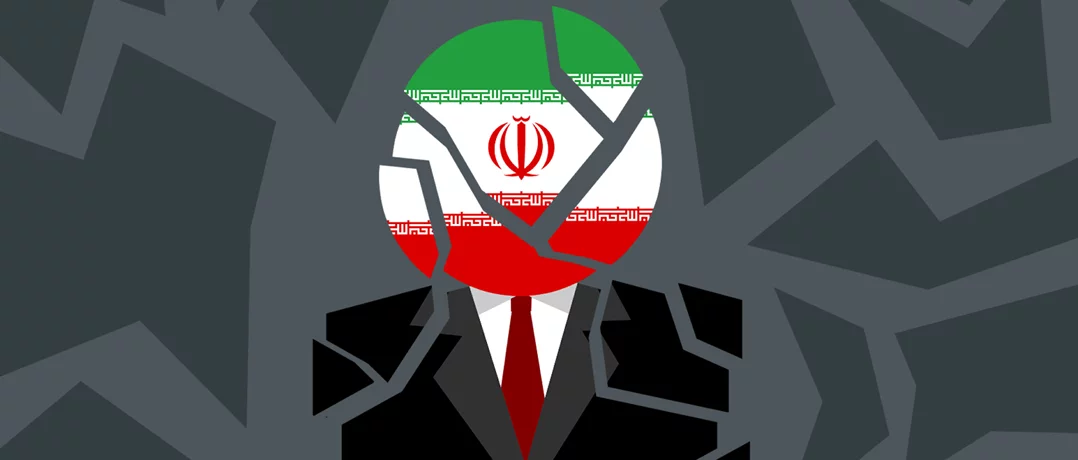
With Iran's supreme leader dead and its security elite decimated, the country stands at a historic juncture but the regime's grip, though loosened, has not yet broken.
The fracture within Iran’s ruling elite is real and it has been deepened catastrophically. For decades, Supreme Leader Ali Khamenei served as the singular arbiter among the Islamic Revolutionary Guard Corps (IRGC), the judiciary, the presidency, the Guardian Council, and the intelligence apparatus. That mechanism is now gone. His likely successor, Mojtaba Khamenei, is most likely dead. The defense minister, the IRGC commander, and four intelligence chiefs have been confirmed killed. What remains is a scramble for survival among the regime’s remnants: Ali Larijani positioning himself for influence, second-tier IRGC commanders jockeying for control, and pragmatists calculating their next move.
This infighting has weakened the regime considerably. But it must not be mistaken for the more fundamental conflict underway: the Iranian people and their organized resistance versus the entirety of a system built on religious tyranny. In the opening hours of the war, the National Council of Resistance of Iran (NCRI) issued the “Announcement of a Provisional Government by the National Council of Resistance of Iran to Transfer Sovereignty to the People of Iran and Establish a Democratic Republic, Based on Mrs. Maryam Rajavi’s Ten-Point Plan.” As Maryam Rajavi, President-Elect of the National Council of Resistance of Iran (NCRI) Provisional Government, declared: “Khamenei’s death is the death of religious tyranny and the end of the regime of Velayat-e Faqih.” The factional fighting is a contest over the spoils of a collapsing order. Without Khamenei’s discipline holding it together, those fractures are now costing the regime far more than they once did.
Society has already decided
The more pressing question is not whether Iranian society is ready for change it is. The December 2025 uprising spread to more than 220 cities across all 31 provinces. More than 7,000 people have been killed since January, and the protests have not only continued but expanded. As Rajavi has observed, the current uprising is not a repetition of earlier unrest but “a more advanced and mature phase of the same revolutionary process,” fusing workers, bazaar merchants, students, women, youth, and ethnic communities in ways not seen before. On the day of a general strike, Iranians marched toward Azadi Square under live fire. In Kermanshah, witnesses reported that “everyone is outside.” Fear, in other words, has changed sides.
And yet the security apparatus should not be underestimated. It has absorbed blows that are, by any historical measure, unprecedented its supreme commander dead, its senior leadership eliminated, its Hashtgerd garrison ablaze, its morale deeply shaken. But it remains deployed. More terrified of the next uprising than ever, the regime has flooded the streets with additional forces, more checkpoints, more live ammunition. It is not what it was, neither in command coherence nor in spirit. But it is still there. This creates a fatal dilemma for the regime: intensified suppression generates more hatred and greater potential for a popular explosion, while easing up risks surrendering the streets entirely. There is no exit from this catch-22 only an acceleration toward collapse.
The current uprising is not a repetition of the past but a more advanced and mature phase of the same revolutionary process.
Sanctions: Weapon against the regime, not its people
Sanctions have never been the primary driver of ordinary Iranians’ suffering. The bulk of Iran’s economy is controlled by the IRGC and regime-aligned entities, and the main source of poverty has always been the regime’s systematic exploitation of national wealth, diverting resources to proxy wars, missile and nuclear programs, and the vast suppression apparatus. This is not a normal economy amenable to conventional macroeconomic analysis.
Sanctions have primarily served to weaken the regime, restricting its access to technology, capital, and markets required to sustain its military and nuclear ambitions. They should continue and intensify. The Iranian opposition has been explicit on this point: “We do not seek money or the presence of foreign forces on Iranian soil.” The people’s suffering derives from forty-seven years of plunder by a regime that has funded Hezbollah, Hamas, and the Houthis at the direct expense of a population living through hyperinflation and currency collapse.
A security apparatus in panic, not consolidation
Military escalation has inflicted severe, short-term irreparable blows on the regime’s suppression apparatus. But because the regime is more frightened than at any point in its history, it has responded by increasing its street presence more checkpoints, more Basij militia, more live fire. This is panic, not consolidation. And every act of suppression generates more hatred and more determination among a population that has already decided the system cannot be reformed.
As for the prospect of military rule: the IRGC is not Turkey’s army or Egypt’s army. It is the regime’s ideological DNA, created precisely because the Islamic Republic never trusted its conventional armed forces. That is why Iran maintained two parallel militaries for forty-seven years, with double the corresponding budget. The IRGC has no independent political identity, no reformist wing, and no governance capacity. Without a Supreme Leader to enforce, it is an enforcement mechanism without authority. Rajavi drew a precise distinction on February 28, calling on “patriotic personnel of the army” to stand with the people, while demanding that the IRGC, Basij, Qods Force, and all suppressive entities lay down their arms and surrender. The NCRI’s Ten-Point Plan mandates their complete institutional dissolution not as an act of vengeance, but as the structural prerequisite for a free Iran.
A roadmap for transition
The Iranian Resistance is well organized and has spent four decades building the structures necessary for a transitional period. Based on NCRI resolutions, once a provisional government is established on Iranian territory, it is obligated to hold free and fair elections within six months for a National Legislative and Constituent Assembly. The duties of that Assembly would be to draft a new constitution, determine the new republican system of governance, and legislate for the administration of current affairs until the formation of a National Assembly under the new constitution. A designated government would then assume responsibility for the country’s affairs under the Assembly’s supervision, following the resignation of the six-month provisional government.
It bears focus: the NCRI and the Provisional Government are not seeking power, but rather the transfer of power to the sovereignty of the Iranian people. Rajavi has framed the immediate moment with equal clarity: “Now is the time for solidarity and unity against the remnants of religious dictatorship and monarchical fascism that seek to steal the democratic revolution.”
The opposition: United, organized, and ready
The NCRI represents the broadest opposition coalition in Iran’s modern history more than 450 members, with women comprising 52 percent, united around the Ten-Point Plan covering every dimension of democratic governance. On the day of the general strike, Resistance Units from Tehran to Baluchestan distributed the provisional government’s announcement and conducted organized operations under near-total internet blackout. That is the proof of an organizational unity that no other political force has demonstrated.
The authentic voice of the Iranian street is unmistakable: “Death to the oppressor, be it Shah or Leader.” The NCRI’s National Solidarity Front calls on all forces committed to a democratic republic to act in unity not uniformity, but democratic pluralism grounded in fundamental shared principles.
A democratic Iran and the regional equation
A democratic Iran would fundamentally dismantle the architecture of regional destabilization. The regime’s proxy network Hezbollah, the Houthis, Iraqi militias was never merely a byproduct of foreign policy. It was the regime’s survival strategy, requiring ideological authorisation from the Supreme Leader and institutional execution through the IRGC and its Qods Force. Both structures are now severely damaged.
The NCRI’s Ten-Point Plan commits to “peace, co-existence and international and regional cooperation” and to a non-nuclear Iran a position with particular credibility coming from a movement that exposed Iran’s secret nuclear program three decades ago, precisely because that program served the regime rather than the Iranian nation’s genuine security interests.
A democratic Iran would remove the primary state sponsor of terrorism from the regional equation, eliminate the nuclear threat driving arms races across the Middle East, open the path to normalized relations with Gulf neighbors, and demonstrate that democratic governance is achievable in the region. The regime’s own incoherent retaliation striking Qatar, Bahrain, Kuwait, the UAE, and Saudi Arabia illustrates a dying system lashing out at the very neighbors any future Iranian government will need as partners.
Iran is not its regime. Iran is its people.
A free Iran at peace with the world is what the Iranian people are fighting for right now. The question is not whether they are ready. They have already answered that. The question is whether the world is paying attention.
