



For many young Lebanese, November 22 brings back memories of school celebrations and lessons about the country's past. But growing up in a Lebanon still facing political and economic struggles has made some question how independent the country really is, and what the day means to them today.
What does Independence mean to Lebanon's young generation?
What does Independence mean to Lebanon's young generation?
By Yara Saliba | November 20, 2026

Reading time: 5 min
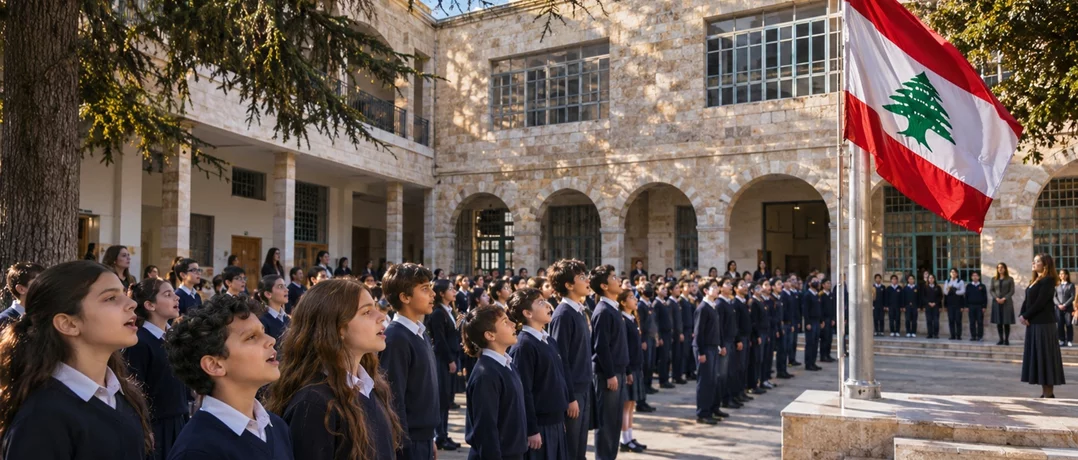
Lebanon celebrates its Independence Day on November 22, marking the end of the French Mandate in 1943, after centuries of foreign rule, including Ottoman and French control.
When asked about November 22, young Lebanese people are quick to identify it as Independence Day. Some recall the celebrations and activities organized at school, while others remember the history lessons through which they first learned about the occasion. However, remembering the date and its celebrations raises a more fundamental question: what does independence truly mean to today's generation? How much do young Lebanese people know about the events that shaped this day? Do they still feel connected to its historical significance, and does it hold the same importance for them as it did for previous generations?
Remembering November 22
Paolo Soueidy, 24, recalled how enthusiastically he celebrated Independence Day as a child. During an interview with The Beiruter, he described buying a Lebanese Army costume, watching the military parade broadcast on television, and looking forward to the celebrations organized on that day. "I still find Independence Day an important symbol for our country," he remarked.
Christia Slim, 22, also associated November 22 with the celebrations she attended at school. “For me this is a day where we thank the people who made history and who lived during that time," she said during her interview with The Beiruter. Her understanding of independence was shaped by both school lessons and stories shared by her family. Although she did not experience the events herself, she recalled hearing about them throughout her childhood.
Sabine El Kallasi, 21, associated Independence Day with the Lebanese flag and the determination of those who fought for the country. "It reminds me of how we should fight for our country, just as they fought for it," she told The Beiruter.
A history with missing pieces
Young generations' understanding of Lebanon's history is affected by political divisions, conflicting historical narratives and the way information is passed down. The country's past is not always presented through a shared account, leaving many young people with different understandings of the same events.
Christia described Lebanon's history as "a puzzle with missing pieces," arguing that the country lacks a shared understanding of its past. "There is always something missing, and I don't think the puzzle will ever be complete because we do not all agree on our history," she shared.
She also pointed to a shift in how younger generations consume information. According to Christia, previous generations had a stronger reading culture, while today's youth are increasingly drawn to social media and fast-paced content, affecting the way they engage with historical knowledge.
Nady Louis, 20, highlighted another aspect of this fragmented historical understanding: political divisions. During an interview with The Beiruter, he observed that people often limit their understanding to the political perspectives they support, without considering other accounts. "Each person now cares to hear only about the party or political interests they follow, and they do not care to hear other parts of the story," he noted, adding that younger generations are increasingly drawn to Western culture and less interested in local affairs due to the growing influence of social media.
For Sabine, the difference between generations also comes down to firsthand experience. Older generations witnessed historical events themselves, while younger people rely on accounts passed down through families. "Only the people who lived through that time will remember what happened and how it felt” she said.
Growing up in crisis
Growing up in Lebanon means witnessing a country repeatedly affected by political instability, economic crises and conflicts. For younger generations, these circumstances have influenced not only their relationship with their country but also their understanding of independence. The idea of being an independent nation becomes more complicated when decisions affecting Lebanon continue to be influenced by foreign interests and internal political divisions.
Nady believes that Lebanon should be able to make its own decisions without outside interference. "November 22 should remind us that we should work only for our Lebanon and not any other country's interests," he stressed. "Our generation is simply tired."
Sabine also questioned the extent of Lebanon's independence today. While acknowledging that the country is independent in theory, she pointed to the influence of political parties and religious affiliations on national decisions. She observed that many people follow their political parties' positions without necessarily considering what is best for the country as a whole.
For Paolo, the continued influence of external interests makes the meaning of independence more complicated. He questioned how Lebanon could celebrate its freedom while remaining affected by outside powers. As he put it, young people struggle to see the significance of celebrating independence when they perceive Lebanon as still being under the influence of foreign powers.
Today's generation may be divided in its relationship with Independence Day, but this does not mean that young Lebanese people have stopped caring about the occasion. Despite their disappointment with the country's current situation, some continue to see November 22 as an important reminder of Lebanon's history and the sacrifices made for its independence.
“We have forgotten that people fought to give us this independence, and I think it is important to commemorate them on this day,” Christia said. While Paolo also views November 22 as a symbol of hope, describing it as “a push to look towards freeing Lebanon again from the problems that it has been passing through.”
Despite the disappointment and fatigue many young Lebanese feel, their connection to the country has not disappeared. Their hopes for a better Lebanon show that the younger generation still cares about its future and continues to see Independence Day as an occasion worth remembering.
-
-

-
Yara SalibaJunior Writer/Translator
-
