

Iranian FM Abbas Araghchi’s visit to Beirut, officially cultural, is closely watched for its political timing amid Lebanon’s security and regional tensions.
What is the reason behind Iranian FM’s visit to Lebanon?
What is the reason behind Iranian FM’s visit to Lebanon?
By The Beiruter | January 07, 2026

Reading time: 4 min
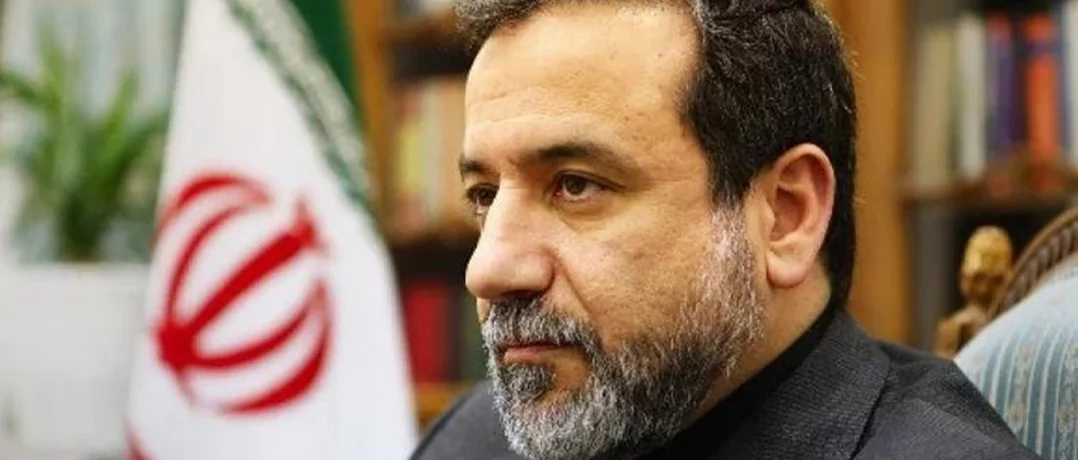
Iranian Foreign Minister (FM) Abbas Araghchi’s upcoming visit to Lebanon has drawn close attention in Beirut’s political and diplomatic circles, amid heightened regional tensions and growing uncertainty along the Lebanese-Israeli frontier.
Officially framed as a cultural visit linked to the signing of a new edition of Araghchi’s book, the trip is widely viewed as carrying political significance that extends well beyond symbolism. Its timing (coinciding with security deliberations, weapons-related deadlines and regional escalation) raises questions about Tehran’s objectives and the messages it seeks to convey.
Official framing and diplomatic protocol
Informed sources inside the Lebanese Ministry of Foreign Affairs and Emigrants (MOFA) revealed to The Beiruter that Araghchi is scheduled to arrive in Beirut on the evening of Thursday, 8 January 2026, with a formal meeting planned the following morning with Lebanese Foreign Minister Youssef Raggi (at 8:45 a.m.). The visit is set to continue on Saturday through meetings with the Lebanese president, prime minister and parliament speaker, underscoring its high-level nature.
Publicly, Iranian officials have emphasized that the visit revolves around the signing of an updated section of Araghchi’s book, which reportedly includes reflections following the recent Iran-Israel confrontation.
Lebanon’s position: dialogue with fundamental conditions
According to the aforementioned sources, FM Raggi is expected to reiterate Lebanon’s position that diplomatic engagement must be grounded in mutual respect and the preservation of state authority. The sources stressed that receiving the Iranian foreign minister falls within established diplomatic norms and Lebanon’s declared openness to dialogue with all states, provided that such engagement respects sovereignty and non-interference. Indeed, while the foreign minister does not reject dialogue with Tehran, he objects to any role that undermines national institutions or interferes in domestic affairs. Thus, the informed sources affirm to The Beiruter that there are certain principals that Iran must abide by to establish healthy relationships between both nations.
This stance reflects a broader Lebanese effort to recalibrate foreign relations at a moment when state authority, particularly over security matters, is under renewed scrutiny. Within this framework, Araghchi’s meetings are being approached with caution rather than optimism.
Suspicions of unannounced political objectives
Despite the visit’s official narrative, Lebanese Foreign Ministry sources have not ruled out the presence of undeclared political aims. Reports indicate that Araghchi requested multiple high-level meetings, including with Lebanon’s top political leaders, a move that suggests broader strategic considerations.
The regional context reinforces these suspicions. Israeli military pressure (through its intensified rhetoric and strikes, not only in the south of the Litani River but the north of it as well), unresolved deadlines related to weapons withdrawal and fears of renewed escalation have created an atmosphere in which any Iranian diplomatic activity is viewed through a security lens. For many in Beirut, the visit appears less about cultural exchange and more about positioning amid shifting regional dynamics.
Another sensitive aspect of the visit concerns potential meetings between Araghchi and Hezbollah officials. While such contacts are not officially confirmed, they are widely anticipated. Discussions, if held, would likely focus on scenarios of escalation or restraint along the southern front.
Background of diplomatic tension
The visit follows a recent public exchange between the two foreign ministers. In a televised interview on MTV Lebanon’s “Sar El Waet” in November 2025, Raggi accused Tehran of interfering in Lebanon’s internal affairs and suggested that discussions on contentious issues be held in a neutral third country. Araghchi responded by rejecting the accusation and affirming Iran’s openness to direct dialogue without intermediaries. Although the Iranian FM invited his counterpart to visit Tehran, the latter refused, prompting the former to succumb and head to Beirut.
This backdrop has fueled speculation about whether Araghchi’s tone and approach have evolved, or whether the visit represents a continuation of earlier positions favoring “resistance” over diplomacy.
Strategic timing and security developments
Araghchi’s arrival coincides with a meeting of the Ceasefire Monitoring Committee held today in Ras al-Naqoura, attended by military representatives from Lebanon, Israel, the United States, France and UNIFIL (with the notable absence of Morgan Ortagus). At the same time, the Lebanese Armed Forces (LAF) are preparing to submit its final report to the Council of Ministers tomorrow, outlining their progress in consolidating state control over weapons and armed activity.
These parallel developments highlight why the visit is being closely scrutinized: it unfolds at a moment when Lebanon is attempting to assert state authority amid intense regional pressure. One would question whether Araghchi’s message would be one on calm or support for Hezbollah to engage in a renewed armed conflict, while insisting on retaining its arms.
In conclusion, while officially presented as a cultural and diplomatic engagement, the Iranian foreign minister’s visit to Lebanon carries unmistakable political weight. Its timing, scope and surrounding context suggest that it is part of a broader regional conversation involving security, influence and the future balance of power in Lebanon. Whether the visit marks a shift toward constructive dialogue or reinforces existing tensions will ultimately depend on the messages delivered behind closed doors and on how Beirut chooses to respond.
-
-

-
The Beiruter
-
