

US warplanes hit ISIS again in Syria as Operation Hawkeye expands signaling Washington’s return to hard-power deterrence.
What is U.S. operation Hawkeye?

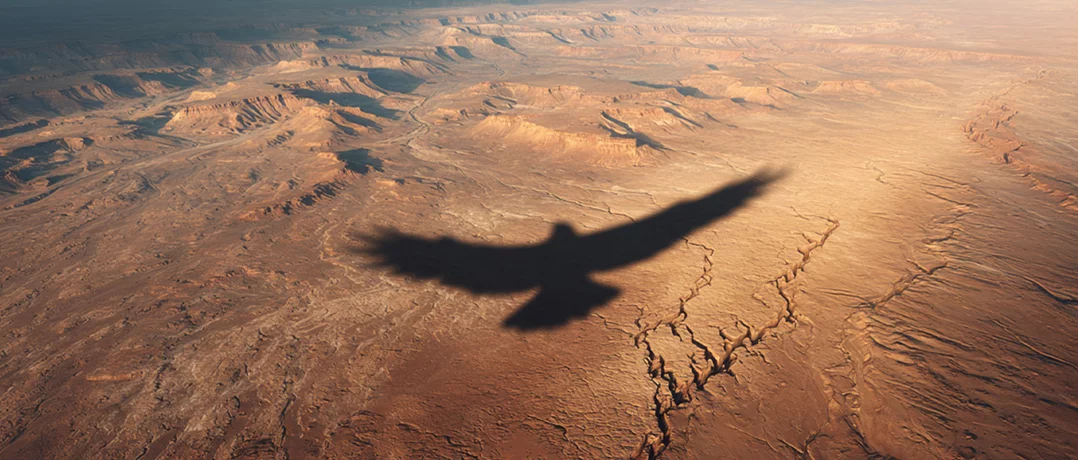
The United States has conducted another round of large-scale airstrikes against Islamic State targets in Syria, reflecting the expanding scope of Operation Hawkeye Strike, a U.S. military campaign launched in December 2025. Carried out as part of an ongoing retaliatory effort, the strikes underscore not only Washington’s sustained commitment to counterterrorism in the Middle East but also a wider trend toward increasingly assertive U.S. military engagement across multiple regions.
Origins of operation Hawkeye
Operation Hawkeye was first announced on 19 December 2025 after an Islamic State gunman killed two U.S. Army soldiers and a U.S. civilian interpreter during an ambush near Palmyra in central Syria. The Americans were supporting counterterrorism operations when they came under fire, marking the first U.S. military casualties in Syria since the fall of Bashar al-Assad’s regime in late 2024.
In response, U.S. and partner forces, including Jordanian aircraft, launched what Central Command described as a “massive strike,” firing more than 100 precision munitions at over 70 Islamic State targets across central Syria. The initial strikes targeted weapons depots, supply routes, and operational infrastructure used by ISIS cells seeking to regroup amid Syria’s fragile post-Assad transition.
Then-Defense Secretary Pete Hegseth framed the campaign bluntly, stating: “This is not the beginning of a war; it is a declaration of vengeance.” President Donald Trump echoed that message, stressing that attacks on U.S. forces would be met with decisive military retaliation.
The latest strikes
The most recent round of strikes, marked the second major phase of Operation Hawkeye. U.S. Central Command said more than 20 aircraft including F-15E fighters, A-10 attack jets, AC-130J gunships, MQ-9 Reaper drones, and Jordanian F-16s delivered more than 90 bombs and missiles against at least 35 Islamic State targets across Syria.
The targets included weapons stockpiles, supply routes, and logistical infrastructure used by the group. U.S. officials said the operation was intended to disrupt future attacks and safeguard American and partner forces in the region. In the days preceding the strikes, U.S. forces had already killed or captured nearly 25 ISIS members in 11 missions conducted between Dec. 20 and Dec. 29 under the Hawkeye campaign.
Although the Islamic State no longer controls territory, it continues to operate through clandestine cells and online recruitment networks. U.S. intelligence officials have warned that the group is attempting to exploit Syria’s political transition to free thousands of detained fighters and restore its operational capabilities. In 2024, ISIS-linked attacks were reported in Iran, Russia, and Pakistan, underscoring persistent concerns about the group’s global reach.
Why Syria and why now
Syria’s security environment remains deeply unstable following the ouster of Bashar al-Assad and the rise of President Ahmed al-Sharaa. While the new government has joined the international coalition against the Islamic State, it faces daunting challenges in asserting control over a country emerging from nearly 14 years of civil war. U.S. forces have stepped up coordination with Syrian government units and regional partners, including Jordan, in an effort to prevent ISIS from exploiting enduring gaps in governance.
U.S. Central Command has also drawn attention to the domestic dimension of the threat, reporting that ISIS has inspired at least 11 plots or attacks against targets inside the United States over the past year. From Washington’s perspective, Operation Hawkeye is framed not only as retaliation but as a preemptive effort to disrupt future attacks before they can be carried out.
Part of a broader U.S. posture
Operation Hawkeye does not exist in isolation. Its launch and escalation coincide with a period of unusually assertive U.S. military and security action under the Trump administration. Most notably, earlier this month U.S. forces carried out Operation Absolute Resolve, a dramatic raid in Caracas that resulted in the capture of Venezuelan leader Nicolás Maduro and his wife. That operation reflected a willingness to deploy overwhelming military force beyond traditional battlefields to neutralize perceived threats to U.S. security interests.
While the Venezuela operation focused on narcoterrorism and regional security in the Western Hemisphere, and Hawkeye targets jihadist militancy in the Middle East, both actions reflect a common doctrine: the use of decisive, often unilateral force to deter adversaries and reassert U.S. power. In parallel, the administration has adopted a confrontational posture in other strategic theaters, including the Arctic and Greenland, signaling that geographic distance is no longer a constraint on U.S. security action.
Implications going forward
Operation Hawkeye underscores that, despite years of reduced visibility, the U.S. military remains deeply engaged in Syria and prepared to escalate force rapidly in response to attacks on its personnel. It also raises questions about the durability of Syria’s post-Assad transition and the long-term sustainability of U.S. counterterrorism operations conducted amid shifting political alliances.
For the Middle East, the message is clear: Washington intends to prevent the Islamic State from reconstituting itself even as regional dynamics continue to evolve. More broadly, the campaign reflects an American foreign policy increasingly shaped by speed, retaliation, and strategic signaling an approach that is redefining U.S. engagement from Syria to Venezuela, and beyond.
-
-

-
The Beiruter
-
