

On the International Day of Democracy, Lee Kuan Yew’s warning reveals how Lebanon’s shrinking middle class and lack of consensus on fundamental state principles undermine the foundations of democratic resilience.
What Lee Kuan Yew’s warning reveals about Lebanon’s democracy
What Lee Kuan Yew’s warning reveals about Lebanon’s democracy
By Anthony Chamoun | September 15, 2026

Reading time: 6 min
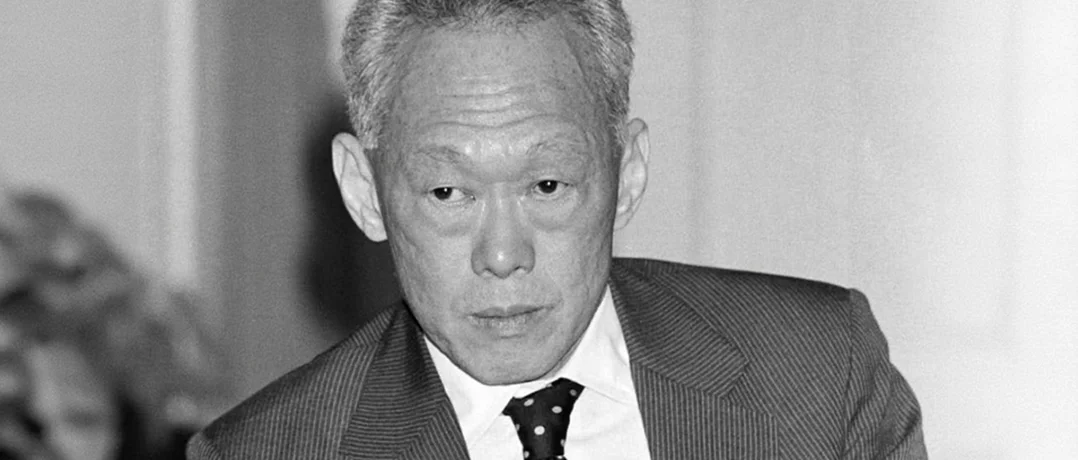
Every year, the International Day of Democracy (when the Universal Declaration on Democracy was adopted at the 161st session of the Inter-Parliamentary Council in 1997) offers an opportunity to reflect not only on elections and political representation, but also on the conditions that allow democracy to function effectively. While constitutions, parliaments, and regular elections are essential components of any democratic system, they do not by themselves guarantee democratic resilience.
Singapore’s founding Prime Minister (P.M.), Lee Kuan Yew, frequently argued that democracy can only endure when supported by certain social and political foundations. Among the most important, he identified two conditions: the existence of a large, educated, and economically secure middle class capable of making informed political choices, and a broad national consensus on the fundamental principles of the state, even when political parties disagree over policies and methods.
Viewed through this lens, Lebanon’s democratic challenges extend well beyond institutional dysfunction or electoral disputes. Since the financial collapse of 2019, the country has experienced both the near disappearance of its middle class and the continued fragmentation of its political landscape over fundamental questions concerning national identity, sovereignty, and Lebanon’s strategic orientation. Together, these developments have weakened two of the very pillars that Lee considered essential for a healthy democracy.
The decline of Lebanon’s middle class
For years since its establishment, Lebanon’s middle class served as the country’s economic and social backbone. It included professionals, teachers, civil servants, small business owners, skilled workers, and salaried employees whose incomes supported domestic consumption, generated tax revenues, invested in education, and contributed to economic productivity.
That foundation has been severely eroded since the onset of Lebanon’s financial crisis. The banking collapse, the sharp depreciation of the Lebanese pound (LBP), soaring inflation, and years of economic contraction destroyed household savings and dramatically reduced purchasing power. Salaries that once provided financial stability became insufficient to cover basic living expenses, pushing thousands of middle-income families into poverty.
The scale of the deterioration has been reflected in multiple international assessments. According to the United Nations Economic and Social Commission for Western Asia (ESCWA), extreme poverty has reached around 40%, while overall poverty exceeds 80%. Multidimensional poverty, which also measures deprivation in education, healthcare, and living conditions, has surpassed 82 percent.
Similarly, the World Bank reported in 2024 that monetary poverty among Lebanese households increased from 12% in 2012 to 44% in 2022, with one out of every three Lebanese falling into poverty during the crisis.
These figures are alarming given that the middle class performs three essential functions. Socially, it provides stability by enabling households to meet their needs without falling into poverty. Economically, it represents the country’s largest consumer group while supplying much of Lebanon’s productive and skilled workforce. Financially, it constitutes the principal contributor to government tax revenues through participation in the formal economy.
The disappearance of this class therefore weakens not only economic growth but also the state’s fiscal capacity and overall social stability.
Why the middle class matters for democracy
The decline of Lebanon’s middle class did not only weaken economic growth and the state’s fiscal capacity and overall social stability, but it is also reshaping the country’s democratic landscape.
Lee Kuan Yew argued that democracy functions best when citizens possess sufficient education, economic security, and independence to participate in politics on the basis of informed judgment rather than immediate material need. A broad middle class is generally better positioned to evaluate competing political programs, demand accountability from elected officials, participate in civil society, and defend democratic institutions without depending on political patrons for basic necessities.
As economic insecurity deepens, these democratic conditions become more difficult to sustain. When households are primarily concerned with securing food, healthcare, education, or stable incomes, political participation often becomes secondary to day-to-day survival. Financial hardship can also increase citizens’ dependence on political parties, sectarian leaders, and local patronage networks that provide services traditionally expected from the state.
Lebanon has long been characterized by clientelist politics, where parties and political leaders provide employment, social assistance, healthcare, or educational support in exchange for political loyalty. The collapse of the middle class has made many citizens more vulnerable to these networks, reducing their political independence and reinforcing existing patterns of patronage.
At the same time, widening inequality risks further distorting democratic competition. As wealth becomes increasingly concentrated while a growing share of society experiences poverty, disparities in political influence, access to resources, and public representation may also widen. In such circumstances, democratic participation risks becoming driven less by public policy preferences than by economic dependence and survival.
This does not mean democracy disappears. Rather, it becomes more difficult for democratic institutions to function as intended when large segments of society lack the economic security necessary to exercise political choice freely and independently.
A democracy without shared national foundations
Lee Kuan Yew’s second condition for democratic stability concerns the existence of broad agreement on the nation’s fundamental principles.
In many established democracies, political parties fiercely compete over taxation, healthcare, immigration, or foreign policy while sharing common acceptance of the constitutional order, the legitimacy of state institutions, and the basic national interest. Political competition occurs within an agreed framework.
Lebanon presents a different reality. The country’s political divisions often extend beyond policy disagreements to competing visions of the state itself. Major political actors continue to disagree over questions of national identity, sovereignty, Lebanon’s regional role, the state’s monopoly over the use of force, and the country’s strategic orientation.
These divisions are deeply rooted in Lebanon’s modern history. Since independence, the country has experienced competing visions centered on Lebanese nationalism, Arab nationalism, Syrian nationalism, and later differing positions regarding Hezbollah’s military role and Iran’s regional influence. These competing narratives have frequently intersected with broader regional rivalries, allowing external actors to exert influence over Lebanon’s domestic politics.
As a result, Lebanon’s democratic institutions frequently operate without a broadly accepted national framework capable of transcending sectarian and geopolitical divisions. Political competition therefore often revolves around fundamental questions about the state’s identity rather than solely around public policy.
This persistent lack of consensus contributes to institutional paralysis, delayed reforms, inconsistent policymaking, and declining public confidence in state institutions.
Rebuilding the foundations of democratic resilience
Lebanon’s democratic challenges cannot be addressed solely through electoral reforms or constitutional procedures. Restoring democratic resilience requires rebuilding both of the foundations highlighted by Lee Kuan Yew.
Economically, this means implementing structural reforms capable of restoring financial stability, rebuilding confidence in the banking sector, creating sustainable employment opportunities, strengthening social protection, and gradually rebuilding the middle class. A financially secure population is not only essential for economic recovery but also for fostering independent civic participation.
Politically, Lebanon faces the more difficult task of developing broader agreement on the fundamental principles that define the state. Such consensus does not require political uniformity or the elimination of ideological diversity. Rather, it requires agreement that national sovereignty, constitutional institutions, peaceful political competition, and the rule of law constitute the common framework within which democratic disagreements should occur.
Without these two pillars, democracy risks becoming increasingly procedural rather than genuinely resilient. Only when these foundations are rebuilt can political competition focus primarily on competing public policies instead of recurring disputes over the nature of the Lebanese state itself.
-
-
-
Anthony ChamounResearcher/WriterFocusing on Political Science and International Affairs.
-
