


Uncover how art has challenged power, inspired resistance, shaped political narratives, and transformed societies across history and into the modern world.
When art meets politics

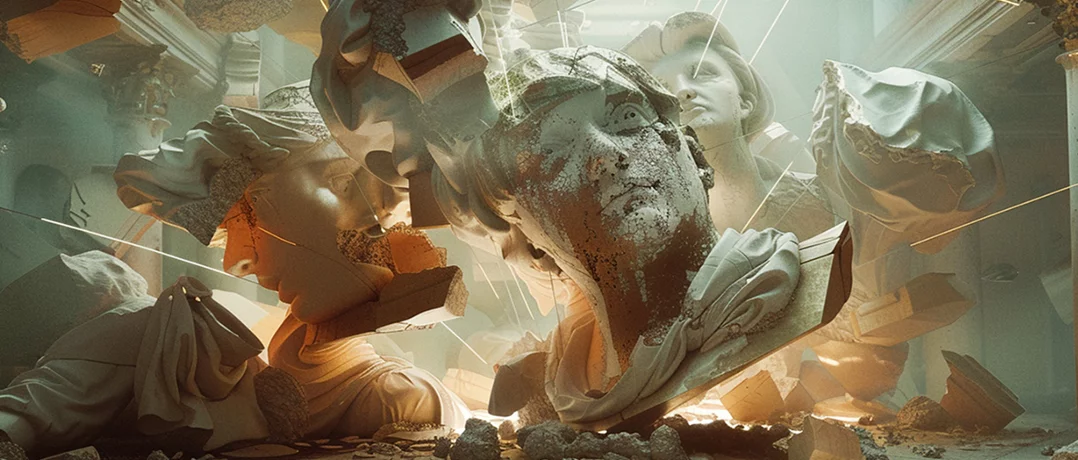
The relationship between art and politics has been one of the defining features of human civilization. Far from existing in separate spheres, artistic expression and political life continuously influence one another, shaping public consciousness, cultural identity, and historical memory.
Throughout history, artists have documented political events, criticized injustice, celebrated national achievements, and inspired social transformation. Likewise, governments and political institutions have recognized the power of art to influence public opinion, strengthen legitimacy, promote ideologies, and shape collective values.
From here, as Lebanon has opened its doors for the 3rd edition of Beirut Art Days organized by Agenda Culture from 24-27 June, understanding the intersection of art and politics is essential for appreciating how culture both reflects and shapes political realities.
Historical evolution of art and politics
The connection between art and politics is as old as civilization itself. In ancient societies, rulers relied heavily on artistic production to reinforce their authority and legitimize their rule. The monumental pyramids of ancient Egypt, for example, symbolized both political power and divine kingship, while Roman triumphal arches commemorated military victories and projected imperial strength. Art thus became a visual language of political legitimacy.
During the medieval period, artistic production was largely controlled by religious and political authorities. Churches, cathedrals, illuminated manuscripts, and religious paintings communicated both spiritual teachings and political authority. Artistic expression was frequently subject to censorship, as institutions sought to preserve ideological conformity and suppress dissenting views.
The Renaissance marked a significant transformation in the relationship between art and politics. Although artists continued to rely on wealthy patrons and political elites, they increasingly asserted their intellectual independence. Prominent figures such as Leonardo da Vinci and Michelangelo incorporated subtle political symbolism into their works while advancing the ideals of humanism. Art became a medium not only for celebrating rulers but also for exploring the complexities of power, morality, and human nature.
During the 18th and 19th centuries, political upheavals further strengthened the connection between art and public life. Francisco Goya’s paintings exposed the brutality of war and criticized political oppression, while revolutionary France witnessed an explosion of political posters, pamphlets, and caricatures that mobilized citizens around the principles of liberty, equality, and fraternity. Art increasingly became a means of political participation rather than merely political representation.
The 20th century witnessed both the liberating and oppressive capacities of political art. Pablo Picasso’s Guernica remains one of history’s most powerful anti-war paintings, illustrating the devastating consequences of armed conflict. At the same time, authoritarian regimes such as Nazi Germany and Stalinist Russia tightly controlled artistic production, transforming art into an instrument of state propaganda while suppressing independent creativity.
Art as a political instrument
Art performs numerous political functions that extend far beyond visual beauty or entertainment.
One of its most prominent roles is political commentary. Artists often respond to social injustice, corruption, discrimination, environmental degradation, and armed conflict by creating works that encourage public reflection and debate. Through symbolism, satire, and emotional storytelling, art allows complex political issues to become accessible to broader audiences.
Art also serves as an instrument of propaganda and persuasion. Throughout history, governments have commissioned monuments, public buildings, portraits, films, and posters to promote national unity, reinforce official narratives, and cultivate political loyalty. While such works may possess artistic merit, they often function simultaneously as tools of political communication.
Equally important is art’s role in resistance and protest. Protest songs, street murals, graffiti, independent films, and political theatre have frequently challenged authoritarian rule and amplified marginalized voices. Artistic expression provides individuals and communities with a peaceful yet powerful means of opposing injustice, particularly when conventional political participation is restricted.
Furthermore, art acts as a historical archive. Paintings, photographs, literature, documentaries, and memorials preserve the memory of revolutions, wars, humanitarian crises, and social movements. These artistic records enable future generations to understand historical experiences not only through factual documentation but also through emotional and cultural interpretation.
Contemporary dimensions
The relationship between art and politics has become increasingly complex in the digital age. Social media platforms, digital illustration, virtual exhibitions, documentary filmmaking, and online performance art enable artists to reach global audiences almost instantly. Political movements increasingly rely on visual communication, graphic design, photography, and short-form videos to mobilize supporters and shape public narratives.
Street art has similarly emerged as a significant form of contemporary political expression. Murals and public installations transform urban spaces into platforms for civic dialogue, often addressing issues such as racial justice, economic inequality, migration, climate change, and democratic participation. Unlike traditional gallery exhibitions, public art directly engages diverse communities and encourages spontaneous interaction.
Globalization has also expanded artistic collaboration across borders, allowing artists to address shared challenges such as environmental sustainability, armed conflict, human rights, and cultural preservation. As a result, political art today frequently transcends national boundaries and contributes to international conversations about justice and collective responsibility.
Challenges and ethical considerations
Despite its transformative potential, the intersection of art and politics presents significant challenges. Censorship remains widespread in many parts of the world, limiting artistic freedom through legal restrictions, political intimidation, or economic pressure. Artists may face imprisonment, exile, or professional exclusion for expressing controversial views.
Another challenge involves balancing artistic independence with political engagement. While many artists seek to promote social change, excessive political instrumentalization may compromise artistic creativity or reduce complex works to ideological messaging. Maintaining artistic integrity while engaging with political issues requires careful judgment.
Finally, art’s inherently subjective nature means that political messages are often interpreted differently by various audiences. The same artwork may inspire solidarity among some viewers while provoking controversy or misunderstanding among others. This interpretive diversity reflects both the strength and complexity of art as a medium of political communication.
To conclude, the intersection of art and politics demonstrates that creative expression is never isolated from the societies in which it emerges. Ultimately, the enduring relationship between art and politics reminds us that creativity possesses not only the ability to represent society but also the power to reshape it, making art an indispensable force in the pursuit of justice, democracy, and cultural progress.
-
-

-
The Beiruter
-
