



How prolonged war, instability, and weak state institutions in Lebanon transformed fear into a permanent social and political condition shaping collective behavior, public discourse, and daily life.
When fear becomes a political system

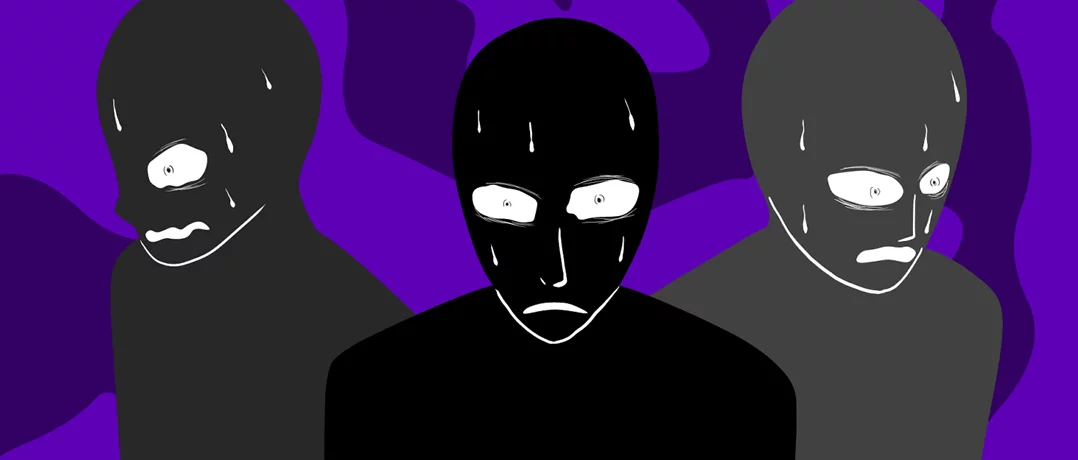
Not all forms of control are openly political, and not all power relies on direct repression. In societies shaped by war, collapse, and prolonged crisis, more complex systems of influence emerge, ones built not only on force, but on managing collective emotions, especially fear, anxiety, and uncertainty.
In these environments, fear gradually stops being a temporary reaction to specific events and becomes a permanent atmosphere surrounding daily life: fear of war, collapse, displacement, chaos, the “worse alternative,” and a future that always feels close to falling apart. Over time, society becomes more willing to cling to any force that promises protection or stability, even if that stability is fragile, costly, or dependent on maintaining fear itself.
This is where one of the most complicated political dynamics begins: fear transforms from a natural human response into an unspoken tool of social organization. A psychologically exhausted population does not always search for truth as much as it searches for reassurance. And societies that spend years under pressure gradually lose part of their critical thinking capacity, because psychological survival itself becomes the priority.
That is why some mobilizing political narratives succeed in exhausted societies, not necessarily because they offer real solutions, but because they provide simple explanations, permanent enemies, and temporary emotional cohesion in the middle of chaos. Political psychology describes this as the appeal of “existential protection narratives,” where collective perception is reorganized around a single idea: danger is permanent, and survival depends on remaining loyal to the force presenting itself as the protector.
The most dangerous outcome is not simply the spread of fear, but the transformation of fear into a complete political identity. When people are raised to believe that anxiety is normal and stability is either impossible or naive, society slowly loses the ability to even imagine a stable life. Fear stops being a consequence of crisis and becomes a permanent mental structure constantly reproducing itself.
Some political systems therefore become psychologically dependent on keeping danger alive. Their legitimacy depends on the idea of continuous protection, which means any attempt to question, rebalance, or imagine a different future becomes threatening, not necessarily because it endangers the nation, but because it challenges the logic of permanent mobilization that sustains their influence.
This is how words such as “betrayal,” “surrender,” “conspiracy,” or “existential threat” evolve from political language into psychological tools shaping collective behavior. Such rhetoric does more than express political positions; it restructures how society experiences safety and fear, tying emotional stability to the uninterrupted continuation of a specific political path.
But societies cannot remain indefinitely in a state of psychological mobilization without paying a heavy internal price. Collective exhaustion eventually produces declining trust, rising emigration, weakened economic life, shrinking ability to plan for the future, and citizens increasingly focused only on daily survival. Ironically, societies constantly warned about “collapse” may slowly experience another form of collapse altogether: destroyed villages, displaced families, exhausted economies, and generations abandoning the country in search of normalcy elsewhere.
The article argues that real national defense cannot be separated from defending the people living on that land. No society can permanently treat fear, displacement, and instability as the “normal condition of resilience.” Healthy societies are not built on adapting to endless pain, nor on transforming loss into a permanent psychological state.
At the same time, the problem is not only political rhetoric itself, but also the vacuum allowing it to expand. When the state fails to provide security, justice, sovereignty, and institutional trust, parallel structures naturally emerge to fill the psychological and social void. Citizens stop viewing the state as the primary source of protection and begin searching for security elsewhere.
In that environment, fear becomes more than a consequence of crisis; it becomes part of how the vacuum itself is managed. The weaker the state becomes, the more society depends on sectarian, ideological, or security-based structures, and the more this dependence grows, the harder it becomes for the state to reclaim its natural role.
Ultimately, the article concludes that the most dangerous form of control is not simply silencing people, but making them afraid to think outside the dominant narrative itself. When every choice is reduced to “loyalty or betrayal,” “continuation or surrender,” politics loses its natural meaning and society turns into a space governed primarily by collective anxiety.
A nation does not become a nation only because people are willing to die for it, but because they are able to live in it with dignity, stability, and safety. Real strength is measured not only by the ability to endure confrontation, but also by the ability to return people to life, rather than keeping them permanently on the edge of survival.
