

More than a festival, Hammana's Cherry Festival is a yearly homecoming where agriculture, heritage, and community come together around a harvest that has shaped the village for generations.
When Hammana turns cherry red

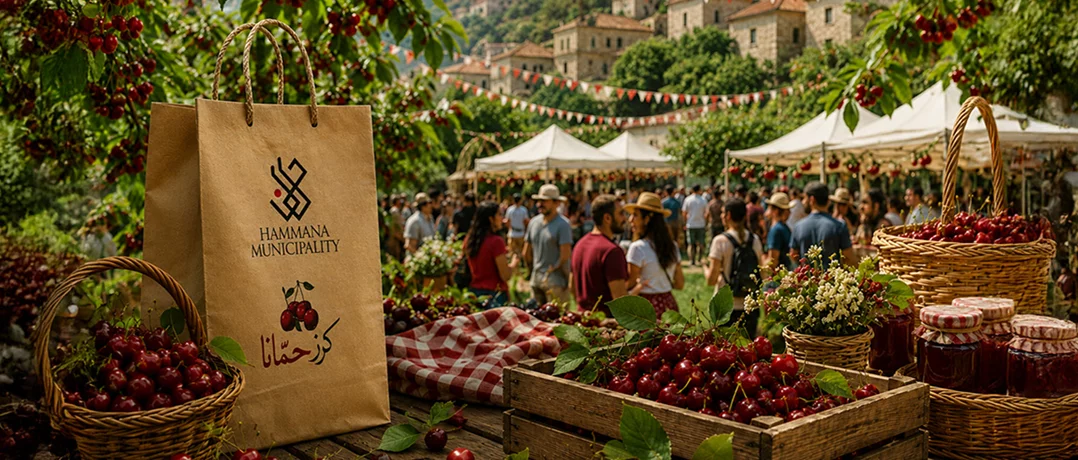
As summer returns to Lebanon's mountains, the village of Hammana is preparing for one of its most cherished traditions: the annual Cherry Festival. What began decades ago as a celebration of a local harvest has evolved into a cultural landmark that draws thousands of visitors each year, bringing together farmers, families, tourists, and members of the Lebanese diaspora.
This year's festival will take place on Sunday, June 21, from 10:00 a.m. to 7:00 p.m., transforming the village into a vibrant showcase of local agriculture, traditional cuisine, music, and community life.
Yet behind the festivities lies a deeper story, one about a village that has built part of its identity around a fruit, and a community determined to preserve its traditions despite uncertainty and change.
From harvest to festival
Cherries have been at the heart of Hammana's identity for generations. What began in the 1960s as a celebration of the annual harvest gradually evolved into one of Lebanon's most recognizable local festivals. Over the years, the event expanded beyond its agricultural roots, incorporating traditional cuisine, artisanal products, cultural performances, and community activities that showcase the village's heritage.
Today, the Cherry Festival is far more than a harvest celebration. It serves as a platform to promote local tourism, support small businesses and farmers, and preserve traditions that have shaped Hammana's character for decades. More broadly, it has become a celebration of Lebanon's agricultural heritage and a living showcase of rural life, where farmers, families, and visitors gather around a harvest that has shaped the village for generations.
Supporting farmers at the heart of the season
While visitors often associate the festival with food and entertainment, organizers insist that local farmers remain at its center.
"The festival is a celebration for people and families, but it is also about supporting our farmers," says Laura El Biry, Coordinator of the Local Development Office at Hammana Municipality.
"The cherry season is very short. We try as much as possible to help farmers sell their production and benefit from the attention that the festival brings."
This year's event will feature around fifteen producers and vendors selling fresh cherries and cherry-based products directly to visitors. Several orchard owners have also opened their gardens to the public, allowing guests to pick cherries themselves from 10:00 a.m. until approximately 3:00 p.m., or until the fruit runs out.
According to El Biry, some farmers participate by selling their harvest, while others contribute by making their orchards accessible to visitors.
We want the farmer to benefit, whether through direct sales or through visitors experiencing cherry picking in our beautiful gardens.
For a crop whose peak season lasts only a few weeks, the festival offers an important opportunity to reach thousands of consumers in a single day.
A village-wide celebration
The festival will officially open at 12:30 p.m. under the patronage of Lebanese Minister of Agriculture Nizar Hani.
Throughout the day, visitors can enjoy a parade, musical performances, children's shows, inflatable attractions, sports activities, and entertainment for all ages.
The municipal garden will host a dedicated food area where women from the village will prepare homemade dishes using traditional family recipes. Nearby food courts and local vendors will showcase an extensive range of cherry-inspired creations.
From juices and jams to compotes, desserts, pizzas, burgers, and even kebbeh dishes incorporating cherries, nearly every corner of the festival will celebrate the fruit that has become synonymous with Hammana.
Meanwhile, the village's old souk, restaurants, cafés, and historic streets will become part of the festival experience, encouraging visitors to explore the wider community beyond the event grounds.
Choosing celebration despite uncertainty
Unlike last year, the 2026 edition will take place over a single day rather than two.
The decision was made amid uncertainty surrounding the broader situation in Lebanon. Yet municipal officials were determined not to cancel the event.
"Last year we organized two days of activities, but this year we weren't sure how the situation would evolve," says El Biry.
Cancelling was never an option.
Last year's festival attracted around 30,000 visitors, if not more, over two days. While this year's edition has been condensed into a single day, the municipality still expects at least 10,000 visitors from across Lebanon's various regions.
The festival was prepared in less than a month.
"We refused to give up on the joy of our people and their happiness," El Biry explains. "The festival is important not only for visitors, but also for our local businesses, restaurants, farmers, and especially for the young people who choose to stay in the village and build their future here."
For organizers, maintaining the festival has become a statement of resilience as much as a cultural tradition, demonstrating Hammana's determination to keep celebrating despite the challenges facing the country.
Coming home for cherry season
The festival's significance extends far beyond Hammana's residents.
Every year, members of the village's diaspora return from around the world to reconnect with family, friends, and the place they still call home.
Among them is Mireille Nassif, a Hammana native who now lives in the Netherlands.
Like many expatriates, Nassif spends much of the year abroad but makes a point of returning to Lebanon every summer.
"I miss my hometown," she says.
I can't imagine spending a full year abroad without coming back to Hammana.
This year, however, she hesitated before making travel plans.
"The situation wasn't very clear, and I wasn't sure whether I would come," she recalls.
Yet one tradition ultimately helped make her decision.
"When I started thinking about booking my ticket, one of the first things that came to mind was the Cherry Festival. I knew I didn't want to miss it."
Rather than purchasing her flight immediately, Nassif waited for the municipality to announce the festival date.
"I actually waited for the date before booking," she says. "Once it was confirmed, I bought my ticket."
For her, the event represents more than a day of festivities.
"It's a moment when everyone comes together. You see people returning from different countries, families reuniting, old friendships coming back to life. It reminds you of what makes Hammana special."
Her experience reflects a broader phenomenon. While the festival supports tourism and agriculture, it also serves as a powerful connection between the village and its global community, drawing generations of Hammana natives back home year after year.
Where memories ripen
Thousands of visitors are expected to pass through Hammana this weekend. Some will come for the cherries, others for the food, music, or mountain scenery.
But beneath the celebrations lies something more enduring.
The Cherry Festival has become a meeting point between residents and expatriates, agriculture and tourism, tradition and community. It supports local farmers, showcases local businesses, and reinforces the village's identity. More than that, it stands as a celebration of Lebanon's agricultural heritage and a living showcase of rural life, where farmers, families, and visitors come together around a harvest that has shaped Hammana for generations.
Surrounded by pine forests, orchards, waterfalls, and the famed Lamartine Valley, Hammana has attracted visitors for generations. Its historic stone houses, red-tiled rooftops, churches, and traditional souk have helped preserve the authentic character that continues to draw visitors from Lebanon and abroad.
For one day each summer, the village's streets and orchards revolve around a simple fruit. Yet the festival's true significance lies not in the cherries themselves, but in the people who return year after year to celebrate the place they call home.
-
-

-
Michella RizkContent Manager/WriterFocusing on social affairs.
-
