



MTV’s Let’s Dabke finale transformed dance into a powerful expression of national unity, bringing together teams from across Lebanon in a celebration of heritage, identity, and shared cultural memory.
When Lebanon danced together

“A nation is a land, a people, and a culture. It is its people who guard the land and the culture.”
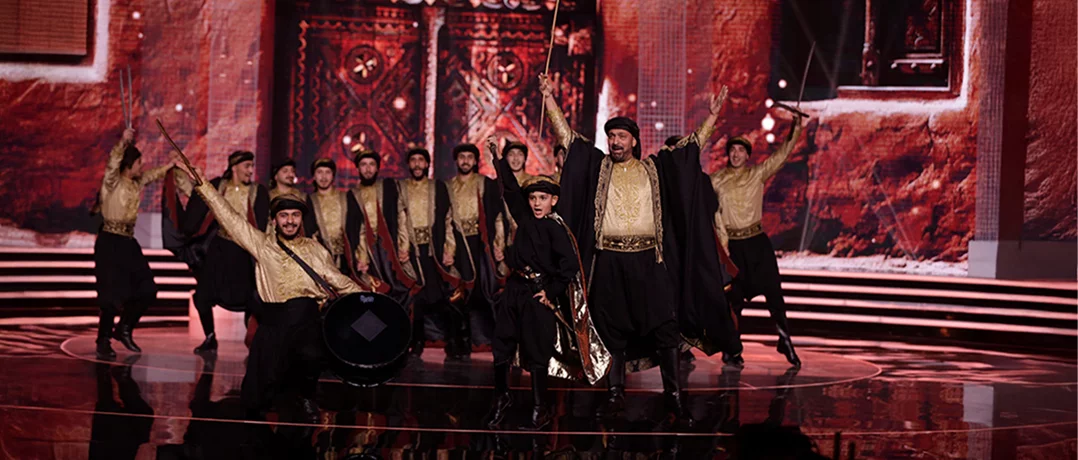
Last night, MTV’s “Let’s Dabke” finale offered a vivid illustration of that sentiment. The event unfolded as a rhythmic celebration of tradition and national pride. In a country often defined by division and political bickering, people came together, sitting shoulder to shoulder in the audience, and millions more gathered around screens at home.
Dabke is a political and cultural message in itself. Linked hands form a chain that refuses to break, a quiet but powerful image of solidarity and coexistence. The stomping of the dance carries another, a proud declaration of presence, of pride, of belonging to this land. Through Dabke, Lebanon danced as one, depicting a deep sense of social cohesion, pride in heritage, and building a feeling of belonging that transcends geography, age, and ideology.
Production that enchants the eyes and the heart
Breaking new ground in the media landscape, MTV created an original format that was as entertaining as it was a cultural and political, managing to unify a diverse audience under a single vision. Let’s Dabke, a pioneer entertainment show brought Lebanon’s culture, artistry, and innovation onto the global stage while remaining deeply rooted in local tradition. The finale showcased Lebanon itself, a country capable of marrying heritage with modernity, simplicity with grandeur, and emotion with precision.
“Let’s Dabke” was a masterclass in production, a celebration of creativity, innovation, and Lebanese talent. From the state-of-the-art stage to the sweeping screens and carefully designed CGs, every visual element elevated the performances, turning the auditorium into a living, breathing canvas. The lighting, choreography, and set design moved not only the heart but enchanted the eyes, creating a spectacle that could stand alongside international entertainment standards.
Folklore, music, and the weight of presence
The “Let’s Dabke” finale united Lebanon with MTV broadcasting live from the four competing cities and culminating in a collective performance symbolizing national unity. Guest Assi El Hallani bridged generations with songs rooted in Lebanese tradition, while judges, including dabke pioneer Omar Caracalla, celebrated both skill and spirit. The presence of the Ministers of Culture and Information highlighted the event’s national significance, and the public vote crowned Team Barja of Chouf, a young troupe embodying the vitality and continuity of Lebanon’s cultural heritage.
Television as a national stage
Beyond the grandeur and the dance, the finale was a reminder that television is far from obsolete. Families across Lebanon, from toddlers to grandparents, sat together, watching, laughing, cheering, and learning. This was the first family program in years that truly spanned generations, shaping a new cultural dialogue and reviving a sense of community.
Through “Let’s Dabke”, MTV led the Dabke community as cultural ambassadors, it honored Lebanon’s heritage, celebrated its people, and broadcasted a message of unity during a time when such moments are rare. Television proved it can still be the stage on which national pride, social cohesion, and shared joy unfold, a medium that brings a country together, step by step, hand in hand.
-
-

-
The Beiruter
-
