Women's rights advocates in Lebanon argue that so-called "honour killings" are not crimes of honour but the deadliest form of domestic and gender-based violence, rooted in coercive control, abuse and inequality.


Women's rights advocates in Lebanon argue that so-called "honour killings" are not crimes of honour but the deadliest form of domestic and gender-based violence, rooted in coercive control, abuse and inequality.

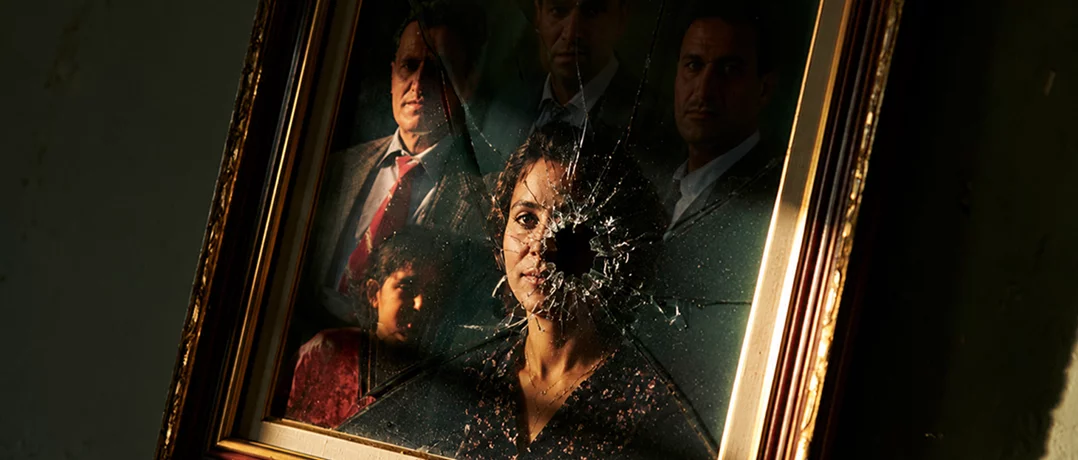
For decades, the term "honour killing" has been used to describe murders committed against women under the pretext of protecting a family's reputation. The phrase itself, however, has increasingly come under scrutiny. Women's rights organizations argue that these are not crimes motivated by honour at all, but rather the most extreme manifestation of domestic violence, coercive control, and gender inequality.
In Lebanon, while legal reforms have removed provisions that once allowed reduced sentences for so-called honour crimes, advocates say the mindset behind them has not disappeared. Instead, the justification has simply evolved, with perpetrators often framing the killing around allegations of infidelity, disobedience, or damaged family reputation.
According to Celine El Kik, Social Worker and Coordinator of KAFA's Support Center, many of the cases commonly described as honour killings are, in reality, domestic violence cases that escalate into murder. Through her work, El Kik supports women and children experiencing violence by providing psychological, social, and legal assistance while helping develop protection plans for survivors at high risk.
For El Kik, the issue extends far beyond allegations of infidelity. What often precedes these killings is a long history of control, intimidation, and abuse. "When an abuser feels he has lost control over his partner, that's often when the danger escalates," she explained.
If a woman leaves the relationship, files for divorce, or refuses to submit to his demands, some perpetrators view violence as a way to regain that control. Afterwards, the crime is frequently justified under the guise of "honour." Rather than being isolated incidents, these murders are often the final stage of prolonged domestic violence. Through KAFA's work, El Kik says many women seeking help are already considered high-risk cases. Some report having guns pointed at them, while others describe being followed, threatened, or secretly monitored through GPS devices placed in their cars.
For these women, leaving an abusive relationship is often only the beginning of the danger rather than its end. To address these risks, KAFA develops individualized safety plans and provides ongoing psychological, social, and legal support to survivors.
While many cases of domestic violence never receive widespread attention, some have become turning points in Lebanon's public conversation about violence against women. For Celine El Kik, these cases demonstrate how the label of "honour" is often used to justify acts that are fundamentally rooted in abuse and control. One of the most well-known cases is that of Manal Al-Asi, a young mother who was killed by her husband in 2014 after years of documented domestic violence. According to El Kik, the defence argued during the trial that Al-Asi had been involved with another man, attempting to present this allegation as an explanation for the murder.
She stresses that this pattern is common, with claims of infidelity frequently emerging after a woman is killed, regardless of whether there is any evidence to support them. The allegation itself often becomes part of the perpetrator's defence rather than a reflection of reality. For women's rights advocates, the case became symbolic not only because of the brutality of the crime but because it highlighted how victims of prolonged domestic violence can ultimately lose their lives despite years of abuse. El Kik argues that these cases should never be viewed through the lens of "honour," but rather as the final and most extreme outcome of unchecked violence against women.
Another case that drew national attention was that of Roula Yaacoub, a mother from northern Lebanon who died in 2013 after suffering severe physical abuse. Her death sparked public outrage and renewed demands for stronger legal protections for women experiencing domestic violence. KAFA closely followed the case, which ended with Roula's husband being convicted of her murder.
According to El Kik, both cases illustrate the same underlying pattern. The violence did not begin on the day the women were killed. Instead, it was the culmination of repeated abuse, intimidation, and attempts to control their lives.
In many instances, perpetrators later attempt to justify their actions by invoking "honour," shifting public attention toward allegations about the victim's behaviour rather than focusing on the violence itself. "Not every relationship ends happily," El Kik explains. "People can separate, divorce, or choose different paths. Murder is never the answer." She notes that, in many of the cases KAFA has encountered, the claims used to justify the killing ultimately prove to be unfounded, serving only as a narrative to excuse an act of violence rather than explain it.
Contrary to popular belief, Lebanese law today does not contain a legal category called an "honour crime." El Kik explained that while courts in the past sometimes applied mitigating circumstances in cases where perpetrators claimed they acted to defend their family's honour, there is no longer any legal provision recognizing honour killings as a separate category or granting reduced punishment on that basis.
Today, such cases are prosecuted under the general provisions governing homicide. She also pointed to one of Lebanon's most significant legal developments in protecting survivors of domestic violence: Law No. 293 of 2014, which allows women facing abuse to obtain emergency protection orders. Judges can issue these orders within 48 hours, enabling survivors to remain in the family home while requiring the abuser to leave and covering immediate medical and financial needs resulting from the violence.
KAFA continues to advocate for the adoption of a comprehensive law addressing all forms of violence, focusing not only on intervention but also on prevention and long-term protection for survivors.
Lebanon's economic collapse and ongoing security challenges have further intensified domestic violence. According to El Kik, while these crises do not create abusive behaviour, they have increased its severity. Women are experiencing more extreme forms of physical violence, resulting in serious injuries and placing more survivors at immediate risk. For organizations like KAFA, this means responding to a growing number of women whose lives may be in imminent danger.
The phrase "honour killing" remains widely used, but El Kik believes it can be misleading. Framing these murders around honour risks legitimizing them or suggesting they are culturally understandable. Instead, she argues they should be recognised for what they are: acts of gender-based violence rooted in power, coercion, and control. As Lebanon continues to strengthen legal protections for survivors, advocates stress that legislation alone is not enough.
Preventing these crimes also requires challenging the social attitudes that continue to excuse violence against women, because behind every so-called honour killing lies not a question of honour, but a woman whose right to live was taken away.
