White phosphorus use in Lebanon poses severe long-term risks to human health, agriculture, and the environment.


White phosphorus use in Lebanon poses severe long-term risks to human health, agriculture, and the environment.

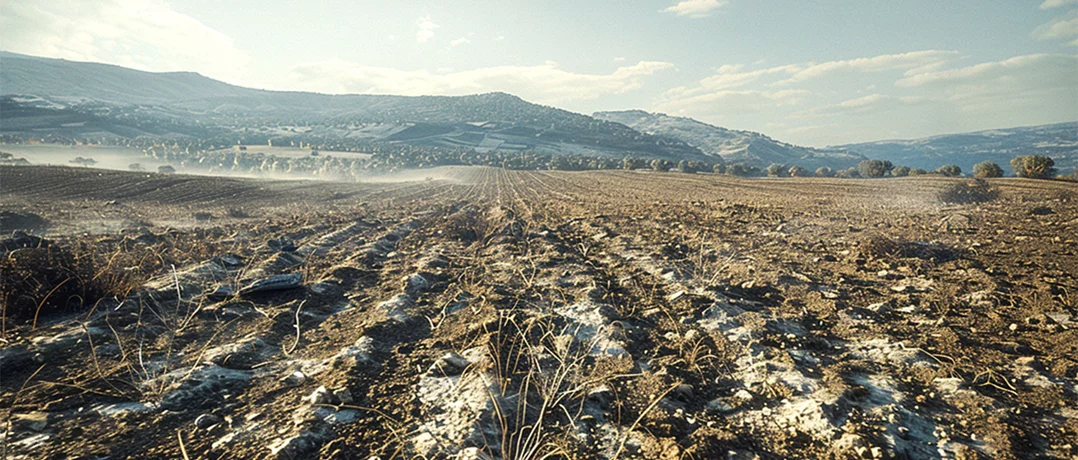
White phosphorus (WP), chemically known as P₄, has re-emerged in the current war in Lebanon as a weapon with devastating and lasting consequences. Since October 2023, Israeli military operations have involved the use of WP across multiple areas in southern Lebanon, raising urgent scientific, humanitarian, and legal concerns. According to Human Rights Watch and Lebanon’s Ministry of Public Health, Israeli forces have used white phosphorus munitions across at least 17 municipalities in southern Lebanon since October 2023, causing documented injuries to at least 173 civilians, displacing more than 92,600 residents and scorching over 600 hectares of agricultural land.
An independent open-source intelligence researcher at Delft University of Technology mapped 248 Israeli white phosphorus strikes across southern Lebanon, finding that 39 percent struck civilian areas. Israel has denied most allegations, maintaining that it uses only legal weapons in accordance with international law, and has not ratified Protocol III of the Convention on Conventional Weapons, the primary international instrument governing the use of incendiary munitions.
Mireille Tayeh Sfeir, chemistry expert tells The Beiruter, “White phosphorus is P₄ a tetrameric allotrope that does not occur naturally. It is extracted from phosphate-rich minerals through industrial thermal treatment processes. The resulting substance is yellow-white, waxy in texture, and exceptionally reactive. It ignites spontaneously upon contact with atmospheric oxygen and sustains combustion for as long as oxygen remains accessible.”
Upon exposure to air, P₄ undergoes spontaneous, self-sustaining combustion reaching approximately 1,300°C, hot enough to melt steel. The reaction produces phosphorus pentoxide (P₄O₁₀), which reacts instantly with atmospheric moisture to form dense clouds of phosphoric acid aerosol. This smoke is the tactical product; the fire is the collateral. Because the reaction is oxygen-driven, particles embedded in soil, clothing, or tissue continue to burn until oxygen is excluded, or until they burn through.
Sfeir explains, “White phosphorus is highly toxic to all biological systems: humans, animals, and the broader environment. Direct dermal contact initiates a burning process that penetrates progressively through cutaneous and subcutaneous tissues and can ultimately reach bone. Systemic absorption leads to prolonged damage affecting the liver, kidneys, cardiovascular system, and respiratory tract. Victims experience severe respiratory irritation. Recovery is difficult, and in cases of significant poisoning, multi-organ failure and death are well-documented outcomes.
Clinically, WP poisoning follows a deceptive three-stage progression: initial burns and gastrointestinal distress; a false recovery window; then fulminant hepatic necrosis, cardiac arrhythmia, and hemorrhagic failure, with case fatality rates approaching 30% in severe exposures. At the cellular level, phosphorus disrupts mitochondrial oxidative phosphorylation, generating reactive oxygen species that destroy organ tissue from within.
When white phosphorus particles land on soil and are not fully combusted, either because they land in wet conditions, become buried, or are smothered by debris, they can persist in a largely unreacted state for months or years.
Sfeir elaborates, “White phosphorus contaminates lakes, rivers, and soil with high efficiency. It affects plant growth and can infiltrate water sources. In water environments, dissolved or suspended phosphorus compounds can produce phosphine gas (PH₃) under anoxic conditions, an extremely toxic gas with neurotoxic and pulmonary effects, and lead to outcomes that may be fatal for both wildlife and human consumers of contaminated water.”
Lebanon's southern region hosts some of the world's oldest cultivated olive trees (Olea europaea), some estimated to be over 1,000 years old. Olive cultivation is not merely an agricultural activity; it is a cultural, economic, and ecological cornerstone of rural southern Lebanese society, with the sector employing hundreds of thousands and generating significant export revenue.
Sfeir elaborates, “WP particles that land without fully combusting persist in anoxic soils for months to years, slowly leaching oxidation products that disrupt soil chemistry, alter microbial communities, and render crops unsafe for consumption or export certification.”
The damage caused by white phosphorus does not end when the shelling stops. A post-conflict assessment by the Food and Agriculture Organization (FAO) following the 2006 war found that contaminated agricultural soil required between three to seven years of active rehabilitation under optimal conditions. In less stable environments, recovery timelines can stretch even further, delaying the return of farming livelihoods and local food production.
The financial burden is equally staggering. According to United Nations Environment Programme (UNEP) remediation frameworks, the cost of decontaminating affected land ranges from $50,000 to over $200,000 per hectare. Applied to the scale of agricultural land impacted in southern Lebanon, these figures translate into national-level costs running into the billions, an economic weight that far exceeds the country’s current capacity to respond.
The use of white phosphorus is not comprehensively prohibited under international law. It is addressed in Protocol III of the Convention on Certain Conventional Weapons (CCW), which restricts its use as an incendiary weapon in areas with civilian concentrations. However, WP used in smoke or illumination roles may be argued to fall outside these restrictions, creating legal ambiguity that military users have historically exploited.
Human Rights Watch documented incidents of white phosphorus (WP) use over populated areas of southern Lebanon and the Bekaa Valley in October 2023, reporting deployment of 155mm artillery-delivered WP shells and aerial dispersal munitions over residential areas. Amnesty International issued similar findings, confirming that WP is being emitted in the current conflict, raising renewed humanitarian and environmental concerns. Both organizations called for an independent investigation under international humanitarian law. The Israeli military acknowledged using WP for smoke and obscuration purposes while disputing that it violated applicable legal frameworks.
White phosphorus does not respect ceasefires. Its chemistry continues working, in soil, in water, in the bodies of people and animals, long after the smoke clears. In Lebanon, what burned is not only land. It is an agricultural future, a water supply, an ecosystem shaped over millennia. Science does not merely observe this destruction. It is now tasked with measuring, understanding, and where possible, undoing it.

