



As ports become more automated, dependence on foreign software and technology is creating new vulnerabilities in global trade and raising questions about control over critical infrastructure.
Who controls the software that moves the world's goods?
Who controls the software that moves the world's goods?
By The Beiruter | November 12, 2026

Reading time: 4 min
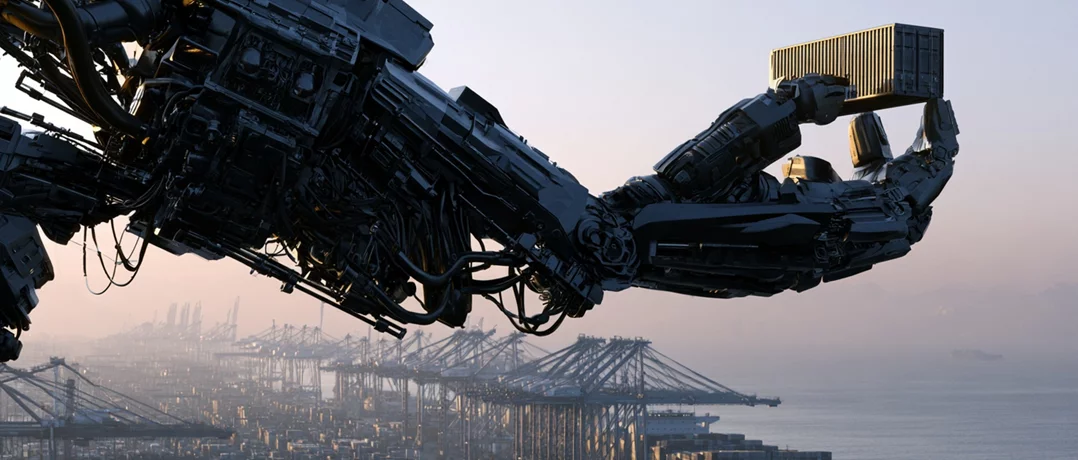
The world's busiest ports are becoming sophisticated digital operations, where software coordinates the movement of containers, cranes, trucks and vessels. Automation promises faster cargo handling and lower costs, but creates dependencies that governments and port operators may struggle to control. More than 80% of international merchandise trade moves by sea, according to the United Nations Conference on Trade and Development (UNCTAD). Yet the technology supporting that commerce is becoming a source of vulnerability. A World Bank assessment found that 61% of surveyed port authorities considered cyber incidents a high risk, while substantial differences in cybersecurity preparedness persisted between wealthier and developing economies. The implications are economic as well as geopolitical. Ports in Europe, Asia, Africa and the Middle East increasingly depend on interconnected foreign technologies, exposing them to cyberattacks, service disruptions and costly proprietary systems. As automation advances, control over global commerce may depend as much on access to software and technical expertise as on ownership of the physical infrastructure through which goods pass. Port automation is transforming an industry traditionally dependent on physical infrastructure and manual coordination. Modern terminal operating systems determine where containers are stored, schedule equipment movements and coordinate transfers between vessels, trucks and railways. Port community systems connect shipping companies, customs authorities, freight forwarders and terminal operators through shared information platforms. These technologies address significant inefficiencies in international commerce. UNCTAD's Review of Maritime Transport 2025 found that average port waiting times between December 2023 and March 2024 reached 10.9 hours in developing economies, compared with 6.4 hours in developed economies. Delays can increase shipping costs, reduce the availability of vessels and complicate supply chains. Major ports have consequently invested in automation through different technological partnerships. Rotterdam uses digital infrastructure to coordinate port operations and support increasingly automated terminals, while Singapore's Tuas Port is being developed around automated guided vehicles, remotely operated cranes and integrated control systems. China's expanding automated terminals and logistics technologies are also intensifying international competition. Yet digital integration can leave essential port operations dependent on foreign contractors operating under different legal jurisdictions. The risks of digital dependence are not merely theoretical. In November 2023, a cyberattack against DP World Australia forced the company to disconnect its Australian corporate network, interrupting landside operations at several major container terminals. Operations resumed after three days, but the disruption left a substantial backlog. According to DP World, approximately 30,137 containers had accumulated before the backlog was cleared on November 20. The company subsequently confirmed that some data had been stolen, although its investigation found no ransomware deployment. The incident demonstrated how a breach of corporate information systems could interfere with physical trade without requiring an attacker to damage cranes, vessels or port facilities. Such vulnerabilities are unevenly distributed. The World Bank's May 2026 Cybersecurity in Ports assessment, drawing on more than 100 port stakeholders, found that nearly 80% of respondents in high-income economies had conducted a cybersecurity risk assessment within the preceding two years, compared with just over 55% in low- and middle-income economies. The disparity was particularly pronounced in workforce preparedness. More than 80% of respondents in wealthier economies reported regular cybersecurity training, against fewer than 50% in lower-income settings. For ports operating with limited budgets, investments in automation may therefore advance faster than the capacity to protect the resulting systems. Cybersecurity requires specialized personnel, continuous monitoring and coordination among multiple operators. The growing importance of maritime software introduces a geopolitical dimension to decisions traditionally governed by commercial considerations. A port authority selecting an automated terminal system must assess not only its cost and performance, but also the supplier's jurisdiction, access to operational data and capacity to provide technical support during a crisis. China's emergence as a supplier of port machinery and automation technologies has attracted particular scrutiny, but the underlying dependencies are global. European, American and Asian companies provide the software, cloud infrastructure, communications networks and industrial equipment used throughout international shipping. Rotterdam illustrates the complexity of these relationships. Its port authority has worked with IBM, Cisco, Esri and Axians on an Internet of Things platform that processes information from sensors across the port, while the Dutch platform Portbase facilitates exchanges among logistics companies and public authorities. Such arrangements can improve efficiency without necessarily surrendering control, provided responsibilities and access rights are clearly defined. For governments, the central concern is less the nationality of any individual supplier than the concentration of operational dependence. Proprietary software can make switching providers expensive, while restricted access to technical documentation or specialized components may complicate maintenance and emergency recovery. These risks become more consequential during diplomatic disputes, trade restrictions or technology sanctions, when otherwise routine commercial relationships may become politically sensitive. International standards, contractual guarantees over data ownership, independent security assessments and the ability to transfer information between competing systems offer ways to reduce exposure without abandoning the economic benefits of automation. Port digitalization ultimately requires balancing efficiency with autonomy. Domestic technological self-sufficiency is unrealistic for most countries, but excessive dependence on foreign providers leaves critical infrastructure vulnerable As maritime commerce becomes more dependent on interconnected technology, the distribution of power will be determined not simply by who owns ports or manufactures cranes, but by who can maintain, secure and operate the systems on which international trade depends.The digitalization of maritime trade
When software failures disrupt commerce
The geopolitics of technological dependence
-
-

-
The Beiruter
-
