Lebanon’s strict drone regulations seek to balance national security with the growing economic and civilian importance of unmanned aerial technology.


Lebanon’s strict drone regulations seek to balance national security with the growing economic and civilian importance of unmanned aerial technology.

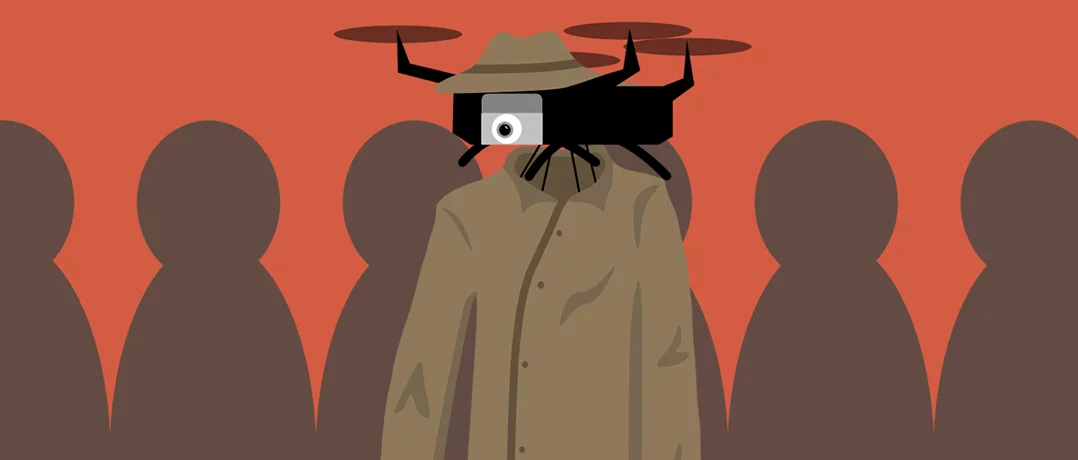
Unmanned aerial vehicles (UAVs), commonly known as “drones,” are no longer merely tools for aerial photography or documenting weddings and special occasions. In recent years, these small aircraft have evolved into one of the defining weapons of modern warfare, becoming capable of competing with conventional fighter aircraft in certain operational roles. As this transformation has unfolded, a pressing question has emerged in Lebanon: how can the use of this technology be regulated in a country facing ongoing security challenges and recurrent conflicts without depriving the media and civilian sectors of its significant benefits?
Drones have firmly established themselves on battlefields, from Ukraine to the Middle East, with small, unmanned aircraft now performing missions that previously required major military equipment and specialized units.
During the war in southern Lebanon, drones became a central element of the fighting. Hezbollah employed relatively low-cost drones against Israeli forces and military positions, including UAVs that proved difficult to neutralize through electronic jamming, prompting Israeli defense manufacturers to develop new interception technologies. At the same time, Israel has incorporated Hezbollah’s drone capabilities into its target bank and has announced carrying out dozens of targeted killings of Hezbollah members using its advanced drone systems.
The applications of drones extend far beyond warfare. They have become indispensable tools in journalism, advertising, tourism, agriculture, engineering, and search-and-rescue operations. However, this dual civilian-military use has prompted governments worldwide to tighten oversight by requiring registration and licensing, prohibiting flights over airports and military or critical infrastructure, and imposing additional restrictions during armed conflicts and security incidents.
This comes at a time when the global drone market is experiencing rapid growth, with an estimated value of approximately $100.74 billion. Consequently, countries such as Saudi Arabia, the United Arab Emirates, the United States, and European Union member states have adopted increasingly stringent licensing and regulatory frameworks. Across the Arab world, security concerns have led to even stricter controls. Iraq stands out as a notable example, after the Iraqi Supreme Judicial Council directed the enforcement of anti-terrorism legislation against individuals involved in the manufacture, use, or possession of unauthorized drones.
In Lebanon, the Lebanese Armed Forces explained to MTV that the regulation of drone operations is not a consequence of the most recent war but is instead based on Cabinet decisions issued since 1991. These decisions entrusted the Army with implementing comprehensive security measures throughout Lebanese territory to preserve security, maintain stability, and safeguard civil peace.
Pursuant to this mandate, current regulations require individuals to obtain prior authorization from the Lebanese Army Command’s Directorate of Guidance before operating drones or conducting aerial photography anywhere within Lebanese territory.
As security challenges have intensified, these regulations have become increasingly restrictive. In February 2025, the Army suspended drone photography permits in Beirut and its surrounding areas for a specified period. Later, on 1 March 2026, as the war expanded, the Army suspended all drone photography permits across Lebanese territory until further notice.
However, on 11 June 2026, the Army announced the issuance of exceptional permits for filming private events and activities, including weddings and cultural and sporting events, provided that applicants specify the time and location in advance. Multiple scheduled events may also be included within a single permit application.
The procedures published on the Army’s official website cover permits related to importing, operating, and manufacturing drones, as well as authorizations for aerial photography. This means regulatory oversight begins the moment a drone enters Lebanon and continues throughout its operational lifespan. The Army also emphasizes that it reserves the right to shoot down and confiscate any remotely piloted aircraft, whether licensed or unlicensed, that flies over or near military barracks or military installations.
At the same time, restrictions on drone use have significant economic and professional implications. Drone technology has become an essential component of the work of photography, production, and advertising companies, as well as wedding planners and event organizers.
Despite the stricter security measures, drone photographer George Douaihy told MTV that professionals in the sector “do not oppose regulating drone operations. On the contrary, they consider it essential for preserving public safety and reducing disorder, particularly under the current security conditions.”
He added that “the presence of Israeli drones operating in certain areas can interfere with civilian drones through signal disruption, potentially causing them to crash. This makes compliance with licensing requirements and coordination with the relevant authorities essential.”
Douaihy urged “all photographers to cooperate with the existing procedures,” arguing that “proper regulation is the only way to ensure the continued use of this technology, rather than banning it.” He also revealed that “the drone photography sector provides a source of income for hundreds of families in Lebanon and suffered severely during the period when permits were suspended because of the war.”
He further noted that “drone filming has become an integral part of private events and media coverage,” explaining that “the cost of providing drone services for a single event ranges between $250 and $500, while the price of drones themselves starts at approximately $1,200 and can exceed $10,000, depending on their specifications.”
Douaihy concluded by stressing that whenever he purchases a new drone, he completes all licensing procedures in accordance with the applicable regulations, reflecting his conviction that “organizing the sector serves the interests of everyone.”
At a time when drones have become an integral component of modern warfare, regulating their use in Lebanon has become an overriding security necessity. The challenge, however, lies in maintaining a delicate balance between protecting national security on one hand and avoiding the suffocation of a sector that has become an important part of the economy and a source of livelihood for thousands of Lebanese citizens on the other.

