

As generative AI companies build multibillion-dollar businesses from systems trained on human-created content, a growing debate is emerging over whether the creators whose work made those systems possible should share in the value they generate.
Who owns creativity in the age of AI?

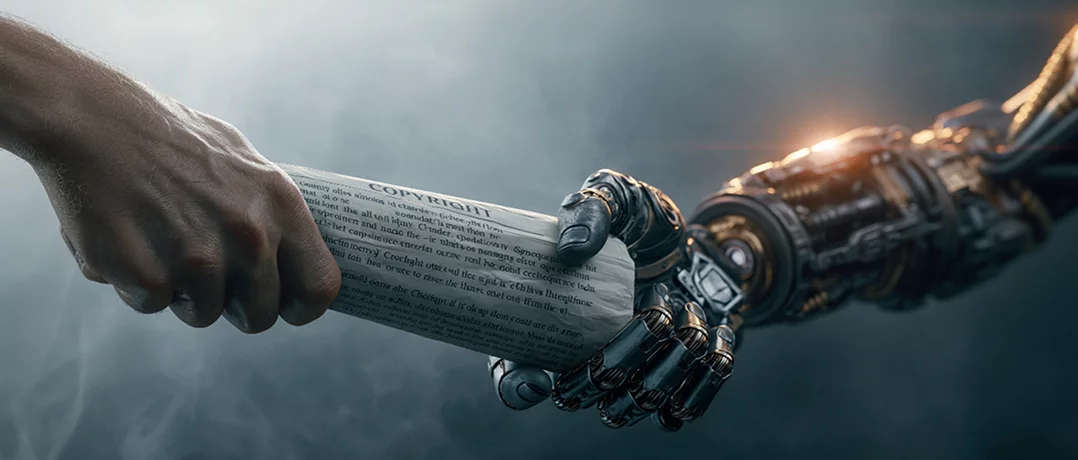
While AI is often portrayed as a technological revolution, its capabilities are built upon decades of human creativity and knowledge. A study commissioned by the International Confederation of Societies of Authors and Composers (CISAC) projected that creators in the music and audiovisual sectors could lose a combined €8.5 billion ($9.3 billion) in annual revenues by 2028, as generative artificial intelligence becomes more deeply integrated into creative industries. The report estimated that music creators could see revenues decline by 24 percent, while audiovisual creators could face losses of 21 percent over the same period.
The projections highlight a paradox at the heart of the artificial intelligence boom. The books, articles, music, films and research used to train today's most advanced models were created by millions of people, yet much of the value generated by those systems is flowing elsewhere. As technology companies race to commercialize more sophisticated systems, policymakers and creators are asking whether the people whose work made those systems possible should share in the value they generate.
The debate now stretches far beyond copyright law. At stake are questions of ownership, artistic freedom and economic power in an era when machines can learn from humanity's collective creative output.
The human foundation of AI
Generative artificial intelligence depends on an enormous reservoir of human knowledge and creativity.
Developers train large language models and image generators on vast datasets containing text, images, audio and video, allowing them to identify patterns and generate new content in response to user prompts. Today, a user can ask an AI system to create a marketing campaign, imitate a particular artistic style, generate a soundtrack for a film, summarize a scientific paper or produce a short video from a few lines of text.
This reliance on human-created content has become one of the central concerns raised by cultural organizations around the world. In its 2025 report Artificial Intelligence and Culture, UNESCO warned that AI development depends on humanity's cultural production and urged policymakers to balance innovation with artistic freedom, cultural diversity and creators' rights.
The issue extends far beyond famous authors and musicians. Journalists, photographers, teachers and ordinary internet users have all contributed to the digital ecosystem from which AI systems draw knowledge. Critics argue the debate is therefore not simply about copyright, but about the relationship between technological progress and the people whose work underpins it.
The growing economic divide
For creators' organizations, the central concern is economic rather than technological.
The CISAC study projected that generative AI services in the music and audiovisual sectors could generate approximately €9 billion ($9.8 billion) in annual revenues by 2028, reflecting the rapid commercialization of tools designed to produce and assist in the creation of content. The report also found that roughly 15 percent of the world's 4.2 billion social media users participate in content creation or monetization activities, creating strong demand for AI tools capable of generating content at scale.
Supporters of stronger protections argue that this creates an imbalance. Companies developing AI models benefit from systems trained on vast libraries of creative works, while the creators who produced them may receive neither compensation nor recognition.
These concerns have become particularly prominent in Europe. In 2025, a broad coalition representing publishers, authors, performers, music companies and collecting societies criticized the European Commission's implementation measures for the EU AI Act, arguing that they fell short of the regulation's stated goal of protecting creators' rights. The coalition contended that the proposed transparency requirements would allow developers of general-purpose AI models to provide broad summaries of training data rather than sufficiently detailed information enabling creators to determine whether their books, articles, music, photographs or other works had been used.
Without meaningful disclosure, the groups argued, rightsholders would struggle to exercise existing copyright protections, negotiate licensing agreements or seek compensation for the use of their content in AI training.
The courts begin to draw the boundaries
While policymakers debate future rules, courts around the world are being asked to resolve disputes that existing laws never anticipated.
One of the most closely watched cases involves The New York Times, which sued OpenAI and Microsoft, alleging that millions of articles were used without authorization to train AI systems. Other cases involve artists who have brought copyright claims against image-generation companies such as Stability AI and Midjourney, while major music companies have filed lawsuits against AI music generators Suno and Udio over the alleged use of copyrighted recordings.
At the heart of these cases lies a common question. Does training an AI model on copyrighted
material constitute infringement, fair use or an entirely new category of activity that copyright laws were never designed to address? The answer could determine how future AI systems are built and whether licensing becomes a standard part of the industry's business model.
Beyond copyright
Not everyone agrees that AI developers should be required to license all training data.
Technology companies and digital rights advocates argue that learning from existing information is a fundamental part of both human and machine intelligence. Organizations such as the Electronic Frontier Foundation contend that overly restrictive rules could hinder innovation, reduce competition and make it more difficult for researchers and smaller companies to develop advanced AI systems.
Legal scholars remain divided. Some argue that training AI models is analogous to reading and learning from publicly available information. Others contend that the scale and commercial nature of modern AI systems distinguishes them from traditional forms of learning and justifies new forms of regulation or compensation.
The question confronting policymakers is not whether artificial intelligence will continue advancing, but whether the economic model underpinning that progress remains sustainable if the creators whose work helped train these systems receive little recognition or reward.
As courts and regulators search for answers, the debate is becoming less about technology and more about ownership. Artificial intelligence may be one of the most powerful tools ever created, but its capabilities rest upon human creativity. The challenge now is determining who benefits from it.
-
-

-
The Beiruter
-
