

Gendered family expectations often make daughters the default caregivers, creating guilt, role overload and conflicts with their careers, relationships and independence.
Why are daughters expected to become caregivers?
Why are daughters expected to become caregivers?
By Lynn El Khalil | August 29, 2026

Reading time: 6 min
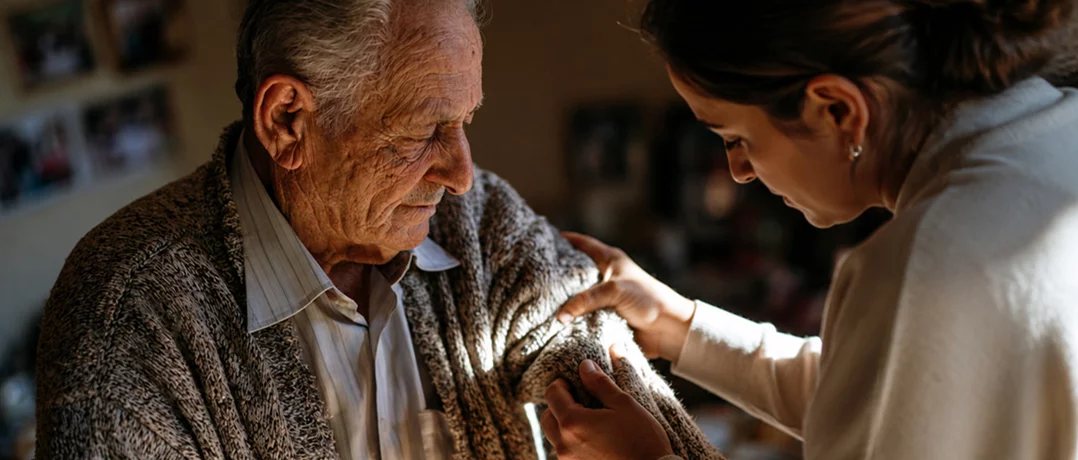
When a parent gets sick, grows older or begins needing support, there is often an unspoken assumption about who will step in: the daughter. She may be expected to accompany parents to appointments, help around the house or simply remain available whenever something goes wrong. Even when there are sons in the family, daughters can find themselves becoming the default caregivers. For Leya, that expectation became clear the first time her mother experienced a health issue. “There was no one to help, so I felt like it was my responsibility to take care of her,” she said but the expectation had existed long before that moment. Growing up, Leya said her parents had always viewed her as “the responsible one,” while her brother was considered less responsible. Because of that, her parents were more likely to rely on her.
Her family had also repeatedly told her that taking care of her parents as they grew older would eventually become her responsibility. “I felt like it would only be my responsibility and not his,” she said. The expectation was particularly noticeable because the same gender divide had not existed in the generation before her. Leya's uncle had been the one who took care of her grandparents. Yet when it came to Leya and her brother, she grew up understanding that the responsibility would fall on her.
Raised to care
According to psychologist and psychotherapist Randa Wehbe, expectations like these are largely connected to gender socialization. “From early childhood, girls are often encouraged to be nurturing, emotionally attentive, patient, and responsible for the well-being of others,” Wehbe said. Boys, meanwhile, may be socialized toward independence, achievement and financial provision rather than emotional caregiving. This socialization can happen through small everyday interactions. Girls may hear statements such as, “You are the girl, you should help your mother,” or “Take care of your brother,” while boys may be given greater freedom from those responsibilities.
Girls are also frequently praised for being “good,” “helpful,” “responsible,” “understanding” or “selfless.” According to Wehbe, these reactions can gradually connect a girl's sense of value to what she provides for others. “If a girl repeatedly receives approval when she accommodates others or suppresses her own needs, she may learn that love and acceptance are associated with being useful and self-sacrificing,” she said. Eventually, caregiving can become more than something a daughter does. It can become part of what she believes being a “good daughter” requires.
Becoming “the responsible one”
Family dynamics can reinforce these expectations further. “Families tend to distribute roles according to what has been culturally established and what appears to ‘work,’” Wehbe explained. If one daughter consistently helps or responds when someone needs her, the family may increasingly rely on her. What starts as a small responsibility can gradually become an assumed role. For Leya, being considered the responsible sibling meant becoming the person her parents automatically relied on. Being seen as capable may initially sound positive, but it can also mean being given more responsibility simply because you have handled it before. Wehbe stressed that this does not mean daughters are inherently more caring. “It is often about what they have been taught to value, what behavior has been reinforced, and what the family and culture expect from them,” she said. The issue is not teaching girls to care. Empathy and compassion are healthy qualities for everyone. The problem begins when caregiving becomes a gendered obligation. “Girls learn that taking care of everyone else is a duty, while taking care of themselves is viewed as selfish,” Wehbe said.
When caregiving shapes the future
For Leya, the expectation already influences how she thinks about her future. “I always think about how this is going to affect my future and whether it’ll get in the way of work,” she said. When her mother is sick, Leya said her father sometimes encourages her not to leave the house so she can stay and look after her. According to Wehbe, being the default caregiver can create chronic role overload. A woman may be expected to maintain a career, relationship and household, potentially raise children of her own, while continuing to support her parents and siblings. “When caregiving becomes excessive, several consequences can emerge: emotional exhaustion, resentment, anxiety, difficulty prioritizing oneself, and a persistent sense of responsibility for other people’s well-being,” Wehbe said. It can also create role conflict, particularly when a woman's ambitions clash with what her family needs from her. A career opportunity, education, moving away or pursuing a relationship can become more complicated when doing so means being less available at home. A daughter may find herself caught between two questions: “What do I want for my life?” and “What does my family need from me?” According to Wehbe, some women may postpone relationships, careers, travel, education or other forms of independence because they feel unable to leave the family system.
The guilt of saying no
For Leya, one of the most significant consequences has been guilt. “It turned into a system of me constantly feeling like I’m selfish or not doing enough if I don’t take care of my parents,” she said. According to Wehbe, guilt is one of the strongest mechanisms maintaining this dynamic. “Many daughters have internalized the belief that saying ‘no’ to family means being selfish, ungrateful, or a bad daughter,” she said. When attempts to establish independence are met with statements such as “Family comes first” or “Who else will do it?”, daughters can begin associating boundaries with guilt. “She starts thinking, ‘If I don’t do this, something will happen, and it will be my fault,’” Wehbe said.
This can create over-responsibility, where someone struggles to distinguish between what she is actually responsible for and what she is simply capable of doing. For daughters who have spent their lives being described as responsible, that distinction can be particularly difficult. Being capable of caring for someone can quietly turn into being expected to do it.
Caring without losing yourself
Caregiving itself is not inherently harmful. Supporting parents can provide connection, meaning and fulfillment, and many daughters genuinely want to care for their families. The psychological risk, Wehbe explained, comes when that care stops being a choice. “The psychological risk comes when caregiving is not a choice, is unequally distributed, and requires the daughter to repeatedly abandon her own needs,” she said. Changing the dynamic does not require daughters to stop caring for their parents. It requires families to question why the responsibility so often becomes attached to daughters and why being considered responsible can mean being expected to sacrifice more. A healthy family, Wehbe said, should allow a daughter to say, “I love you, I care about you, and I cannot do this right now,” without forcing her to prove her love through sacrifice. A daughter can care for her parents while still protecting her career, relationships and independence. Responsibility does not have to mean permanent availability. As Wehbe put it, “We need to stop measuring a daughter’s love by how much of herself she is willing to give up.” “Love and responsibility can coexist with autonomy.”
