

Researcher Wijdan Abdel Rahman explains the political, military, and diplomatic calculations that may have prompted Iran to respond now to Israel’s strikes on the southern suburbs of Beirut.
Why Iran chose to respond now

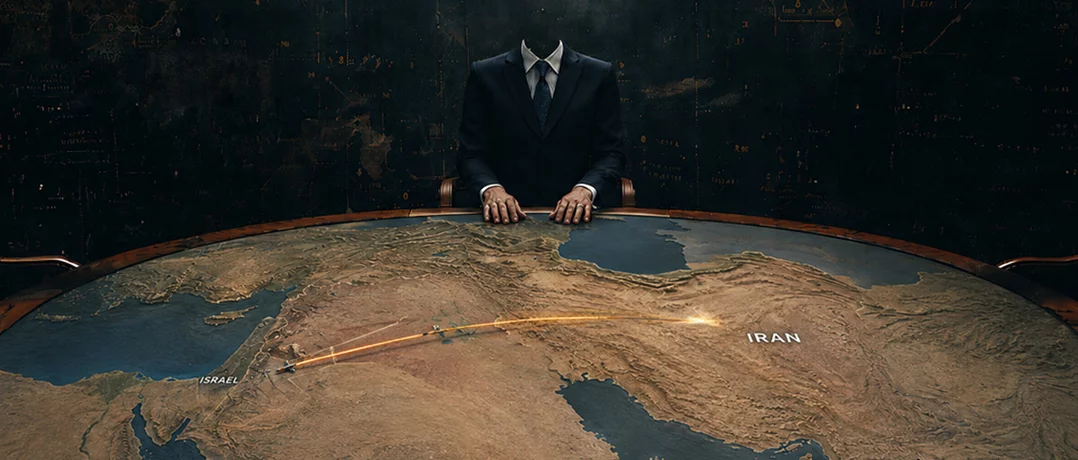
The latest round of Iranian missile strikes against Israel carries underlining purposes and implications that extend far beyond the immediate military battlefield. While officially framed by Tehran as a “defensive” response to ongoing Israeli violations of the ceasefire reached on 26 April 2026, specifically the recent targeting of Beirut’s southern suburbs, the timing suggests that Iran’s reaction is driven primarily by broader geopolitical calculations rather than strictly normative or “moral” considerations.
What makes this escalation particularly significant is that it was not the first time Israel had targeted Beirut or Hezbollah positions since the ceasefire arrangements were established. Israel conducted strikes against Beirut’s southern suburbs on multiple occasions in March and April 2026 without provoking a direct Iranian military response. Yet this time, Tehran chose to intervene publicly and directly.
From here, a vital question arises: was Iran’s response primarily about defending Lebanon, or was it intended to reinforce its political influence in the country and strengthen its negotiating position vis-à-vis the United States (U.S.)?
In an interview with The Beiruter, Wijdan Abdel Rahman, a researcher specializing in Iranian affairs and Middle Eastern issues, argued that the strikes cannot be understood solely through the lens of military retaliation. Rather, they reflect a combination of regional deterrence calculations, internal Iranian power struggles, and ongoing negotiations between Tehran and Washington.
Defending the “Axis of Resistance”
According to Abdel Rahman, one of the primary reasons behind Iran’s decision to respond is the importance Tehran places on its regional network of allies and proxies. Iran had previously warned that it would retaliate if Israel targeted Beirut’s southern suburbs, a stronghold of Hezbollah and a key component of what Tehran refers to as the “Axis of Resistance.”
When Israel carried out strikes against the area, Iran found itself facing a credibility challenge. Having publicly threatened retaliation, failing to respond could have weakened its image among both allies and adversaries. The strikes therefore served as a demonstration that Iran remains committed to defending its regional partners and maintaining deterrence against further Israeli actions.
From this perspective, Abdel Rahman believed that the response was not simply about Lebanon or Hezbollah. It was also about preserving Iran’s reputation as a regional power capable of enforcing its red lines and honoring its commitments to allied groups throughout the Middle East.
Internal Iranian divisions and the role of the IRGC
Abdel Rahman also pointed to internal political dynamics within Iran as a crucial factor behind the escalation. He argued that significant divisions exist between those favoring diplomatic engagement with the U.S. and hardline factions, particularly within the Islamic Revolutionary Guard Corps (IRGC), which remain skeptical of any potential agreement with Washington.
The timing of the strikes coincided with reports of diplomatic contacts involving Pakistani intermediaries carrying messages between regional actors and Tehran. According to Abdel Rahman, indications that Iranian diplomats may have shown flexibility during these discussions likely generated concern among hardliners who fear that excessive compromise could undermine their strategic position.
In this context, military escalation serves an additional purpose, he added. It strengthens the position of hardline factions by creating conditions that make diplomatic breakthroughs more difficult and by reinforcing narratives that highlight resistance over negotiation. In short, Abdel Rahman asserted that
The IRGC needs escalation.
The strikes therefore appear not only as a message to Israel but also as a reflection of ongoing competition between different centers of power within the Iranian political system.
Escalation as a negotiating tool
A central argument advanced by Abdel Rahman is that the escalation may have been intended to improve Iran’s bargaining position vis-à-vis the U.S.
Rather than representing a rejection of diplomacy altogether, he noted that military pressure can sometimes be used to increase leverage at the negotiating table. By demonstrating its capacity to influence regional stability and security, Iran may seek to remind Washington that any future agreement must take Tehran’s strategic interests into account.
Abdel Rahman noted that the IRGC has been among the institutions most directly affected by American sanctions. As a result, the organization has a strong interest in reshaping the strategic environment in ways that increase pressure on all parties involved, including regional states.
Under this interpretation, Abdel Rahman believed that the strikes form part of a broader strategy aimed at improving negotiating conditions while simultaneously preventing Iran from appearing weak during ongoing diplomatic discussions.
Reinforcing Lebanese concerns regarding Iranian interference
The timing of the strikes inevitably led to speculation about a possible connection between Iran’s actions and the recent statements made by President Joseph Aoun and Prime Minister Nawaf Salam regarding Iranian involvement in Lebanon.
However, Abdel Rahman does not believe the operation was designed primarily as a direct message to Lebanon’s leadership. Nevertheless, he argues that the episode inadvertently reinforced the very concerns raised by Lebanese officials.
By launching attacks that risk dragging Lebanon into a wider regional confrontation and by influencing the broader security environment surrounding Lebanese-Israeli negotiations, Iran effectively demonstrated its ability to shape developments within Lebanon. In doing so, Tehran provided further evidence for those who argue that Lebanese affairs remain deeply intertwined with Iranian regional strategy.
For Abdel Rahman, the strikes therefore highlight the extent to which Lebanon continues to be affected by wider geopolitical rivalries that extend far beyond its borders.
Iran’s strike against Israel demonstrates that Iran is indeed intervening in Lebanese affairs and is using the Lebanese issue as a bargaining card, as the President of the Republic indicated.
Therefore, Iran’s latest strikes against Israel appear to have been driven by a combination of strategic, political, and diplomatic considerations. While the operation was presented as retaliation for Israeli actions in Lebanon, the broader context suggests a more complex picture involving the defense of Iran’s regional influence, internal competition between moderates and hardliners, and efforts to strengthen Tehran’s leverage in negotiations with Washington.
Hence, whether the strikes ultimately strengthen Iran’s position or contribute to further instability remains an open question, but they clearly reveal that Iranian interference in Lebanese affairs remains a recurrent feature governing the two countries’ relations.
-
-

-
The Beiruter
-
