



Despite ongoing fighting, Iran may have already lost the war where it matters most credibility, deterrence, and regional influence.
Why Iran has already lost the war

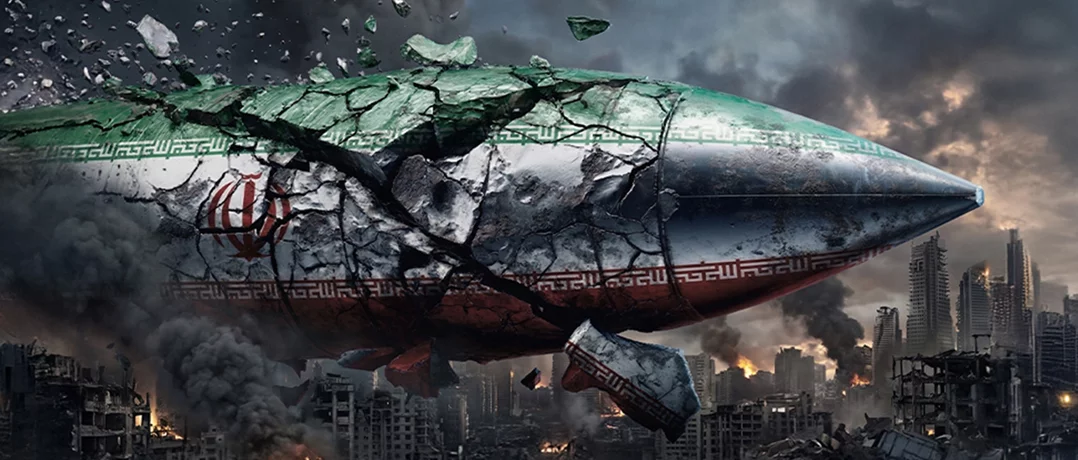
Predictions in politics are notoriously unreliable. No one can say with certainty what will become of the Iranian regime once the guns fall silent. History, however, offers a useful reminder: autocracies often appear immovable right up until the moment they collapse. What seems unthinkable for years can suddenly feel inevitable. That is why the question is not whether Iran’s rulers will fall tomorrow. It is whether the Iranian regime has already lost something more fundamental: its prestige as an alleged peer rival to Israel, a leader of a mighty regional axis capable of threatening the very existence of the Jewish state, and a valued partner of the Chinese and the Russians. By that measure, the answer is yes. Even if hostilities stop this week as the United States President Donald Trump hinted they might, the Islamic Republic has already lost this war whatever happens next.
On the Battlefield: A collapse of deterrence
Start with the battlefield. Iran’s military response has been striking for the limited damage it was able to inflict on Israel. Yes, Iran owns a ballistic missile arsenal and has used it. But Israel has intercepted most Iranian missiles. Furthermore, firing missiles in the hope that a few might evade Israeli defenses is not a strategy; it is sign of a lack of better options. Nor is it strategic genius that Iran developed nuclear capacities inviting attacks in the absence of credible deterrence. In contradistinction with Iran’s lackluster performance, Israel has demonstrated an unmistakable level of precision and reach. The Israeli air force owns Iranian skies and has destroyed hundreds of missile launchers. Iranian officials and scientists have been eliminated deep inside the country, exposing profound vulnerabilities in Tehran’s security apparatus. Since the war started, Israel operates with intelligence superiority and, increasingly, freedom of action. Iran, by contrast, appears porous, its defenses penetrated, its deterrence eroded. Decades spent suppressing domestic dissent have not translated into the ability to counter a sophisticated external adversary. In modern warfare, intelligence and air dominance are decisive. On both counts, Iran is outmatched, although Israel is a fraction of her size, in terms of demography, geography, and natural resources. And when the United States intervened, the Iranian regime failed to hide the most obvious of all targets: the late Supreme leader Ali Khamenei.
Tehran’s fallback hope that it can impose economic costs by disrupting energy markets has so far fallen flat. To be sure, Donald Trump suggested on Monday that the war may stop soon. Economic disruption may indeed be taking its toll. But had Iran held the cards in this war, the United States would have stayed neutral. And it is too soon anyway to draw conclusions from Trump’s announcement pertaining to the “complete and total resolution of hostilities”. Only days ago, he seemed to be threatening Iran with American weapons of mass destruction.
The myth of the “axis of resistance”
Then there is the much-celebrated “axis of resistance.” For years, Iran invested heavily in a network of regional allies meant to deter precisely this kind of confrontation. Yet when tested, the axis has revealed itself to be weak, ineffectual. Post-Assad Syria is now an enemy. Hezbollah, once touted as a formidable deterrent, has succeeded mainly in exposing Lebanon to devastating Israeli retaliations. Israel has killed thousands of Hezbollah operatives and has eliminated its pre-war leadership. Propaganda put aside, Hezbollah has inflicted no serious pain on Israel and is unlikely to do so as the Israelis continue to pound the extremist Shia organization daily. Other partners, from Iraqi militias to the Houthis, have hesitated or stayed on the sidelines. This is not a coordinated front—it is a loose collection of actors with limited willingness or ability to act in concert when it matters most. Iran proxies were useful for assassinating the Mullahs’ regional enemies such as the late Lebanese Prime Minister Rafic Hariri. But their performance against the Israelis have shown them to be more a liability than an asset.
This is especially true of Hamas. The October 7 attack dragged the region into a broader conflict, but not on terms favorable to Tehran. Did the late Yahia Sinwar fail to consult with his Iranian paymasters before launching the fateful attack on Israel that day? Perhaps he did consult and they miscalculated? Either way, the result was an unmitigated disaster for Iran and her proxies, Sinwar included. So much for the alleged long-term planning of the Persian carpet weavers.
A region turning away
The geopolitical picture is also bleak. Iran today stands more isolated than at any point in recent decades. Across the Arab world, governments and publics alike view Tehran with outright hostility. This is a sharp reversal from earlier periods when Iran managed to exploit shared animosities against Iraq’s Saddam Hussein to maintain Arab countries such as Syria and Libya on her side throughout the 1980s during the Iran-Iraq war. Nor have Iran’s alleged great-power allies come to her rescue. Russia remains bogged down in Ukraine. China will not confront the United States on Iran’s behalf. The much-discussed alignment among Moscow, Beijing, and Tehran has proven shallow when tested.
And beneath all of this lies an even bigger problem: Iran’s internal frailty. Long before this war, the country faced mounting economic distress, rising inflation, ethnic friction, environmental strain, and persistent social unrest. These pressures have not disappeared—they have merely been obscured by the immediacy of conflict. War can delay a reckoning, but it cannot postpone one indefinitely. No war lasts forever and the ongoing fighting will eventually subside. The Mullahs and the IRGC will then confront a population already weary of hardship and mismanagement, now burdened with the additional costs of war. Assuming the regime survives that is.
Power beyond survival
This is why the outcome of the conflict should not be measured solely in whether the Mullahs remain in power. To be sure, Power is above all about raw force. But it is also about credibility, alliances, and perceptions. By those metrics, The Mullahs have already suffered a decisive setback. The Islamic Republic may still endure as Saddam Hussein did for over a decade after he was decisively defeated in Kuwait, in 1991. But the Saddam of the 1990s was a shadow of his former self and so was Egypt’s Gamal Abdul-Nasser after Israel humiliated him in 1967. Authoritarian regimes can lose wars disastrously and yet survive for a while. But the fact is the ruling clique in Teheran lacks good options out of its current quagmire. The regime will break or, if it survives, it will do so diminished: less frightening, more frightened, and more than ever a pariah among nations.
In that sense, although the war may or may not be over, its results are already clear to see. The writing is on the wall for the once formidable Mullahs.
-
-
-
Hicham Bou NassifWriterWeinberg Associate Professor of International Relations and the Middle East, and George R.Roberts Fellow. Claremont McKenna College-California.
-
