



Egypt’s Abrams tank modernization strengthens its military capabilities, prompting Israeli scrutiny over shifting regional dynamics despite decades of bilateral peace.
Why Israel is watching Egypt’s Abrams upgrade

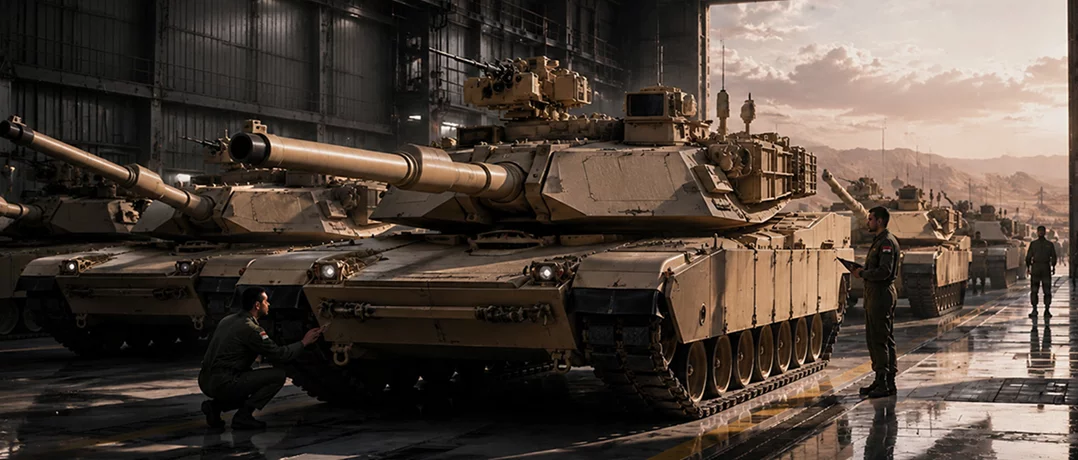
Egypt’s ongoing modernization of its fleet of M1A1 Abrams main battle tanks has attracted considerable attention across the Middle East, particularly in Israel, where several media outlets and security commentators have portrayed the project as part of a broader shift in the regional military balance. The upgrade program, approved by the United States (U.S.) as part of a multi-billion-dollar military assistance package, will modernize more than 550 Egyptian tanks while expanding Cairo’s domestic defense manufacturing capabilities.
Although the project is officially presented as a routine modernization effort conducted in cooperation with Washington, it has fueled debate in Israel about Egypt’s growing military strength and the long-term strategic implications should the regional political landscape change.
A longstanding Egyptian-American defense partnership
The Abrams modernization project represents the latest stage of a defense relationship between Egypt and the U.S. that has existed for more than 4 decades.
Following the Camp David Accords and the 1979 Egyptian-Israeli Peace Treaty, Egypt became one of the largest recipients of American military assistance. During the early 1990s, Cairo and Washington launched a joint production program allowing Egypt to assemble M1A1 Abrams tanks domestically at Factory 200 near Cairo, making Egypt the only country outside the U.S. authorized to manufacture major components of this tank.
Today, Egypt operates approximately 1,130 Abrams tanks, making them the backbone of its armored forces. Rather than purchasing an entirely new fleet, Cairo opted to upgrade 555 existing tanks to the more advanced M1A1 Situational Awareness (SA) configuration under a program valued at approximately $4.69 billion.
The project will be managed by Egypt’s Factory 200 with significant American technological support, illustrating the continued strategic military partnership between both countries.
What the modernization includes
According to Egyptian military officials and defense reports, the upgrade involves extensive technological improvements rather than the acquisition of a new platform.
The modernization package includes upgraded engines and transmissions to improve mobility, enhanced armor protection against modern anti-tank weapons, advanced digital battlefield management systems, improved thermal and night-vision equipment, laser-based targeting systems, and enhanced situational awareness capabilities for commanders and gunners.
These improvements are designed to increase battlefield effectiveness, particularly in desert operations where the Egyptian Army has traditionally highlighted maneuver warfare.
Former Egyptian military officials have also stressed the importance of expanding local manufacturing. They argue that a large proportion of the tank’s components are now produced domestically, strengthening Egypt’s defense industrial base while reducing long-term dependence on foreign suppliers.
Why are concerns raised in Israel?
Although Egypt and Israel have maintained peace for more than 4 decades, several Israeli analysts argue that military planning should be based on capabilities rather than political intentions.
Following the collapse of the Syrian government under Bashar al-Assad on 8 December 2024, some Israeli think tanks began reassessing regional military threats. With Iraq’s military significantly weakened after 2003 and Syria’s armed forces severely degraded during years of civil war and subsequent Israeli obliteration, Egypt increasingly emerged in Israeli strategic discussions as the only remaining large conventional Arab military possessing substantial armored, naval, and air capabilities.
Israeli commentators have therefore questioned why Egypt continues investing heavily in advanced military hardware despite facing no immediate conventional military threat. Some analysts argue that while relations between Cairo and Tel Aviv remain stable today, future political changes inside Egypt could alter the strategic environment; especially should the Muslim Brotherhood once again ascend to power. Several former Israeli officials have warned that military capabilities endure even when governments change, making long-term planning essential.
Others have linked these concerns to Egypt’s expanding military infrastructure around the Suez Canal and Sinai Peninsula, suggesting that enhanced logistics could facilitate rapid troop movements if circumstances were ever to deteriorate.
Egyptian response: Modernization, not preparation for war
Egyptian officials have consistently rejected allegations that their military modernization is aimed at Israel. Cairo argues that every sovereign nation has the right to maintain and modernize its armed forces, particularly given the volatile security environment surrounding Egypt. Indeed, military modernization programs are common among regional powers and do not necessarily indicate offensive intentions.
For more than a decade, the Egyptian military has been heavily engaged in counterterrorism operations against extremist groups in North Sinai while simultaneously protecting maritime routes in both the Mediterranean and the Red Sea.
Egypt also maintains extensive borders with Libya, Sudan, Gaza, and Israel, each presenting distinct security challenges that require well-equipped conventional forces.
Regarding Israeli accusations of military expansion in Sinai, Egyptian authorities maintain that new infrastructure (including roads, tunnels, logistics facilities, and fuel depots) primarily supports national development and counterterrorism operations rather than preparations for interstate conflict.
The Camp David framework
Military deployments in Sinai remain governed by the 1979 peace treaty between Egypt and Israel.
The peninsula is divided into 3 security zones that limit troop numbers and weapon deployments, particularly near the Israeli border. The easternmost Zone C remains largely demilitarized except for police forces and the Multinational Force and Observers (MFO), which monitors compliance with the agreement.
However, both Egypt and Israel have repeatedly agreed to temporary modifications to these force limitations over the past decade, allowing additional Egyptian troops and equipment to enter parts of Sinai to combat terrorism. These adjustments have generally occurred through bilateral coordination rather than unilateral action.
Additionally, concerns expressed in parts of the Israeli media may overstate the likelihood of future confrontation, noting that Egypt continues to cooperate closely with Israel on border security, intelligence sharing, and efforts to maintain stability in Gaza and Sinai.
Ultimately, the differing interpretations underscore the enduring importance of military capability in regional security calculations. While the Egypt-Israel peace treaty continues to provide the foundation for bilateral stability, evolving defense modernization on both sides will likely remain an important subject of strategic assessment for years to come.
-
-

-
The Beiruter
-
