

The escalating Iran–Israel confrontation could push Lebanon into becoming the region’s most dangerous theatre of war, analysts warn.
Why Lebanon is the most fragile front in the Iran war
Why Lebanon is the most fragile front in the Iran war
By Tony McMahon | March 06, 2026

Reading time: 4 min
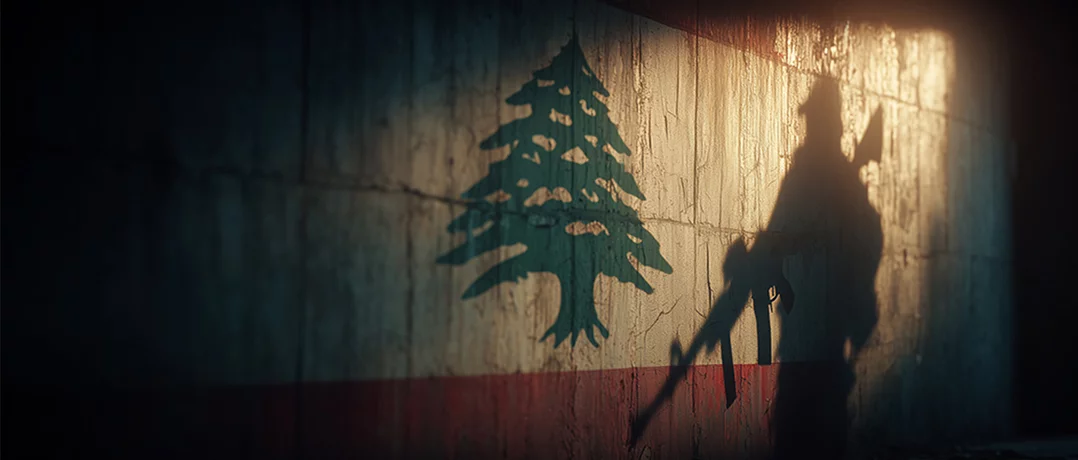
Lebanon is poised to become the worst theatre of war if the Iran conflict continues to escalate, according to UK analysts. The spectre of warfare is returning to haunt Lebanon, dragging it back to a past it hoped could be buried. This is the view from London analysts who The Beiruter will be questioning each week for their insights.
Andreas Krieg is a senior lecturer at the School of Security Studies at King’s College London, also at the Royal College of Defence Studies, and a fellow at the Institute of Middle Eastern Studies. He lived and worked in Lebanon and other countries in the region for a decade. He recognises that Iranian society is heavily divided in its view of the unfolding war:
There is a lot of fog of war, but a few things are already clear about how Iranians are reacting. Society is split between people who see the strikes as a chance to weaken a system they despise, and people who loathe the regime yet refuse to identify with Israel or a foreign military campaign.
Iranian citizens, he argues, hold contradictory views at the same time. They are furious at the Islamic Republic but simultaneously resent foreign interference. Add to that the element of fear. The shootings and executions that halted the protest wave are still fresh in people’s minds:
After the regime killed thousands of protesters in recent months, deterrence is real. That kind of mass violence does not create legitimacy, but it can suppress collective action and keep many people off the streets even if the private mood is anti-regime.
The problem for the United States and its allies is that while Iran can be hit hard, “it is not a neat hierarchy where removing a few nodes produces paralysis.” However, although the system can absorb shocks, a long-term war would create severe problems for Iran’s regime. To prevent that weakening, Tehran will create as much volatility as possible and widen the theatre of conflict, especially to Lebanon.
Lebanon is where the danger of escalation-by-chain-reaction is highest. Israel is striking Hezbollah hard, including in Beirut, to impose immediate costs and to prevent Hezbollah from using this moment to reassert itself. Hezbollah is weakened but still capable of harassment, and that is enough to pull Lebanon deeper into a conflict the Lebanese state cannot control.
The risk this poses to the people of Lebanon is enormous:
“The near-term risk is a cycle of retaliation that raises civilian casualties and displacement, with a significant chance that events outrun political intent on both sides. The best case is a brutal, time-bound degradation campaign followed by a forced pause; the worst case is a slide into another large-scale Lebanon war that neither Beirut nor the region can absorb.”
Professor Simon Mabon, Chair in International Relations at Lancaster University, shares this grim view: “Though the government has sought to curtail Hizballah’s influence and seize its weapons, the exchange of missiles between Israel and Hezbollah suggests that war has come to Lebanon, if it ever left.”
Though Lebanese Prime Minister Nawaf Salam has banned Hezbollah’s military activities, Mabon notes that implementation has been difficult. But without that ban enforced, “Lebanon risks being dragged further into what is increasingly becoming a regional conflict.”
Arshin Adib-Moghaddam is Professor in Global Thought and Comparative Philosophies at SOAS, University of London where he co-directs the Centre for AI Futures and the Centre for Iranian Studies. A double alumnus of Cambridge University, his maternal family relates back to Karim Khan-e Zand, Persia’s dynastic rulers who unified the country in the 18th century.
Adib-Moghaddam sees two ways in which Iran will inflict pain on the west. Both methods will be about maximising the cost of war for the United States and its allies. Firstly, Iran will make the shipment of oil and gas through the Strait of Hormuz very difficult, even if the US navy can counteract their action. “However, a maritime war would provoke further destabilisation of the Persian Gulf.”
Iran will also step up its targeting of American and Israeli military assets in the region: “This is meant to provoke the Arab monarchies to put pressure on the United States to stop the attack on Iran.” Tehran is also betting that the public in the US and Israel do not share their leaders’ appetite for war.
As for Israel’s action in Lebanon, Adib-Moghaddam sees this as the continuation of long-term Israeli policy, going back to the 1967 war:
This conflict between the Arab/Muslim world and Israel will continue until either, the former submits to Israeli interests, including giving up on Palestine, or Israel changes from within and finally accepts that regional legitimacy can’t be obtained with campaigns of death and destruction against the majority peoples of this region.
As for the Iranian state apparatus, it could prove more durable than many external commentators are hoping:
“The idea that the Iranian state will simply wither away is primitive and uneducated. The Iranian state is complex, diverse and the power of the state is dispersed via several religious and governmental institutions that have matured over centuries.”
The view from London is pessimistic in terms of the war concluding soon and if the past can teach us about the future, then Lebanon must prepare for the worse case scenario.
-
-

-
Tony McMahonJournalistInvestigative historian, published author.
-
