



UNHCR Lebanon tells The Beiruter why Syrian refugee returns are increasing and what continues to hinder lasting reintegration.
Why more Syrian refugees are returning home

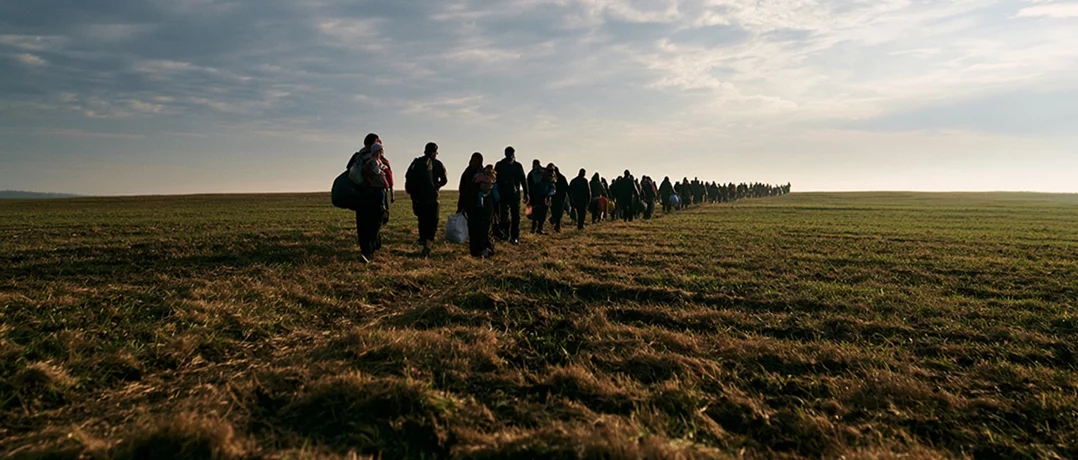
The return of Syrian refugees from Lebanon to Syria has entered a new phase, marked by a significant increase in departures and a notable shift in the reasons driving refugees to go home. While the escalation of hostilities in Lebanon on 2 March 2026 initially triggered a wave of conflict-induced movements across the border, recent data indicate that return decisions are increasingly influenced by conditions inside Syria rather than insecurity in Lebanon itself.
Therefore, The Beiruter reached out to the United Nations High Commissioner for Refugees (UNHCR) in Lebanon in order to better understand recent trends and persistent barriers to the aforementioned refugees’ return to their homeland.
A sharp increase in cross-border returns
The latest figures illustrate the scale of cross-border movements witnessed in recent months. According to Syrian authorities, more than 590,000 Syrians crossed from Lebanon into Syria between the escalation of violence on 2 March 2026 and 1 July 2026. UNHCR’s June 2026 operational update similarly recorded more than 581,000 Syrians crossing during the same period, while Lebanese General Security documented over 491,000 departures through official border crossings by late June. These movements include both Syrians registered with UNHCR and Syrians who were living in Lebanon under work permits, sponsorship arrangements, or temporary residency.
UNHCR told The Beiruter that although the conflict in Lebanon was a major catalyst during the first months of the escalation, this is no longer the primary explanation for the continuing rise in returns.
Separately, since January 2025, UNHCR has confirmed or presumed that 655,732 Syrian refugees have voluntarily returned to Syria, either independently or through organized return movements coordinated by UNHCR in cooperation with Lebanon’s General Security Office and the International Organization for Migration (IOM). These individuals have consequently been removed from UNHCR’s refugee registration database. Among them, approximately 577,600 returned spontaneously, while more than 78,000 benefited from UNHCR-facilitated return programs.
Changing motivations behind return decisions
Perhaps the most significant development is the changing profile of refugees choosing to return.
UNHCR explained that return decisions are increasingly driven by conditions inside Syria, particularly the prospect of securing housing, employment opportunities, and a means of rebuilding livelihoods. While security concerns in Lebanon played an important role immediately after fighting intensified, their influence has diminished considerably over recent months.
UNHCR’s monitoring of official crossing points supports this assessment. Since March, the agency has conducted dozens of monitoring missions and interviewed hundreds of departing Syrians. In March, 55% of those surveyed identified the deteriorating security situation in Lebanon as their primary reason for leaving. By June, however, only 6% cited insecurity as their main motivation. Instead, family reunification and visits to relatives emerged as the most frequently reported reasons for travel, reflecting a broader normalization of cross-border movement rather than emergency displacement.
The findings suggest that many refugees now view return as part of longer-term family and economic planning rather than merely an escape from violence in Lebanon.
UNHCR’s humanitarian return programs
The escalation in Lebanon also prompted UNHCR to adapt its operational response.
On 1 April 2026, the agency introduced a temporary “Return due to Force Majeure” program, recognizing that many refugees had been left with no viable alternative but to leave Lebanon because of the conflict. Unlike traditional voluntary repatriation, these movements were not classified as voluntary returns but were supported on humanitarian grounds to reduce risks during the journey.
Under the program, UNHCR provided transportation, food assistance, counselling, and a cash grant of $100 per returning individual. By the end of June, more than 25,300 Syrians had received counselling regarding return procedures, while 17,292 individuals ultimately returned under the program. The initiative officially concluded on 1 July 2026, when UNHCR resumed its standard voluntary return procedures.
Meanwhile, organized voluntary return convoys also resumed, with UNHCR and IOM facilitating the first post-hostilities movement on 17 June.
Persistent obstacles to sustainable return
Despite the growing number of departures, UNHCR cautions against interpreting the increase as evidence that conditions throughout Syria have fully stabilized.
According to the organization, refugees consistently identify three principal barriers preventing their return: access to housing, sustainable livelihoods, and basic public services.
Many refugees report that their homes have been destroyed or heavily damaged during years of conflict. Others remain concerned about the availability of employment, schools for their children, healthcare facilities, electricity, water, and other essential services required to restart daily life.
These concerns underscore the distinction between willingness to return and the capacity to reintegrate successfully. While many Syrians express a desire to go home, successful reintegration depends on economic recovery, infrastructure rehabilitation, and continued humanitarian support inside Syria.
UNHCR therefore continues to highlight that returns must remain voluntary, informed, safe, and sustainable, allowing refugees to make independent decisions based on accurate information rather than pressure or deteriorating circumstances elsewhere.
Border crossings reflect growing mobility
Additional figures released by Syria’s General Authority for Border Crossings and Customs illustrate the broader scale of movement between the two countries.
The authority announced that approximately 625,000 travelers crossed through the Jousieh border crossing with Lebanon since the beginning of 2026, including arrivals and departures. Among them, roughly 150,000 Syrian citizens voluntarily returned to Syria through Jousieh alone.
At the same time, the Jdeidet Yabous crossing has experienced even heavier traffic, recording approximately 1.7 million crossings in both directions since the beginning of the year. Syrian authorities attribute these figures to sustained travel activity while highlighting continued efforts to facilitate efficient border procedures and organized reception services for returning citizens.
As UNHCR continues facilitating voluntary repatriation while monitoring return conditions, the long-term success of this process will ultimately depend not only on the number of refugees crossing the border but also on Syria’s ability to provide the security, stability, and economic opportunities necessary for sustainable reintegration.
-
-

-
The Beiruter
-
