



The price of a cup of coffee can reveal how weather, global supply, shipping disruptions, energy costs, inflation, and domestic policies travel across the world before reaching consumers.
Why your morning coffee costs more than you think
Why your morning coffee costs more than you think
By Carmen Haidar | August 21, 2026

Reading time: 5 min
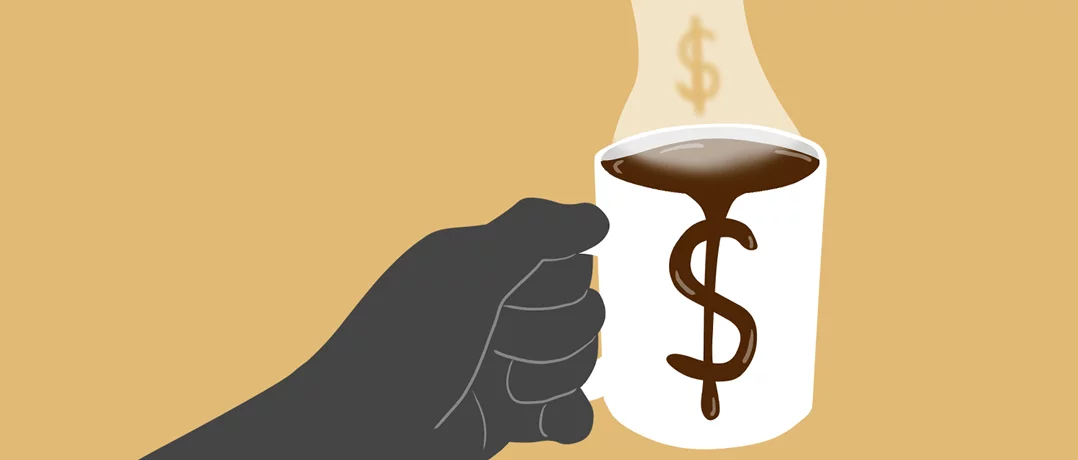
Every morning begins more or less the same way. You stop by your favorite coffee shop on your way to work, order the coffee you have been drinking for years, and barely look at the menu. Until one morning, you do. The price has gone up.
Your first reaction is probably familiar: Everything is getting more expensive.
You are not necessarily wrong, but the more interesting question is: Where did that extra cost actually begin?
It may be tempting to blame the coffee shop. After all, that is where you see the new price. But what if I told you that the reason your coffee costs more today may have started thousands of kilometers away, long before the beans even reached your city?
That cup may look local but its story is anything but. Long before reaching your hand, it has already crossed borders, oceans and several layers of costs you never get to see. Your coffee arrives carrying a bill from every stop it made along the way. So, let’s find out where that bill begins.
The price starts at the farm
Coffee is an agricultural product, which means that before it becomes part of the global economy, it depends on something no one can control: the weather.
Take Brazil, the world’s largest coffee producer. Good growing conditions can mean a larger harvest, while drought, extreme temperatures, or too much rain can threaten both the quantity and quality of the beans available. This is where the first economic force enters our cup: Supply. But markets don’t wait for the harvest to finish before reacting.
In May 2026, the International Coffee Organization (ICO)’s benchmark coffee price fell 3.8% from the previous month as expectations of stronger suppler grew. Behind this optimism was Brazil, where the coffee crop was expected to reach a record 66.7 million bags, adding more supply to the global market. The beans did not even have to leave the trees for prices to react... A stronger harvest forecast was already changing what the market expected tomorrow and what coffee was worth today.
The cost of the journey
Moving goods across the world cost money even when everything goes according to plan. Ships need fuel, ports charge fees, cargo needs insurance, and every extra day at sea costs more. But when a major shipping route is disrupted, that journey can suddenly become longer, riskier and far more expensive.
The Red Sea crisis offered a clear example. As ships avoided the Suez Canal and sailed around Africa instead, UN Trade and Development (UNCTAD) estimated that some Asia-Europe journeys gained around 12 extra days. The destination had not changed. The price of getting there had. Sometimes, a disruption can affect your coffee without coming anywhere near the beans!
Take the Strait of Hormuz. Your Brazilian coffee may never cross it, but around one-fifth of the world’s petroleum liquids normally does. When the strait was disrupted in 2026, the International Coffee Organization reported that crude oil prices rose 55.8% and shipping freight costs 43.6% between late February and the end of April. More expensive fuel raises the cost of transportation, while greater risk can increase shipping and insurance bills. More interestingly, the impact can travel all the way back to the farm, as higher energy costs affect inputs such as fertilizer. So, your coffee doesn’t have to get stuck in Hormuz to feel Hormuz… Sometimes, all it takes is for one important route to become more expensive, more dangerous, or simply longer for the cost to start travelling through the rest of the chain.
When the cost finally reaches you
By now, our coffee has collected quite a bill… The farmer, shipper, importer, roaster, distributor, and café owner have all carried part of it. However, not every increase automatically lands in your pocket. Businesses can absorb part of the pressure, accept smaller margins, negotiate with suppliers, or simply postpone raising prices… Eventually, part of the bill may reach you but it does not happen overnight. A 2026 IMF study found that an additional 100 hours of shipping delay could raise consumer inflation by around 0.5 percentage points at its peak, roughly five months after the disruption. This is how a distant shock can slowly find its way into everyday prices. When production and transportation become more expensive across the economy, businesses may pass part of those costs to consumers. Economists call this cost-push inflation. For households, the result is much simpler: the same income buys less.
In Lebanon, however, price shocks can often feel immediate. This is where domestic policies matter: government cannot control the weather, oil prices, or disruptions at sear but sound policies can help contain the impact of external shocks, protect competition and support consumers when the pressure becomes too heavy.
So perhaps the next time your usual coffee costs more, the café owner is not the only one to blame. Part of the extra dollar may carry the cost of a weaker harvest, a longer journey, more expensive fuel or a crisis you watched on the news months earlier.
Because in the end, the price on your coffee may look local, but the bill behind it is not.
-
-

-
Carmen HaidarWriterEconomist with a PhD in Economics, writing on financial systems, economic development, and regional economic trends.
-
