



In an interview with The Beiruter, Brigadier General Naji Malaeb analyzes the implementation, challenges, and significance of southern Lebanon’s pilot zones.
Will pilot zones be able to stabilize southern Lebanon?
Will pilot zones be able to stabilize southern Lebanon?
By The Beiruter | July 20, 2026

Reading time: 5 min
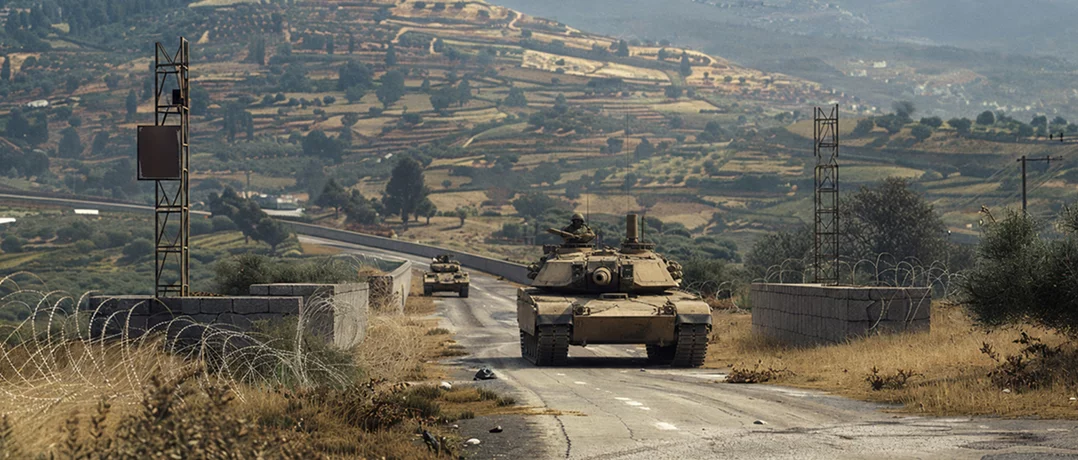
Following the round of U.S.-mediated negotiations in Rome, Lebanon and Israel have agreed to move from discussions to the implementation phase of a pilot security arrangement in southern Lebanon. The initiative aimed to test a phased approach to restoring security and state authority through 2 geographically distinct pilot zones before expanding the model to other areas along the border.
The first pilot zone includes the villages of Frun, Ghandouriyeh, Srifa, Qalaouiyeh, and Borj Qalaouiye, where the Lebanese Armed Forces (LAF) are already largely deployed. The objective is to remove any remaining armed infrastructure and weapons while reinforcing the state’s exclusive security role. The second pilot zone begins with Zawtar el-Gharbiyeh, an area still occupied by Israeli forces, where an Israeli withdrawal would allow the LAF to assume full security responsibilities. Although implementation has begun in certain areas such as Frun, Srifa, and Zawtar el-Gharbiyeh, as per the U.S. Department of State (DOS), similar approach is yet to be expanded towards the remaining agreed upon regions.
While the agreement represented a potentially significant step toward implementing the ceasefire understandings, major political and military obstacles remain. In an interview with The Beiruter, military and strategic expert Brigadier General Naji Malaeb believes the success of the initiative will depend not only on Israeli withdrawal but also on the credibility of the ceasefire, Hezbollah’s position, and the international security framework accompanying the process.
The LAF’s presence in the south
According to Brigadier General Malaeb, one of the most widespread misconceptions surrounding the current discussions is the belief that the LAF has been absent from southern Lebanon.
The Lebanese Army has never left southern Lebanon.
He stressed that the LAF has maintained a continuous presence in the south throughout the conflict, working alongside approximately 7,500 personnel from the United Nations Interim Force in Lebanon (UNIFIL). Around 8,000 Lebanese soldiers remain deployed across the region, and whenever Israeli forces are not physically present in a given area, the LAF immediately assumes responsibility.
Recent deployments and checkpoints in villages such as Frun and Ghandouriyeh, he noted, demonstrate that the LAF has never abandoned its security responsibilities in southern Lebanon. From this perspective, the pilot zones are less about introducing a new military presence than about expanding the state’s effective control by eliminating any remaining armed infrastructure and ensuring that security responsibilities are exercised exclusively by official institutions.
U.S. mediation and the mechanism for implementation
Malaeb argued that one of the principal reasons for the delay in certain areas has been Israel’s insistence on maintaining direct oversight of the LAF’s activities inside the proposed pilot zones. In his assessment, Israel sought to establish direct coordination mechanisms with the Lebanese military and place the implementation process under Israeli supervision; an arrangement that Lebanon firmly rejected. To overcome this obstacle, the U.S. proposed an alternative monitoring mechanism.
According to Malaeb, Washington has deployed a dedicated American force under the command of General Clark Field, who previously headed the ceasefire monitoring mechanism and possesses extensive knowledge of southern Lebanon. The organizational structure of this force has already been established, creating an intermediary capable of overseeing implementation without requiring direct military coordination between Lebanon and Israel. The remaining prerequisite, he explained, is an Israeli withdrawal from the designated occupied areas.
Challenges facing the pilot zones
Although the concept appears straightforward, Malaeb believes implementation will become increasingly complex as the process advances. Thus, Malaeb identified 2 principal sets of obstacles confronting the agreement.
The first originates from Israel. He noted that the first phase, such as an Israeli withdrawal from Zawtar el-Gharbiyeh followed by immediate deployment of the LAF, could proceed relatively smoothly.
However, future stages may involve areas where Hezbollah military infrastructure or hidden weapons caches still exist. Although Israel has formally accepted the American proposal, he believes it may continue seeking opportunities to delay or reinterpret its commitments. Israeli officials have reportedly insisted on verifying LAF deployment in one sector before withdrawing from another, effectively linking each phase to the previous one and slowing the overall process. Locations such as Ali al-Taher or Jabal Blat could prove particularly sensitive if Israeli withdrawals are linked to LAF operations in areas where Hezbollah retains military capabilities.
Israel wants to verify the LAF’s deployment in one area before withdrawing from another, effectively linking each phase of the process.
The second obstacle lies within Lebanon itself. For Beirut, a ceasefire must mean a genuine and comprehensive cessation of hostilities. Continued Israeli military operations or violations, Malaeb argued, would fundamentally undermine confidence in the implementation process.
At the same time, Hezbollah continues to maintain that it welcomes the deployment of the LAF wherever it assumes control. However, the group has repeatedly insisted that as long as Israeli occupation persists, it will not surrender its weapons. This position remains one of the most significant challenges facing any broader security arrangement.
In his view, there is concern that certain pilot zones could unintentionally, or deliberately, place the LAF in direct confrontation with Hezbollah by requiring it to dismantle weapons that Israeli forces have not previously targeted. Such a scenario would significantly complicate implementation and risk undermining both domestic stability and the broader ceasefire framework.
President Joseph Aoun’s Washington visit
Malaeb believes President Joseph Aoun’s visit to Washington could play an important diplomatic role.
If Lebanon succeeds in obtaining stronger American guarantees for a complete Israeli withdrawal and an effective ceasefire, the political environment surrounding the pilot zones would become considerably more favorable.
In his viewpoint, achieving a full Israeli withdrawal would remove Hezbollah’s principal justification for retaining its weapons.
If Israel withdraws completely from Lebanese territory, Hezbollah will no longer have a domestic justification for retaining its weapons.
Although broader regional considerations, including Hezbollah’s ties with Iran, would continue to influence the issue, the domestic rationale based on resisting occupation would largely disappear. Such progress would also strengthen the Lebanese state’s position in future negotiations concerning security arrangements across southern Lebanon.
Filling the security vacuum
Another critical issue concerns what happens after Israeli forces withdraw.
The question is who will fill the security vacuum after Israel withdraws. That will be essential to ensuring long-term stability.
Malaeb observed that Israel continues to express reservations regarding the LAF’s ability to independently guarantee security along the border.
Consequently, he believes the future of international peacekeeping will become increasingly important. One possibility is the renewal of UNIFIL’s mandate, provided Washington supports its continuation. Alternatively, if the U.S. opposes extending UNIFIL, Lebanon and its European partners could pursue a proposal to deploy a European Union (EU) force capable of filling the security vacuum left by Israeli withdrawal.
According to Malaeb, the presence of credible international forces alongside the LAF would remove Israel’s stated security concerns and eliminate its justification for maintaining a buffer zone inside Lebanese territory.
Hence, whether the pilot zones become the foundation for a lasting de-escalation or merely another temporary experiment will depend on sustained political will, credible security guarantees, and the ability of all parties to prioritize long-term stability over short-term strategic calculations.
-
-

-
The Beiruter
-
