



New WMO report warns global temperatures could reach record highs by 2030, with Lebanon already experiencing climate breakdown according to climate expert Dr. Doumit Kamel.
WMO warns of record global heat by 2030

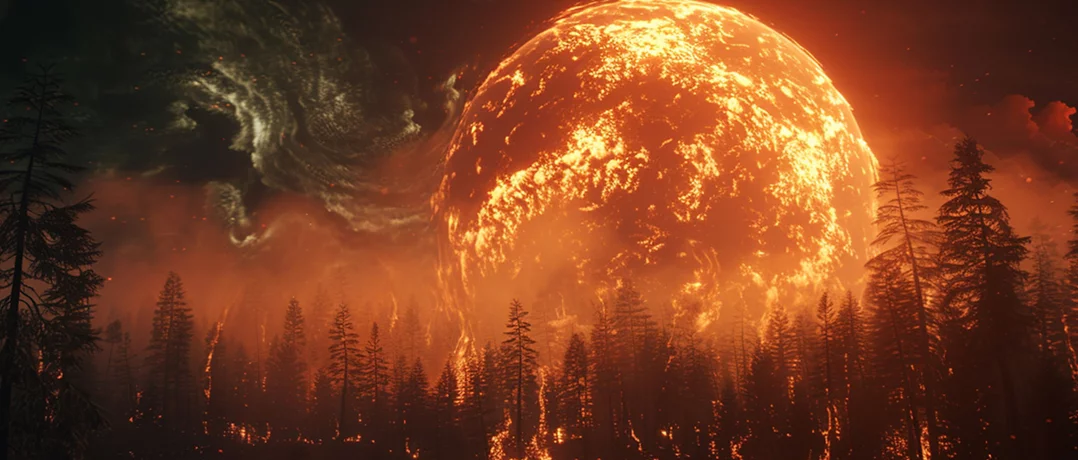
The world is likely to experience even hotter years in the near future, according to a new report released by the World Meteorological Organization (WMO) and produced by the United Kingdom’s Met Office. The findings paint a concerning picture of a planet continuing to warm at an alarming pace, with scientists warning that the next 5 years could bring new global temperature records, accelerated Arctic warming, worsening droughts, and increasingly disruptive weather patterns across multiple continents.
The report, titled the Global Annual-to-Decadal Climate Update, forecasts that average global temperatures between 2026 and 2030 will remain at or near historic highs. Researchers estimate that annual global temperatures during this period will range between 1.3°C and 1.9°C above pre-industrial levels recorded between 1850 and 1900. Most notably, there is an 86% chance that at least one year before 2030 will surpass 2024 as the hottest year ever recorded.
Crossing the 1.5°c threshold more frequently
One of the report’s most significant conclusions is the increasing likelihood of surpassing the 1.5°C warming threshold established under the 2015 Paris Climate Agreement. Scientists estimate there is a 91% probability that at least one year between 2026 and 2030 will temporarily exceed 1.5°C above pre-industrial averages.
The report also projects a 75% chance that the average warming over the entire 5-year period will remain above 1.5°C. However, experts stress that this does not necessarily mean the Paris Agreement has officially failed. The agreement’s temperature targets are based on long-term averages measured over roughly 2 decades rather than isolated annual spikes.
Still, climate scientists stress that even temporary breaches are highly significant. Every fraction of additional warming increases the intensity and frequency of extreme weather events, including heatwaves, floods, droughts, and storms. Researchers also warn that ecosystems such as coral reefs, glaciers, and polar ice systems are particularly vulnerable to relatively small temperature increases.
Melissa Seabrook, a research scientist at the UK Met Office and one of the contributors to the report, noted that the scientific evidence is increasingly clear: the window for keeping global warming near 1.5°C is rapidly narrowing.
El Niño could drive new heat records
A major factor behind the projected temperature surge is the anticipated return of El Niño conditions in the Pacific Ocean. El Niño is a naturally occurring climate phenomenon involving unusually warm sea surface temperatures in the central and eastern Pacific, often leading to elevated global temperatures and widespread weather disruptions.
According to the WMO report, El Niño conditions are expected to strengthen toward the end of 2026 and could persist into 2027 or beyond. Dr. Leon Hermanson, the lead author of the study, explained that this development significantly increases the possibility that 2027 could become the next record-breaking year for global temperatures.
Historically, strong El Niño events have coincided with some of the warmest years ever observed. When combined with the long-term warming caused by greenhouse gas emissions from fossil fuels, the effect can push global temperatures to unprecedented levels.
Scientists also fear that repeated El Niño events occurring alongside steadily rising background temperatures could intensify climate instability across many regions of the world.
Dr. Doumit Kamel warns: Lebanon already facing climate breakdown
The implications of these global projections are particularly concerning for countries already struggling with economic instability and weak environmental governance, including Lebanon. In an interview with The Beiruter, Dr. Doumit Kamel, President of the Global Environment Party, warned that Lebanon has already begun experiencing visible and dangerous consequences of accelerating climate change.
According to Dr. Kamel, the country has effectively “crossed the red lines” of climate disruption, describing the current period as an entry into an “unknown tunnel” caused by global warming and unsustainable human activity. He argued that rising population growth, expanding energy consumption, and continued dependence on fossil fuels are intensifying the climate crisis worldwide, while Lebanon remains dangerously unprepared to confront its local consequences.
One of the clearest indicators, he explained, is the dramatic transformation of Lebanon’s winter climate. During the 1970s and 1980s, snowfall regularly reached elevations as low as 200 meters above sea level multiple times each winter. In recent years, however, snow accumulation has retreated to much higher altitudes, often remaining above 1,300 to 1,500 meters. Entire regions that historically experienced cold winters and consistent snowfall are now witnessing significantly warmer conditions.
Dr. Kamel warned that these changes are not merely symbolic environmental shifts but signs of deeper ecological disruption. He pointed to the growing presence of tropical insects in mountainous areas as evidence that Lebanon’s climate is gradually transitioning from a temperate Mediterranean environment toward hotter and more unstable conditions resembling semi-tropical or African climates.
The consequences, he said, are expected to affect nearly every sector of Lebanese society. Agriculture is already experiencing increasing instability due to irregular rainfall patterns and delayed winter seasons. Farmers who once relied on predictable autumn precipitation to sustain seasonal crops now face repeated dry periods extending into December, causing severe production losses and threatening food security.
Beyond agriculture, Dr. Kamel highlighted what he described as a largely ignored environmental catastrophe unfolding within Lebanon’s forests. Large sections of forested areas, he warned, are drying out due to rising temperatures, prolonged drought conditions, and environmental degradation. Combined with increasing heatwaves, these conditions could substantially elevate the risk of devastating wildfires in the coming years.
He also criticized the absence of long-term environmental planning within the Lebanese state, arguing that the country lacks comprehensive strategies for climate adaptation, water management, environmental protection, and sustainable agriculture. Without coordinated policies, he warned, Lebanon risks becoming increasingly vulnerable to water shortages, ecosystem collapse, and economic damage linked to climate instability.
While global climate discussions often focus on future decades, Dr. Kamel stressed that many of these changes are already underway and could intensify rapidly before 2030. Even if mitigation measures were introduced immediately, he argued, their impact on short-term climate outcomes would likely remain limited due to the scale of accumulated global warming.
His warnings closely align with the broader conclusions of the WMO report, which emphasizes that countries with fragile infrastructure and limited institutional preparedness may face disproportionately severe consequences as global temperatures continue to rise. For Lebanon, where economic crises have already weakened public services and environmental oversight, the combination of rising heat, drought risks, declining water resources, and ecological degradation could present major long-term challenges.
Climate action remains urgent
United Nations officials argue that the report should serve as another warning that current global efforts to combat climate change remain insufficient. Although renewable energy expansion and climate policies have accelerated in recent years, emissions from coal, oil, and natural gas continue to rise globally.
UN climate officials stressed that every increment of warming avoided matters. Even if the world temporarily exceeds the 1.5°C threshold, rapid emissions reductions could still help limit long-term warming closer to 2°C and reduce future damage.
The report ultimately delivers a clear message: without faster and more decisive action to reduce greenhouse gas emissions, the world risks entering an era of increasingly dangerous and unpredictable climate extremes.
The world is likely to experience even hotter years in the near future, according to a new report released by the World Meteorological Organization (WMO) and produced by the United Kingdom’s Met Office. The findings paint a concerning picture of a planet continuing to warm at an alarming pace, with scientists warning that the next 5 years could bring new global temperature records, accelerated Arctic warming, worsening droughts, and increasingly disruptive weather patterns across multiple continents.
-
-

-
The Beiruter
-
