Your brain isn’t failing, it's being rewired by an attention economy designed to keep you distracted.


Your brain isn’t failing, it's being rewired by an attention economy designed to keep you distracted.

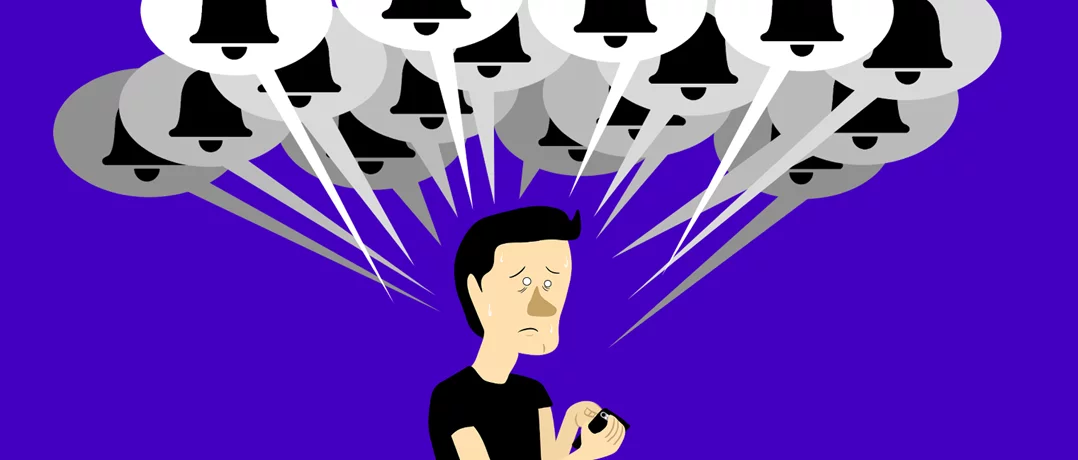
Many individuals believe they are effective multitaskers. However, cognitive neuroscience consistently contradicts this assumption. What is commonly perceived as multitasking is, in fact, rapid task-switching, an executive control process in which the brain alternates between tasks rather than processing them simultaneously. Each switch incurs a measurable cognitive cost.
Gloria Mark, a professor of informatics at the University of California, Irvine, has been studying attention in naturalistic work environments since 2004. Her longitudinal findings demonstrate a marked decline in sustained attention on digital screens: from an average of 2.5 minutes per task in 2004, to 75 seconds in 2012, 47 seconds in 2020, and approximately 40 seconds by 2025. This trend reflects a significant and measurable shift in attentional dynamics with meaningful implications for cognitive performance.
Empirical research indicates that multitasking can reduce productivity by as much as 40%. This reduction is attributable to the brain’s inability to process multiple cognitively demanding tasks concurrently. Instead, it engages in rapid switching, which produces a phenomenon known as “attention residue”, a condition in which cognitive resources remain partially allocated to a previous task, thereby impairing performance on the subsequent one.
The primary driver of attentional fragmentation is not merely individual willpower but the deliberate design of digital environments. Notifications, visual indicators (such as red badges), and auditory alerts are engineered to exploit the brain’s involuntary attentional system, the evolutionary mechanism responsible for orienting toward sudden or salient stimuli, historically linked to threat detection and survival.
Over time, repeated exposure to such stimuli fosters habitual engagement. A 2020 study found that approximately 89% of smartphone interactions are user-initiated rather than triggered by external notifications, suggesting that digital checking behaviors become internally conditioned rather than externally prompted.
Contemporary usage patterns reflect this conditioning. A 2024 survey reported that individuals their smartphones approximately 205 times per day on average. Concurrently, workplace research indicates that 59% of employees are unable to sustain focus for more than 30 minutes without digital interruption. Given that cognitively demanding tasks such as analysis, writing, and strategic reasoning typically require uninterrupted periods of at least 30 minutes, this represents a substantial deficit in optimal working conditions.
The structure of contemporary digital platforms is grounded in an attention-based economic model. In this framework, user attention constitutes the primary commodity, which is monetized through targeted advertising. As a result, platforms are incentivized to maximize engagement duration through continuous novelty and reinforcement mechanisms.
Short-form video content, in particular, conditions users toward high-frequency novelty exposure. Stimuli are delivered in rapid succession, through edits, auditory cues, and topic shifts, each functioning as a discrete reward signal. When individuals transition to slower-paced cognitive activities, such as reading or extended listening, the absence of rapid stimulus change often produces perceptual restlessness and increased propensity for distraction.
A 2025 meta-analysis published in Psychological Bulletin associated increased short-form video consumption with reduced cognitive performance and poorer mental health outcomes, with particularly strong correlations observed for stress and anxiety indicators.
Research by Gloria Mark further suggests that diminished attentional stability is associated with elevated perceived stress and increased physiological arousal, including higher heart rate variability. This state, often described as continuous partial attention, reflects a mode of awareness in which cognitive engagement remains persistently divided across competing stimuli.
A 2025 report by the McKinsey Global Institute estimated that knowledge workers lose approximately 2.1 hours per day, roughly 26% of the workday, to task interruptions and attentional fragmentation. This represents not only a decline in efficiency but also an increase in cognitive load and mental fatigue over time.
The available evidence suggests that attentional capacity is not fixed but trainable. Similar to physical fitness, sustained attention can be strengthened through intentional practice and environmental modification.
One of the most effective interventions involves reducing environmental cues that trigger habitual checking behavior. Studies indicate that simply placing a smartphone in another room during focused tasks significantly improves cognitive performance. Even placing a device face-down on a desk has been shown to reduce working memory capacity due to its attentional salience.
Another evidence-based approach is the practice of “critical ignoring,” defined as the deliberate disengagement from low-value or manipulative digital content rather than reactive consumption.
Physiological factors also play a significant role. Research demonstrates a positive association between cardiorespiratory fitness and executive control functions, including improved resistance to distraction. Additionally, adequate sleep and reduced chronic stress have been consistently linked to improved attentional regulation.
The decline in sustained attention should not be interpreted as an individual cognitive failure. Rather, it is a predictable outcome of environments specifically engineered to capture and fragment human attention for economic gain. Recognizing the structural nature of this phenomenon is an essential first step toward restoring cognitive agency and rebuilding the capacity for sustained focus.

