



The four-day celebration seeks not only to showcase Lebanese creativity but also to reaffirm the sense of community, continuity, and vibrancy that art can help sustain.
“Art is our capital:” Beirut art days returns

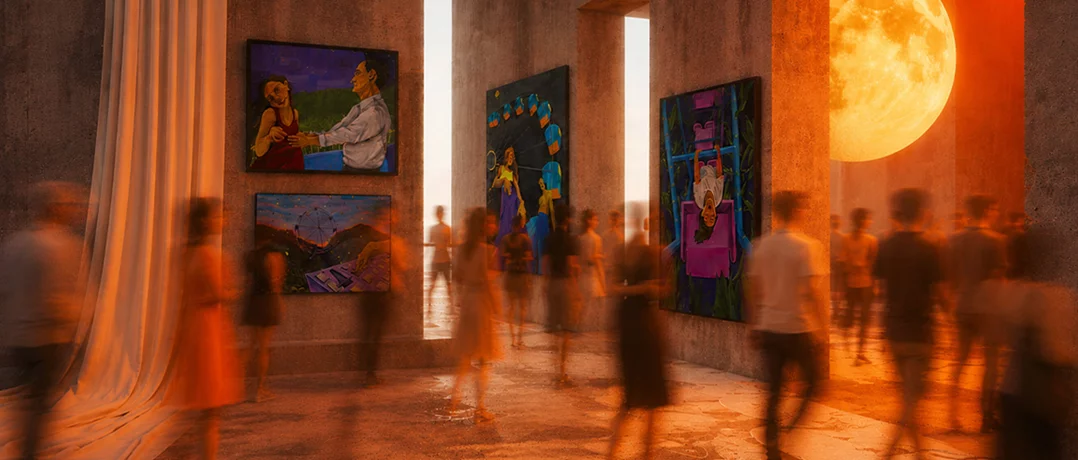
Few cities of its size possess a cultural scene as varied and deeply rooted as Beirut's.
As Lebanon continues to grapple with war, displacement and uncertainty, however, many of the country's summer festivals have gone dark. Yet June 24 to 27, galleries, museums, artist studios and cultural spaces across Beirut and beyond will open their doors for the third edition of Beirut Art Days, a four-day celebration featuring more than 120 events organized by Agenda Culturel.
The program includes exhibitions, performances, workshops, artist talks, guided tours and open studios spread across nearly 40 participating institutions and initiatives. Venues range from established galleries such as Saleh Barakat, Galerie Tanit, Opera Gallery and Mark Hachem to museums, libraries and independent spaces stretching from Bourj Hammoud and Gemmayzeh to Batroun, Bsharri and Aley.
Under the slogan “Art Is Our Capital,” the festival invites the public to rediscover the breadth of Lebanon's cultural landscape through moments of beauty, inspiration, and reflection. In a country enduring profound challenges, organizers argue that sustaining cultural life is not a luxury but a necessity — one that preserves creativity, memory, dialogue and the human connections that unite communities. For four days, Beirut itself becomes a space for discovery and shared experiences. Even amid war and uncertainty, culture must remain alive.
Art amid conflict
At its core, Beirut Art Days is animated by a simple ambition: to encourage people to venture outside their homes and rediscover the city through shared experiences
“It is a very difficult time for our country,” Agenda Culturel director Myriam Nasr Shuman told guests during the launch event, noting that months of crisis have left many Lebanese consumed by heartbreaking news.
Still, while many cultural events have been canceled this year, she said the decision was made to move forward.
“We want to show each other that we are all here and all alive, and we want to show the world that Beirut is here,” she said.
Beirut hasn't changed, and Beirut will remain a vibrant city with a vibrant cultural life.
Shuman said one of the goals behind Beirut Art Days is to offer people a temporary reprieve from the constant stream of bad news.
She said one of the aims of Beirut Art Days is to encourage people to put aside, if only briefly, the constant stream of headlines, discover new places, and reconnect with others.
That conviction that culture serves a social purpose beyond entertainment is shared by Samy Saadi, acting head of the European Union Delegation to Lebanon. Speaking to The Beiruter, Saadi said cultural initiatives take on added significance in times of crisis.
“We believe it's important, alongside humanitarian aid and efforts to find solutions to the crisis, to continue emphasizing cultural and artistic events,” he said.
It's always important not to forget the beauty, creativity and richness of Lebanese culture, and what ultimately brings people together.
Saadi said preserving ordinary routines and spaces for creativity remains important even amid conflict, allowing people to continue working, studying and maintaining some sense of normal life despite the abnormal circumstances.
A city-wide invitation
This year's program spans virtually every form of artistic expression, from exhibitions dedicated to pioneering figures such as Lebanese photographer Marie el-Khazen to contemporary installations, collective shows, artist talks and performances. Visitors will encounter works exploring memory, landscape and everyday life, alongside opportunities to engage directly with artists.
Beyond the galleries, the festival extends into workshops, performances and guided tours. Traditional crafts and dance sit alongside photography and ceramics workshops, while museums and historical sites offer visitors a chance to reconnect with Lebanon's cultural heritage. With activities for both adults and children, Beirut Art Days aims to make art something to experience rather than simply observe.
That breadth, Saadi said, is precisely what he hopes visitors, particularly those unfamiliar with Lebanon, will come away appreciating.
“Pay attention to the diversity of Lebanese art and culture,” he said.
The diversity on offer is quite incredible for a relatively small country.
Local roots, international voices
That richness, according to Joumana Rizk, is rooted not only in the breadth of artistic expression on display, but also in the character of Lebanon's creative community itself. As managing director of Mirros, which implements the European Union-funded "Culture for All" initiative in partnership with the Ministry of Culture, Rizk said years of working with artists and cultural institutions have left her continually struck by the energy and ambition of the scene.
“The Lebanese people and the creative art scene are so dynamic, committed, and it's high quality. she said. “It's not only about doing things that are ordinary. They want to reinvent art and the way they encounter the arts every day.”
For Rizk, one of the most remarkable characteristics of Lebanese art is its ability to speak simultaneously to local audiences and to communities abroad.
“It is local and global,” she said.
You feel that it is connected to the roots, land and culture, but also it has an international voice.
Lebanese communities abroad, she added, often find in art a source of identification and dialogue.
That sense of continuity between generations also lies at the heart of Agenda Culturel itself, which has spent more than three decades documenting and promoting the country's creative life.
Recalling a question her father often asked, Shuman offered what may be the simplest definition of the festival's purpose.
What did you learn today?
For four days, Beirut Art Days hopes to provide thousands of answers.
-
-

-
The Beiruter
-
