



The Houthi capture of islands surrounding Bab al-Mandeb brings weapons and surveillance closer to vital shipping lanes, increasing risks to global trade and energy flows.
The islands that guard the Red Sea

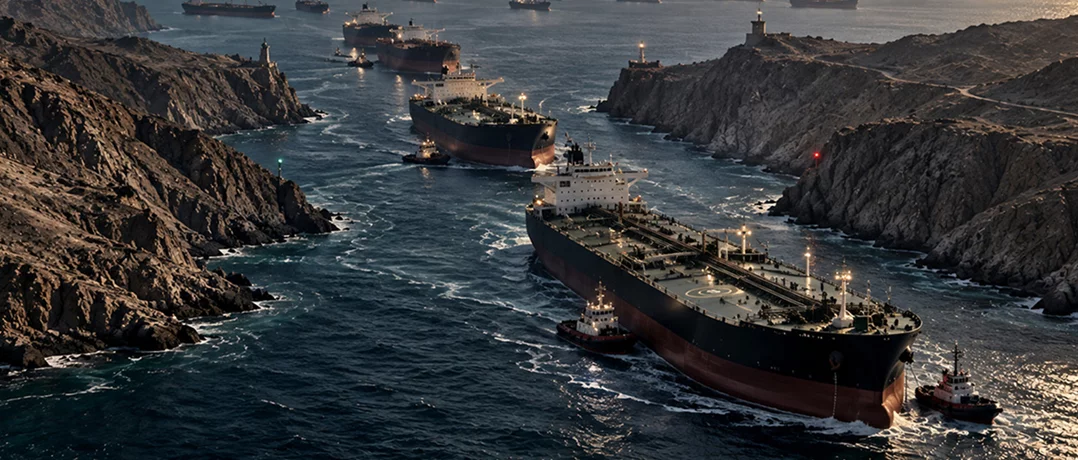
In a matter of days, the military map of Yemen’s Red Sea coast has been transformed. A renewed Houthi offensive pushed forces aligned with the Presidential Leadership Council into a tactical retreat and redeployment southward from positions along the western coast, including Mokha and Dhubab. By September 11, the Hanish-Zuqar island group and Mayyun had also fallen under Houthi control, carrying the battlefield from Yemen’s coast into the islands surrounding Bab al-Mandeb.
The islands, however, do not carry equal strategic weight. The Hanish group, including Zuqar and Greater Hanish, lies farther north, forming the first offshore line along the approaches to Bab al-Mandeb. Mayyun, historically known as Perim, occupies a different position altogether: it sits inside the strait itself, dividing the waterways through which vessels enter and leave the Red Sea.
Hanish and Zuqar: The outer northern screen
Before reaching Bab al-Mandeb from the Red Sea, vessels pass the Hanish-Zuqar group, whose principal islands include Zuqar, Greater Hanish and Lesser Hanish. Lying roughly 150 kilometers north of the strait and alongside international shipping routes running down Yemen’s western coast, the islands provide an offshore position overlooking the northern approaches to Bab al-Mandeb.
From the islands, forces can maintain an offshore presence away from the mainland, monitor maritime traffic moving toward Bab al-Mandeb and observe activity along a lengthy stretch of Yemen’s Red Sea coast. Their position also made them useful for monitoring maritime routes that could be used to move weapons and other supplies toward Houthi-held territory.
Their military value had become increasingly visible in recent years. Beginning in 2025, a new dock and a runway nearly 2,000 meters long were constructed on Zuqar. The new infrastructure on the island could support larger-scale operations, while analysts said the position could improve surveillance across the Red Sea and help monitor weapons-smuggling routes toward Houthi territory. From Zuqar, aerial surveillance could potentially extend toward the Gulf of Aden and Bab al-Mandeb itself.
The strategic importance of the archipelago also predates Yemen’s current war. Yemen and Eritrea fought over Greater Hanish in 1995 before international arbitration awarded the Hanish-Zuqar group to Yemen three years later. Their latest change of hands adds another chapter to that long history of competition over islands whose value derives largely from their position along the southern Red Sea.
Mayyun: the island inside the gate
Mayyun occupies a fundamentally different position from the Hanish group. The volcanic island, historically known as Perim, lies inside Bab al-Mandeb itself, dividing the strait into two passages between Yemen and the African coast. Its importance has consequently attracted outside powers for more than two centuries.
Britain first occupied Mayyun in 1799, amid fears that French expansion through Egypt could threaten the route to India. The garrison was soon withdrawn: the barren island lacked fresh water, and British officials concluded that artillery batteries there could not command the entire width of the strait.
Britain reoccupied the island in 1857, partly in anticipation of the strategic importance Bab al-Mandeb would acquire once the Suez Canal linked the Mediterranean directly to the Red Sea. A lighthouse was completed four years later, and Mayyun eventually developed into a coaling, cable and signaling station tied to Aden and the maritime route between Europe and India.
Its position became sensitive enough that, as Britain prepared to leave Aden in 1967, London proposed placing Mayyun under United Nations administration. The stated purpose was explicit: to ensure freedom of navigation through Bab al-Mandeb and prevent misuse of the island from closing the waterway. The proposal was not adopted, and Mayyun instead became part of the newly independent South Yemen.
Those concerns soon acquired a military dimension. In June 1971, commandos from the Popular Front for the Liberation of Palestine attacked the Liberian-flagged, Israel-bound oil tanker Coral Sea near Mayyun. Operating from a small motorboat, the attackers fired rocket-propelled weapons at the vessel, setting part of the tanker on fire before the crew extinguished the blaze.
Two years later, during the October 1973 Arab-Israeli War, Yemeni artillery positioned on Mayyun, together with Egyptian naval units, imposed an undeclared blockade at the southern entrance to the Red Sea for about four weeks, restricting Israeli-linked shipping through Bab al-Mandeb.
The island returned to the center of Yemen's wars four decades later. Houthi forces took Mayyun during their 2015 advance south before Yemeni government and coalition-backed forces restored control that October. Its military infrastructure was subsequently strengthened, and by 2025 the island had an operational runway.
What control changes militarily
The Houthis already possessed weapons capable of reaching vessels in the southern Red Sea and Gulf of Aden. The difference now is distance. With positions closer to the shipping lanes, systems that previously required greater range can be employed from much nearer the target, while cheaper short-range capabilities, potentially including FPV-type drones, become more relevant.
That proximity complements an arsenal the Houthis have already demonstrated at sea. Since 2023, they have used anti-ship ballistic and cruise missiles, one-way attack drones, explosive unmanned boats and small craft against commercial and military vessels. They have also carried out boarding operations, most prominently the seizure of the Galaxy Leader, a roll-on/roll-off cargo ship.
There are also signs that the wider weapons-development environment in northern Yemen is becoming more technologically sophisticated. Anthropic recently disclosed that it had disrupted a Yemen-based engineering cell using Claude across three guided-weapons projects, including a ballistic missile with a stated range above 2,000 kilometers and work involving a hypersonic-glide variant.
The cell also carried out a live guided-rocket test in Yemen, although Anthropic said the test failed. Anthropic did not formally identify the cell as Houthi, but the activity took place in Houthi-controlled northern Yemen and has subsequently been linked to the group in international reporting.
Surveillance is another part of that equation. Maritime attacks depend on locating and correctly identifying vessels before weapons are launched. The Houthis have previously drawn on coastal observation, unmanned aircraft and commercial ship-tracking information, but their campaign has also exposed the limits of relying on incomplete or outdated ownership data.
In several cases, vessels were targeted based on links that were no longer current or could not be substantiated. The Andromeda Star, for example, was attacked in April 2024 after being wrongly described as British-owned. Additional offshore positions could therefore improve not only observation of traffic through Bab al-Mandeb, but also the ability to track vessels more directly as they pass through the strait.
This still does not amount to uncontested military command of the strait. American, Saudi and other naval forces retain far greater conventional capabilities. What changes is the density of the threat around the waterway: Houthi weaponry and surveillance assets can potentially be brought together across a much narrower operating space.
From Yemen to a global maritime problem
Control of positions around Bab al-Mandeb does not mean the Houthis can simply shut the strait at will. Nor would they necessarily need to. Their maritime campaign has already demonstrated that attacks on a relatively small number of vessels can alter commercial behavior, prompting major shipping companies to divert around the Cape of Good Hope rather than accept the additional risk of the Red Sea route.
After Houthi attacks began in late 2023, freight rates on some routes between China and Europe and the Mediterranean roughly quadrupled within two months. The cost of shipping a standard 40-foot container from China to the Mediterranean, for example, climbed from about $1,000 to more than $4,000. War-risk insurance premiums for Red Sea voyages also rose from around 0.02–0.03% of a vessel’s value before the attacks to about 1% during 2024, reaching as high as 2% for some transits as the campaign intensified.
That vulnerability has become considerably more important due to the current conflict between the United States and Iran. Disruption at the Strait of Hormuz has redirected a growing share of Gulf energy exports toward the Red Sea. According to the U.S. Energy Information Administration, crude oil and petroleum-liquid flows through Bab al-Mandeb rose from 5.4 million barrels per day in the final quarter of 2025 to 8.1 million in the second quarter of 2026. Over the same period, flows through Hormuz fell from 21.6 million barrels per day to 4.9 million. Saudi Arabia’s East-West pipeline has provided a critical alternative by allowing crude to reach the Red Sea port of Yanbu without passing through Hormuz.
The timing gives the Houthi advance a significance far beyond Yemen. Five military sources from Yemen’s internationally recognized government, citing intercepted communications and accounts from captured Houthi fighters, said Iran’s Revolutionary Guards directed the latest offensive, although Tehran denies directing Houthi military operations. Iranian pressure around Hormuz and the advance of an Iran-aligned armed group to Bab al-Mandeb now create simultaneous threats at both maritime gateways flanking the Arabian Peninsula.
The islands themselves may be Yemeni, but the consequences of who controls them extend far beyond Yemen. Their change of control reduces the strategic depth around a waterway on which global trade and energy flows depend. If Bab al-Mandeb becomes more dangerous, the economic bill will be carried far beyond the region.
-
-

-
Nami El KhazenJournalistFocusing on geopolitics and international affairs.
-
