



At an exclusive conference attended by The Beiruter, Finance Minister Yassine Jaber outlined Lebanon’s 2027 draft budget law, revealing the government’s roadmap for reform, recovery, and renewed confidence.
Lebanon’s 2027 budget bets on reform and recovery
Lebanon’s 2027 budget bets on reform and recovery
By The Beiruter | September 18, 2026

Reading time: 6 min
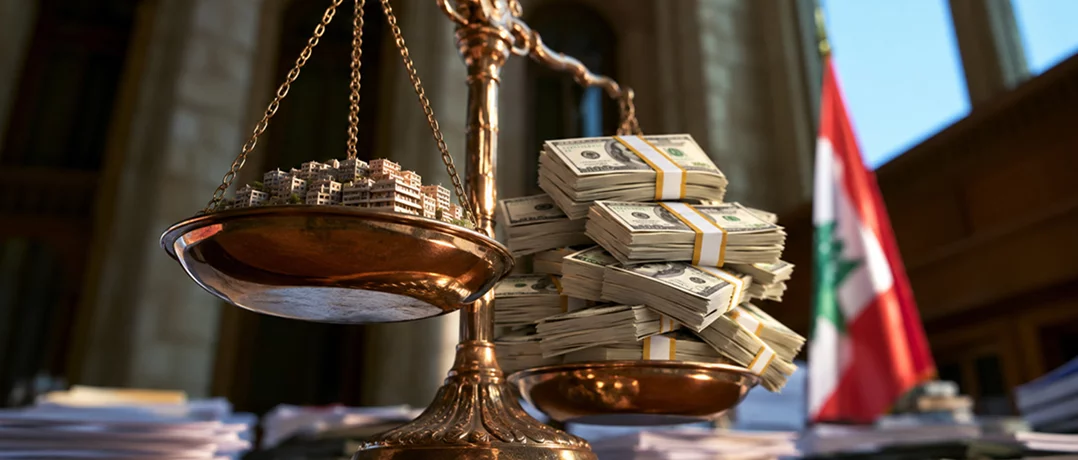
The Ministry of Finance has referred the draft budget law for 2027 to the Council of Ministers, in preparation for its review and subsequent referral to Parliament according to constitutional procedures. The draft comes as Lebanon continues discussions with the International Monetary Fund (IMF) on fiscal reforms, banking restructuring, and medium-term economic planning.
Finance Minister Yassine Jaber presented the government’s approach during an exclusive conference organized by Leaders Club by Lebanon Opportunities at Le Gabriel in Beirut, which was attended by The Beiruter along with members and friends of the club, stressing that restoring confidence in state institutions remains the central challenge facing Lebanon.
Restoring confidence through reform
Addressing Lebanon’s economic situation, Jaber described the country as facing one of the most complex crises in its modern history, with a severe loss of confidence affecting state institutions, citizens, and Lebanon’s international image.
He noted that Lebanon had begun laying the foundations for economic recovery before the latest war between Israel and Hezbollah placed additional burdens on public finances and damaged infrastructure, particularly in the south and the Bekaa. According to Jaber, “reconstruction will be a test of the state’s ability to restore the confidence of Lebanese citizens as well as the Arab and international communities.” He thus stressed that
no external support can be sustainable without effective and credible institutions.
Jaber also highlighted Lebanon’s vulnerability to regional developments, noting that economic recovery cannot be separated from the broader regional environment. However, he rejected pessimistic approaches, arguing that Lebanon still possesses important assets, including human capital, private sector capabilities, the diaspora, and long-standing relations with Arab countries.
Consequently, Jaber asserted that “reform is the only path to saving Lebanon. It is not a submission to external demands, but a necessity for rebuilding the country from within.”
IMF agreement as a confidence-building mechanism
Jaber stressed that cooperation with the IMF should not be viewed as an objective in itself, but rather as a signal that Lebanon has committed to a serious reform process.
According to the minister, an agreement with the Fund would represent a “certificate of confidence” that could contribute to restoring investor confidence, facilitating reconstruction efforts, and reintegrating Lebanon into international financial markets.
The ongoing discussions with the IMF include several key areas, including banking sector reform, public finance modernization, transparency, and governance. Jaber pointed to recent legislative steps, including lifting banking secrecy and approving the Bank Resolution Law (BRL), as evidence that Lebanon has begun implementing structural reforms. What remains is the Financial Gap Law; “the final bridge that we need to cross,” according to Jaber.
He described banking reform as a necessary condition for reviving the financial sector, stressing that the objective is not to eliminate banks but to establish clear rules allowing viable institutions to operate again. This includes ensuring sufficient capital levels, potentially encouraging mergers, and restoring public confidence in the banking system. “To reactivate the banking sector, we must first restore public confidence in banks,” he added. “Achieving this requires the adoption of an appropriate legal framework.”
Jaber warned that Lebanon remains exposed to international scrutiny, particularly as the country seeks to exit the Financial Action Task Force’s (FATF) grey list and reduce reliance on a cash-based economy.
We must eliminate the cash economy and restore the banking sector.
Modernizing public finances and improving state efficiency
One of the government’s priorities, according to Jaber, is transforming Lebanon’s financial management system from a traditional budget based primarily on expenditures and salaries into a program-based budgeting approach focused on objectives and performance.
The Ministry of Finance has launched a project to transition from an item-based budget, which focuses primarily on salaries, to a program-based budget.
The Ministry of Finance has also been working on digital transformation initiatives, including electronic tax payments (in either Lebanese pounds or, in certain cases, U.S. dollars), digital wallets, and online services aimed at simplifying procedures for citizens and improving tax collection.
Jaber said the ministry had launched an artificial intelligence-based assistant through its YouTube platform to help citizens obtain information about public services and administrative procedures.
Regarding revenue collection, the minister explained that previous criticism over limited income tax revenues was partly linked to the suspension of tax declaration deadlines. He noted that the situation had changed, as no similar extensions were granted this year, allowing the administration to improve collection mechanisms.
The ministry is also strengthening efforts to combat tax evasion by reviewing the compliance of approximately 1,500 to 1,600 major companies across different sectors. The introduction of electronic invoicing and incentive mechanisms, including a lottery system linked to invoices, aims to encourage citizens and businesses to request official receipts and reduce informal economic activity.
Through electronic invoicing, we will gradually force unregistered sectors to formalize and register their activities.
In this context, the Ministry of Finance is also advancing its broader digitalization agenda by developing electronic platforms and applications that provide citizens with easier access to administrative information and services, including matters related to real estate and other public procedures. The initiative forms part of the ministry’s efforts to modernize and digitalize its operations and move toward e-governance, reducing costs and simplifying citizens’ access to essential information.
Jaber also highlighted efforts to improve the management of state-owned enterprises (SOEs). He said institutions such as the Régie Libanaise des Tabacs et Tombacs (RLTT) have evolved from representing a burden on the public treasury into becoming an important source of state revenue. The government is also working to corporatize several public entities, including Électricité du Liban (EDL) and the Port of Beirut, as part of broader efforts to improve governance and operational efficiency.
However, Jaber acknowledged that expanding the tax base and integrating informal economic sectors cannot happen overnight, particularly given administrative constraints and public sector disruptions. He also warned that economic stagnation and layoffs in Gulf countries could eventually affect Lebanese expatriates, businesses, and remittance flows, given the large Lebanese community working across the region.
Nevertheless, He noted that “within six and a half months, we were able to maintain financial and monetary stability. The Lebanese pound has preserved its value, while salaries and payments have continued on time through liquidity management.”
Energy reform and economic recovery priorities
Energy remains one of Lebanon’s most significant structural challenges. Jaber explained that electricity sector reform is essential because the current model generates losses regardless of production levels.
The government is working on restructuring the sector by separating electricity generation, transmission, and distribution. According to the minister, private sector participation will be encouraged in some areas, while regulatory reforms will create a more sustainable framework.
We do not want to sell state sectors. We want the private sector to become a partner.
Furthermore, he highlighted the importance of reducing Lebanon’s dependence on diesel, which contributes significantly to imported inflation and affects production costs across the economy. A potential transition of the Deir Ammar power plant from diesel to liquefied natural gas (LNG) through Jordan could help reduce energy costs.
Jaber also pointed to Lebanon’s potential key role in regional energy connectivity, particularly regarding oil pipelines and railway links. The government has requested a World Bank study on improving regional connectivity, especially as recent geopolitical tensions and developments in the region, particularly in the Gulf, have increased attention toward the Eastern Mediterranean.
Balancing fiscal discipline and social pressures
The preparation of the 2027 draft budget law comes amid significant social pressures, particularly from public sector employees, military retirees, and pensioners who argue that salaries have lost much of their purchasing power since the 2019 financial collapse.
Jaber acknowledged the legitimacy of these demands but stressed the limitations facing public finances. He explained that restoring salaries to pre-crisis levels would require economic conditions comparable to those of 2019, including a significantly larger GDP and greater state revenues.
The minister noted that Lebanon cannot rely on borrowing, as international and domestic access to financing remains limited. Instead, the government must focus on economic growth, improved tax collection, and restoring confidence.
He expressed cautious optimism that if regional conflicts subside and stability improves, Lebanon could achieve economic growth of around 3% to 4% in 2027, supported by tourism, better public administration, and stronger revenue performance.
The success of the budget, however, will depend not only on its adoption but also on the government’s ability to implement reforms, strengthen state capacity, modernize public administration, and rebuild trust in Lebanon’s economic institutions.
-
-

-
The Beiruter
-
