



After nearly three decades at Baalbek, German archaeologist Margarete van Ess knows where to look. The Beiruter spent a day following her through a history that begins long before Rome, with Neolithic settlements, medieval fortifications, and a surprising amount of water.
The many lives of Baalbek

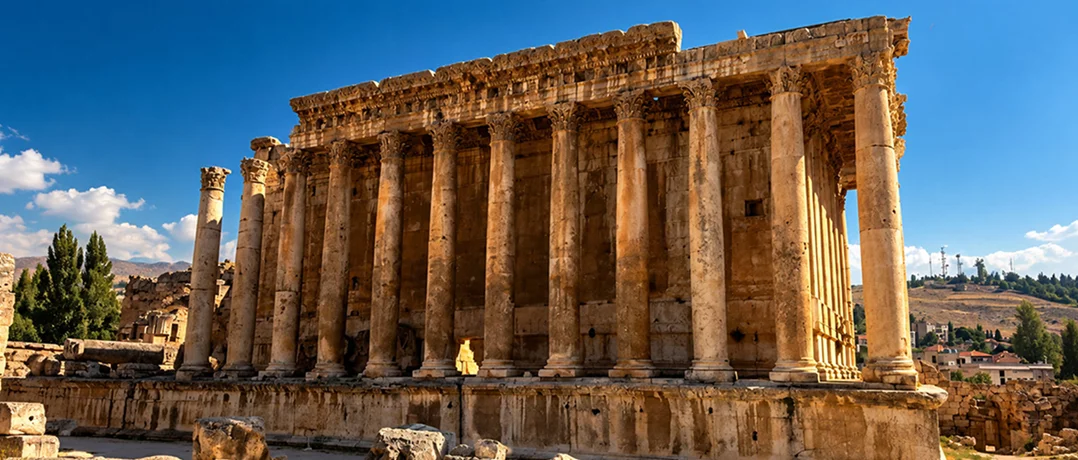
Following Margarete van Ess around the archaeological site of Baalbek is like playing a rather elaborate game of hide-and-seek among a maze of ancient ruins. The German archaeologist has spent nearly three decades working here, and has a slightly disorienting, if not endearing, habit of disappearing behind colonnades, picking her way between fallen blocks, and reappearing beside a fragment or structure a typical visitor might overlook. Pause to take a picture, and she will have drifted off to peer at the remains of a medieval moat around the site’s exterior. Stop to tie your shoe, and she will have wandered to a seemingly unremarkable hole beside the Temple of Jupiter, where an excavation more than eight metres deep has exposed layers of settlement reaching back to the Neolithic period. Oh, and did we mention that Baalbek is Neolithic? For a site best known for its monumental Roman temples, Baalbek contains a remarkably long archaeological record. Bronze and Iron Age settlement preceded the Romans, while Byzantine churches and medieval fortifications followed them. Van Ess has spent much of her career working across those layers, piecing together a history of Baalbek that neither begins nor ends with Rome. “No one has fallen into that hole since the 1970s,” she said. How encouraging. The layers van Ess points out so readily were not always treated equally. When European archaeologists descended on the eastern Mediterranean in the 19th and early 20th centuries, classical antiquity commanded particular attention. Baalbek, with some of the largest surviving Roman temples anywhere in the world, was difficult to resist. Germany arrived with an emperor. Kaiser Wilhelm II visited Baalbek in November 1898 during a tour of the Ottoman Empire, an encounter that helped set in motion the first German excavations of the site two years later. Led by archaeologist Otto Puchstein, the expedition worked at Baalbek from 1900 to 1904, documenting and excavating a sanctuary whose scale had fascinated European travelers for centuries. The expedition belonged to a period when archaeology was becoming both a professional discipline and a source of national prestige. France, Britain, Italy and Germany established institutes, sponsored excavations and sought scholarly prominence across the Mediterranean and Near East. “There was a huge competition in the 19th century between different European countries over who could develop the strongest departments for classical studies,” van Ess said. What archaeologists chose to preserve and expose at Baalbek also depended on what successive generations wanted to find. The German excavations left in place the enormous Byzantine basilica built over the Roman sanctuary. During the French Mandate, archaeologists removed it to investigate the Roman altar underneath. In an era when excavators often privileged particular periods, later structures were sometimes removed in order to investigate earlier remains beneath them. “It is critical to respect all the periods, because then people can understand the evolution of humanity,” said Laure Salloum, who oversees Baalbek for Lebanon’s Directorate General of Antiquities (DGA) and has worked alongside van Ess at the site. A century after Wilhelm II's visit, German archaeologists returned. In 1998, van Ess began working at Baalbek as part of the German Archaeological Institute, or DAI, the federal research institution that has conducted archaeological work abroad since the 19th century, some of the work involved returning to excavations that earlier generations had left unfinished or unpublished. At Bustan Nassif, for example, an excavated area of medieval Baalbek just southeast of the main temple complex, excavations had exposed medieval houses and other remains before work was interrupted by Lebanon’s civil war. The excavation left behind a dense collection of walls and documentation that later researchers had to reconstruct. Van Ess and her colleagues worked alongside the Directorate General of Antiquities, comparing old excavation records with what remained on the ground to establish what the surviving walls had once formed and how the area had been used. Similar work helped researchers reconstruct a Roman bath whose upper structure had largely disappeared. “Everything about Baalbek is surprising,” van Ess said. Consider the ornamentation, Salloum said, which contrasted with the recognizable decorative patterns typically repeated across Roman temples. At Baalbek, the sculptors occasionally seem to have departed from them. Among otherwise conventional elements appear unusual animals such as snakes or human faces, a testament to how much room the sculptors could find for invention within established Roman conventions. “The artists played,” Salloum said. Whether these departures were playful flourishes or carried some dedication to particular deities is harder to establish, she added. But the most exciting result of their decades of work at Baalbek? Even more than the odd snake or unexpected human face? “That would be the role of water,” van Ess said. Water? In Baalbek? Yes, van Ess confirmed. Water. Standing within the sun-baked sanctuary on a hot, dry September day, it is difficult to imagine water ever playing into the surrounding landscape. On that particular late-summer afternoon, the area looked rather…parched. A quick glance at the ground underfoot confirmed the initial suspicion: Yep, no water. The modern landscape, however, is deceptive. Ancient canals, van Ess explained, once carried it toward the city from springs around the Bekaa Valley. In particularly wet years, water spilled through the wadis and inundated the area around the Temple of Venus. At the Jupiter sanctuary, it was channeled into basins where the difference in elevation could have produced fountains rising roughly 15 metres into the air. The fountains were positioned in a landscape Romans associated with the sources of two of the region’s great rivers. The Litani ran south through the Bekaa Valley, while the Orontes flowed north toward Syria. Standing between them, the sanctuary could present Roman control not only in stone, but in water. “It must have been unbelievably impressive,” van Ess said. In case several millennia of settlement, conquest and war have not left Baalbek with enough archaeological puzzles, a short walk from the temples, hundreds of architectural fragments are arranged inside the newly rehabilitated Mesdakhana, a research collection that functions, in effect, as a library of stone. Columns, capitals, and other pieces line three rows of shelving that wrap around the room, while larger pieces, some still bearing elaborate carvings, are gathered on a platform at its center. Over the past year, Lebanese heritage NGO Biladi has rehabilitated the Mesdakhana with support from Germany’s Gerda Henkel Foundation and supervision from the DAI. The project has so far recorded around 1,600 pieces in a database intended for eventual digital access. The building itself had suffered roof collapses after standing for roughly a century. A hundred years is a respectable run for a roof. The new one now has a century to beat. For now, visitors can peer through the barred doorway. The space is eventually intended to open more fully to the public and provide researchers with somewhere to work among the fragments themselves. “Baalbek has always been interactive,” Salloum said. But remaining within that original context is a luxury foreign archaeologists do not always have. Archaeologists like van Ess arrive for excavations, research and field seasons, but eventually depart Baalbek for universities and institutes abroad. Those who remain with the site year-round are Lebanese. “We have to leave the site and return to our writing tables,” she said. Alongside excavation and documentation, the DAI and its Lebanese partners have therefore trained students and local craftspeople in archaeological conservation. The German Embassy describes the cooperation as part of its cultural and scientific diplomacy in Lebanon, a relationship that has now stretched across more than a century. For van Ess, however, nearly three decades of that relationship are drawing to a close. She is approaching retirement, and at Germany’s Unity Day celebration in Beirut this week, Ambassador Thomas Zahneisen honored her for her work connecting Germany, Lebanon, and the wider Middle East. Back in Baalbek, van Ess did not look much like someone preparing to stop. As the group exited the Mesdakhana and made its way back toward the complex’s entrnace, she paused at an unassuming stone. The subject in question? An inscription from the Temple of Jupiter that records a date around 60 AD, fixing its place on the monument to the reign of Nero. “A proper archaeological tour here would last four hours,” she said. Apparently, even leaving Baalbek takes time.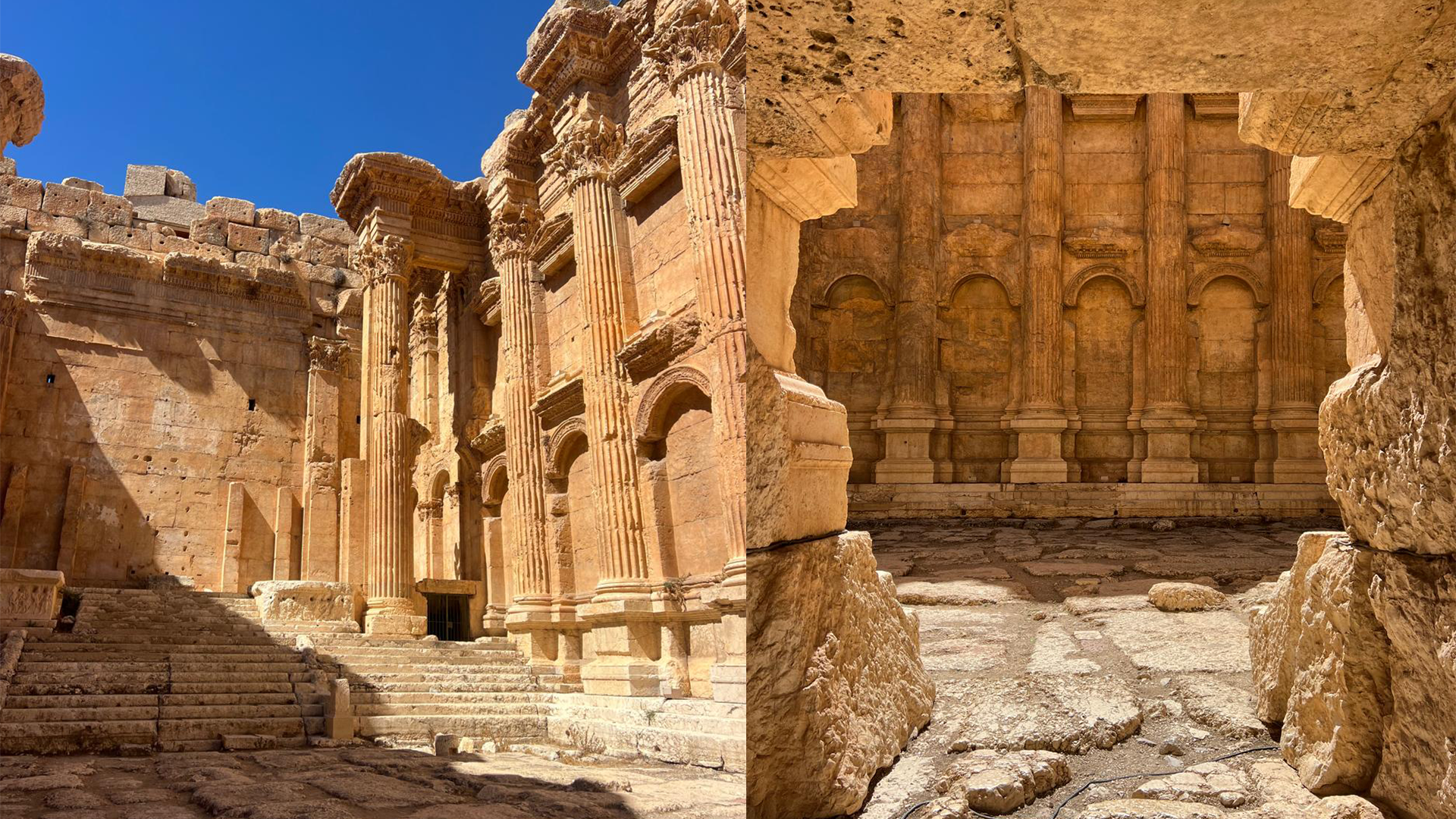 Views inside Baalbek’s monumental Temple of Bacchus complex. Source: The Beiruter
Digging past Rome
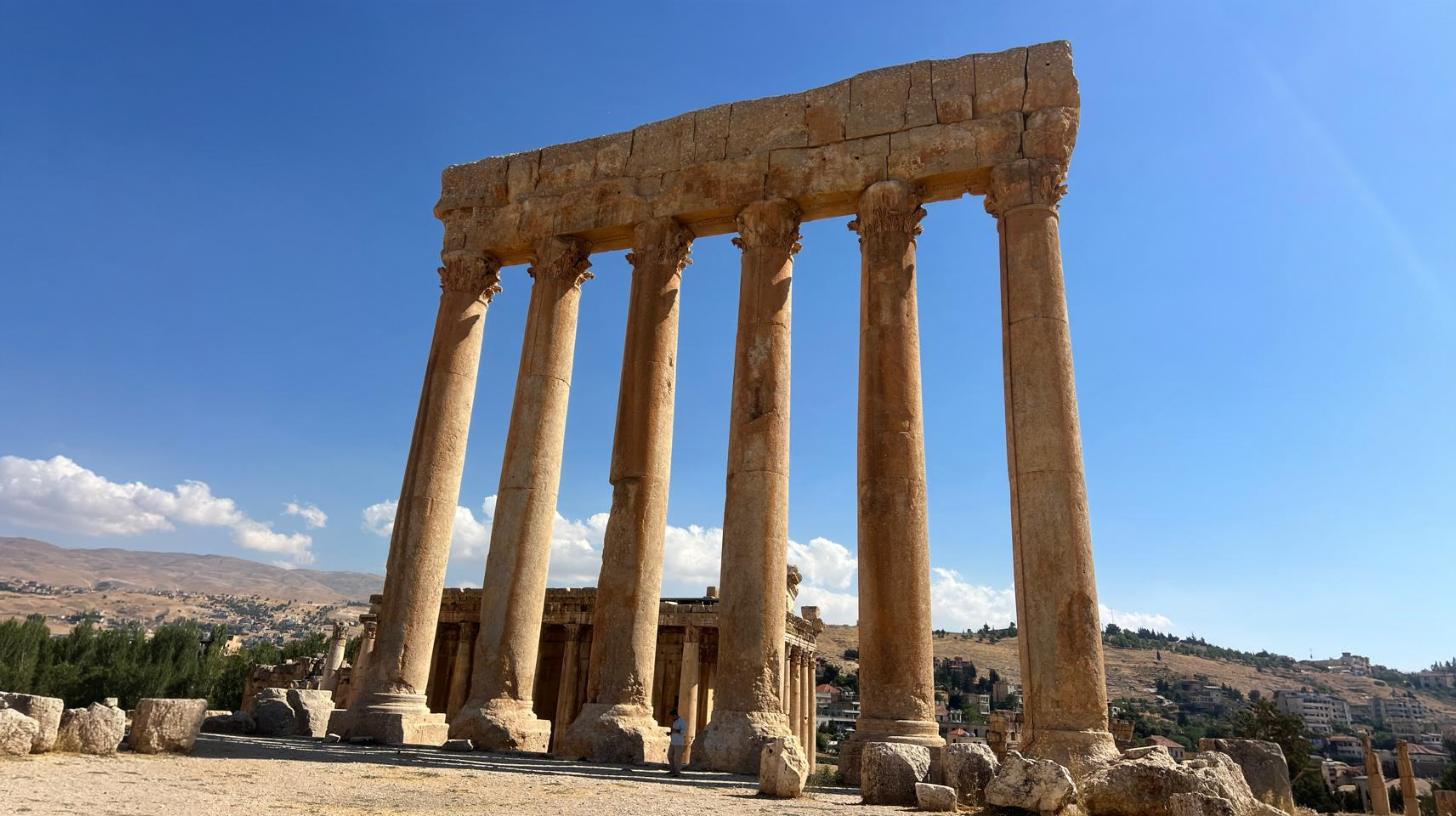 Six surviving columns of the Temple of Jupiter rise above Baalbek. Photo: The Beiruter.
 Archaeology without humanity is nothing. It’s just an exhibition of objects.
What Baalbek still hides
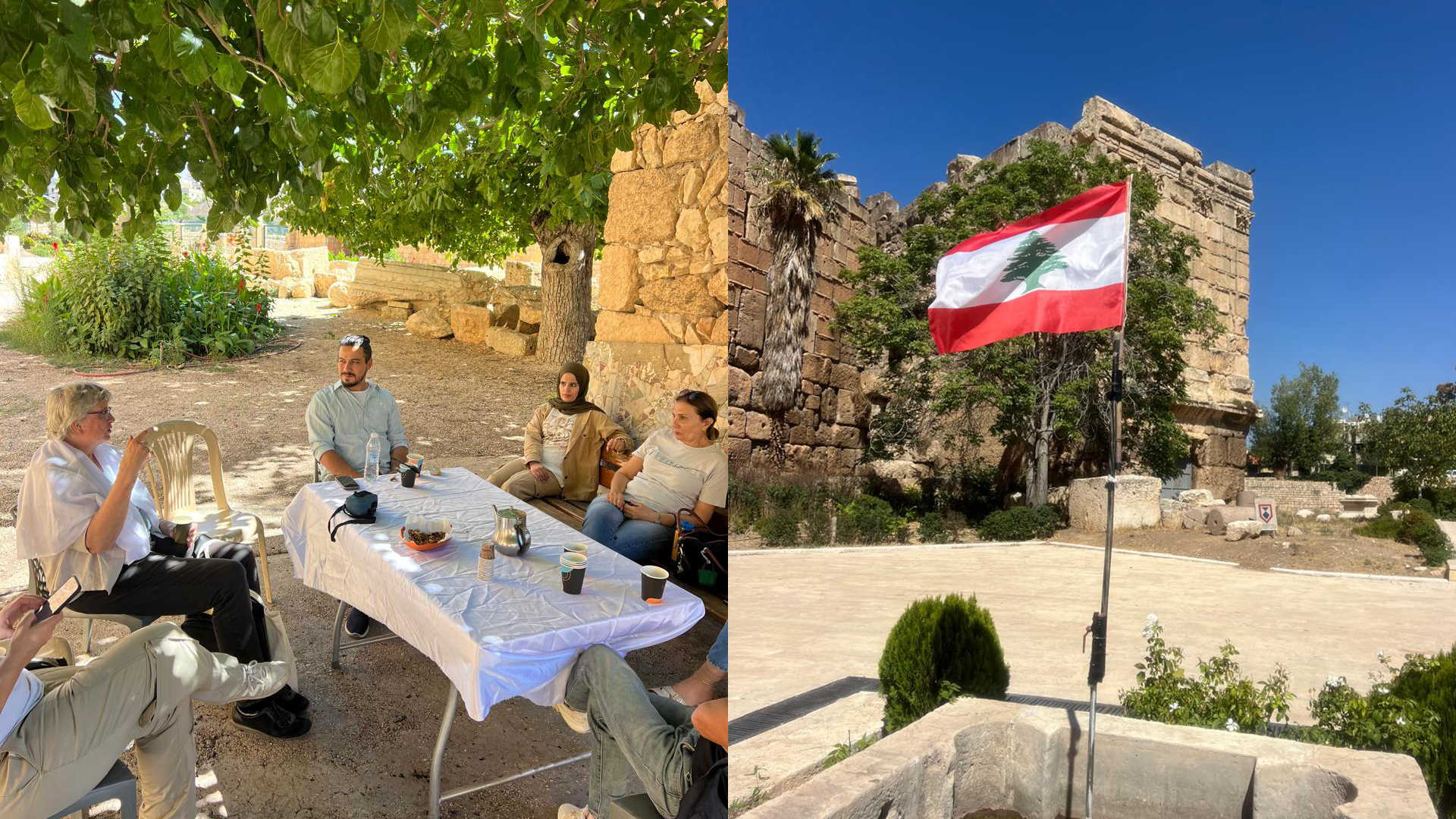 Margarete van Ess speaks with DCA and Biladi colleagues at the archaeological site of Baalbek. Source: The Beiruter.
For centuries, we will be able to keep discovering things.
The impression for the Romans was that they were sitting at the watershed of these two systems, almost like emperors over the water. It was a little bit of a power play.
A library of stone
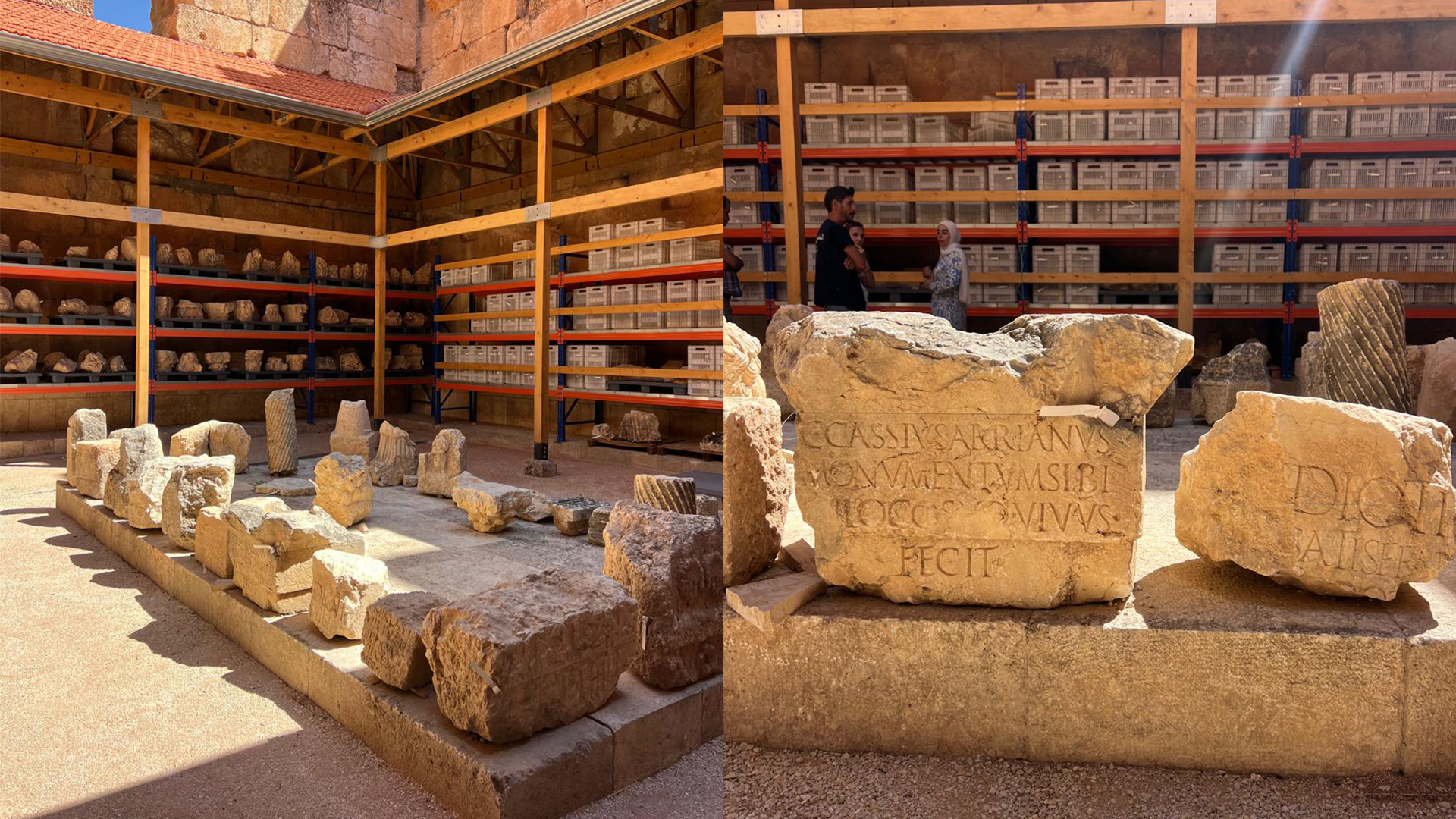
Architectural fragments and inscriptions inside Baalbek’s newly rehabilitated Mesdakhana. Photo: The Beiruter.Being among the original context is an entirely different way of experiencing history.
It’s really the local staff who are critical. You have to ensure that everybody is in love with these sites, otherwise, you can’t protect them.
-
-

-
Katharine SorensenReporterSpecializing in global affairs, technology and economics, with a focus on on-the-ground investigative reporting.
-
