



The Education Ministry says consolidating under-enrolled schools will reduce waste and make better use of limited resources. But two cases in Hadath and Hsarat show how the logic of reform becomes more complicated once it reaches individual schools.
The other side of reform: Inside Lebanon’s school mergers
The other side of reform: Inside Lebanon’s school mergers
By Chelsea Al Arif | September 27, 2026

Reading time: 7 min
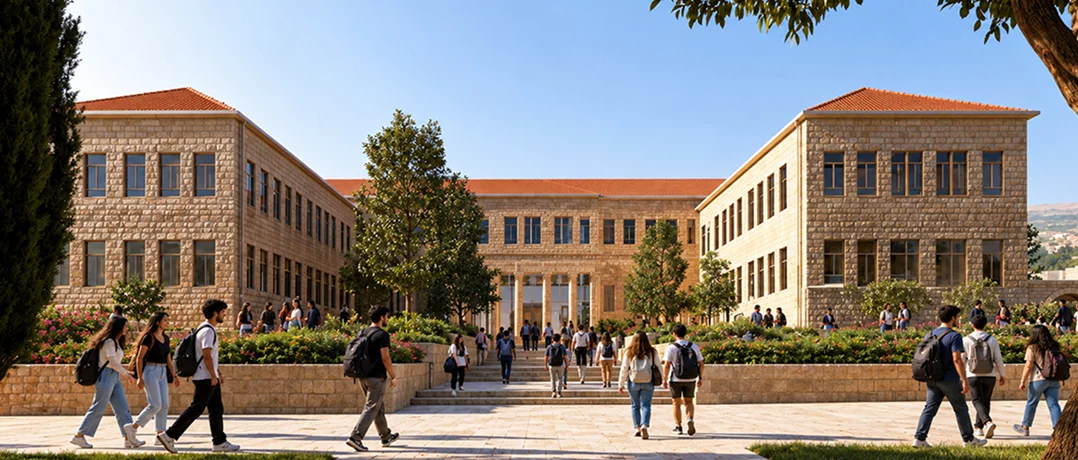
At Hadath Public Secondary School in Baabda, the controversy is not over an entire building shutting its doors.
The premises continue to operate as a public intermediate school in the morning. What was cancelled was the secondary school’s afternoon shift, which served students whose lives did not necessarily fit into a conventional school timetable.
A source at Hadath Public Secondary School told The Beiruter that the administration initially learned that the secondary school would be merged with Kfarshima Public Secondary School through word of mouth and social media. An official written notice arrived only later.
“We were not informed through the proper administrative channels. The decision was kept from us for more than 20 days, and we were only informed in writing after the news had already spread on social media,” the source said.
According to the source, a number of the secondary school’s students work during the morning, in some cases to supplement their families’ income, before attending classes in the afternoon. Moving them to a school operating on a different schedule therefore does not amount simply to changing buildings.
The school formally raised those concerns with the Ministry of Education and asked it to reconsider the decision.
The response, according to the source, never came.
The letter I submitted explained that some students work in the mornings and attend school in the afternoons. It received no response. I received confirmation that it had reached the minister’s WhatsApp account and had been read, but no reply came.
The source said the school received confirmation that the message had reached Education Minister Rima Karami’s WhatsApp account. The Beiruter has not independently verified who read the message.
Hadath had also proposed delaying the decision to give students and teachers time to reorganise their schedules. The source said there was concern that students unable to combine morning work with another school’s timetable could ultimately leave education, although The Beiruter could not independently establish whether any students have dropped out.
In an August 22 statement, Karami rejected the characterisation of the policy as a wholesale closure of public schools. She said it targeted a limited number of struggling schools and secondary schools, some of which had no more than 10 pupils. According to the Ministry, affected institutions had already been given a year to increase enrollment before the latest decisions were made.
The Ministry described consolidation as part of a reform plan intended to rationalise public spending, curb waste and improve the distribution of human and financial resources. It said students would be transferred to nearby public schools and stressed that decisions were based on what it described as objective educational, administrative and financial criteria. Karami also said individual cases could be reconsidered if new information emerged that had not been available when the decisions were made.
A joint analysis by the World Bank and the Ministry, using first-shift data from the 2022-2023 academic year, found that Lebanon had around 13 primary pupils for every teacher and just 5.9 secondary pupils per teacher. The comparable OECD averages were 15 and 13 respectively. The analysis linked Lebanon’s low ratios partly to the prevalence of small schools, the limited number of hours taught by some contracted teachers, teacher specialisation and the need to staff parallel English and French language streams.
The World Bank concluded that there was room to improve the deployment of teachers and optimise the public-school network. But it also cautioned that national averages concealed wide variation between schools and regions.
The argument made by sources in both schools is not that every small institution must remain open regardless of cost. It is that enrollment figures alone may fail to capture how a school functions, how its teachers are deployed or what role it plays for the population it serves.
In Hadath, the afternoon secondary school operated from a municipal building that, according to the source, did not generate rent costs for the Ministry. The building remains occupied by the public intermediate school in the morning.
The Hadath source also said most teachers were permanent Ministry staff whose teaching loads were shared with other schools. After the decision, teachers were redistributed among several secondary schools, with only some transferred to Kfarshima.
“I support reform. I do not accept a situation in which one teacher has seven students while another has 30,” the source said. “But reform cannot be reduced to closing schools. There are other ways to strengthen and develop them.”
The source’s criticism went beyond the mechanics of the merger. They also questioned whether educational considerations alone were shaping the decisions, saying they suspected political considerations had entered the process. The source did not provide evidence establishing political interference.
The Ministry has publicly rejected that premise. Karami has maintained that the decisions are governed by educational, administrative and financial considerations, and that student interests, educational quality and the management of public funds are the standards on which the policy is based.
That leaves an important question at the centre of the reform: not only whether consolidation is necessary, but whether the criteria used to determine which schools are merged are sufficiently transparent for affected schools to understand why one case qualifies and another does not.
Kfarshima Public Secondary School declined to comment without formal approval from the Ministry.
Hsarat: when the numbers change
The case of Hsarat Public Secondary School in the Jbeil district raises a different question: what happens when the facts used to justify a merger change before it is completed?
According to a source closely involved in the case, Hsarat had 17 secondary students last year and 10 permanent and contracted teachers. But those teachers, the source said, also complete their teaching loads at other secondary schools, including Jbeil Public Secondary School.
“The Ministry based its position on last year’s enrollment of 17 students,” the source said. “But all ten teachers complete their teaching loads at other secondary schools, including Jbeil Public Secondary School, so none of their teaching hours are going unused.”
This year, the source said, enrollment has reached 37 students across three secondary classes while the number of teachers has remained unchanged.
Public reporting supports the broader trend, even if the figures vary slightly depending on when registrations were counted. An-Nahar reported that Hsarat’s enrollment had risen from 16 to 35 and that Karami had asked for the merger to be put on hold while the situation was reviewed.
The source said students would have to travel to Amchit Public Secondary School, around 10 kilometres from Hsarat, or Jbeil Public Secondary School, around 13 kilometres away. For pupils living in surrounding villages, the journey could reach 25 kilometres, the source said.
Students are not numbers. They are people with rights.
The school’s physical circumstances also complicate a purely cost-based assessment. According to the source, its building belongs to the Lebanese state, sits on donated land and is equipped with solar panels, meaning the school does not incur rent costs.
Yet the Hsarat source said the school was still waiting for a definitive answer when contacted by The Beiruter.
“The minister promised to review the case. A full week has passed, and we have received no further information,” the source said.
The Beiruter contacted Karami and the Ministry of Education seeking comment on the two cases, including the treatment of afternoon schools, the criteria used to assess efficiency, the capacity of receiving schools, the status of objections submitted over the merger decisions and whether political considerations played any role in the process. No response was received by the time of publication.
Lebanon’s public-school system does face an efficiency problem. Keeping every school open regardless of enrollment, staffing or cost is not automatically synonymous with protecting public education, and consolidating genuinely underused institutions can free resources for a system operating under severe financial pressure.
A school that allows students to work in the morning and study in the afternoon is not necessarily interchangeable with one operating only during conventional hours. A school whose enrollment has doubled after a merger decision may no longer fit the assumptions on which that decision was made. A building that costs the state little to operate presents a different calculation from a rented or unsafe property.
The test of Lebanon’s school-merger programme, therefore, is not simply how many institutions it can consolidate. It is whether reform can respond to the distinct educational and social realities of the schools and students it is intended to serve, while giving those affected clear reasons for the decisions being made.
Genuine reform requires not only efficiency, but a Ministry willing to explain how those decisions are reached, reconsider them when circumstances demand it, and answer the questions raised by schools, students and the press.
-
-

-
Chelsea Al ArifJournalistMultimedia Data Journalist and Analyst.
-
