



As convenience becomes easier to purchase, wealth is giving affluent consumers greater control over how they spend, save and reclaim their time.
The new luxury is not things, but time

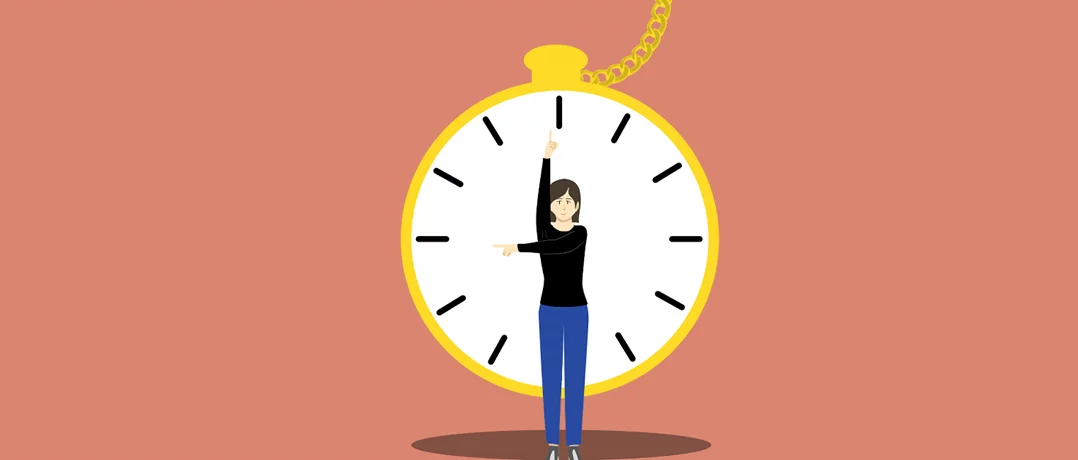
Illustration by Karim Dagher
Luxury has traditionally been easy to see. It announced itself loudly and deliberately, and could be found beside the driveway, hung from a wrist, or served across a dinner table. Yet today a less visible commodity—time—is becoming a luxury of its own, reclaimed by skipping the queue, outsourcing dinner or paying somebody else to clean the kitchen. The hours saved can accumulate in surprisingly mundane places. A 2023 study in Nature Human Behaviour found that when lower-income Americans waited for basic services, they spent 12 minutes longer waiting on average than higher-income people. Across a year, the researchers estimated that the income gap amounted to at least six additional hours spent waiting. Money may not be able to buy love, but it can certainly buy time. Many conveniences of affluent life share a simple proposition: Pay money now and an unwanted claim on your time becomes somebody else's problem. A cleaner can remove hours of housework, delivery can replace the supermarket trip, or a nanny can absorb part of the daily burden of childcare. Researchers have been trying to put a value on this exchange long before app-based convenience became ubiquitous. One of the most significant experiments remains the 2017 study Buying Time Promotes Happiness, which surveyed 6,271 people across the United States, Canada, Denmark, and the Netherlands. Among 4,469 respondents asked about time-saving services, 28.2% regularly spent money to buy themselves time. Those who did spent an average of about $148 a month and reported greater life satisfaction, even after researchers accounted for income and other characteristics. The researchers then put the idea to a simple test. After receiving $40 for a material purchase one weekend and $40 for a time-saving purchase the next, participants reported better moods after buying time, partly because they felt less pressed for it. In this experiment, at least, spending money to clear the calendar brought more satisfaction than spending it on something new. A queue may be one of the few places where the cost of a service can rise without its price changing at all. Time spent waiting for transport, healthcare, public services or everyday errands rarely appears in household budgets, yet every additional minute carries a cost of its own, particularly when there is little choice over when or how it is paid. Using nationally representative survey data tracking how Americans spent each hour of the day, public-policy researchers Stephen Holt and Katie Vinopal found that lower-income people were both more likely to wait for basic services and to wait longer. The gap persisted even after accounting for family responsibilities, education, working hours, travel time and other demographic differences. A price tag, then, tells only part of the story. The same errand can cost one person money and another money plus an hour, as wealth offers more ways to make that hour disappear. Not all free time is equally useful. Knowing when it will arrive can matter almost as much as how much of it there is. A predictable schedule makes it easier to arrange childcare, see a doctor, or plan an evening. Changing shifts, mandatory attendance and little control over working hours, on the other hand, can make even time away from work difficult to plan. According to the 2025 American Time Use Survey, 51% of workers with a bachelor's degree or higher did some work from home on days they worked, compared with 19% of those whose highest qualification was a high-school diploma. Remote work is hardly leisure, but it can give workers greater discretion over how their day is arranged. Two people can work the same number of hours while having very different control over the rest of their day. One can plan around a predictable schedule, while the other must arrange life around working hours they have little power to set. Buying back time often means paying for somebody else's. Behind the cleaner who frees up a Saturday morning, the nanny who makes a full working day possible or the meal delivered in 30 minutes is another person spending their time doing the work. The scale of that transfer is enormous. The International Labour Organization estimates that 75.6 million people worldwide are employed as domestic workers, accounting for 4.5% of employees globally. Three-quarters are women, while 81% work informally, leaving many without the labor protections available to other workers. None of this dependence on paid labor makes convenience inherently frivolous or exploitative. Domestic work provides livelihoods, childcare can make paid employment possible and outsourcing mundane tasks can materially improve people's well-being. The 2017 experiment found benefits from buying time across income levels, rather than only among the wealthy. But access to those exchanges remains unequal. The person with money has more options for deciding which hours to keep, which to delegate, and which inconveniences to avoid altogether. While traditional status goods made wealth visible by displaying what someone could afford to possess, the emerging luxury of time works almost in reverse, revealing itself through absences. No supermarket trip. No queue. No commute. No afternoon lost to housework. Wealth still buys things, but one of its greatest privileges may now lie in all the things it allows people not to do.Buying back the day
The price of waiting
Who owns the calendar?
Whose time gets bought?
-
-

-
The Beiruter
-
