



War damage, water shortages and rising costs threaten Lebanon’s olive oil harvest, rural livelihoods and export markets.
Lebanon’s golden harvest in the line of fire
Lebanon’s golden harvest in the line of fire
By Christiane Tager | October 01, 2026

Reading time: 8 min
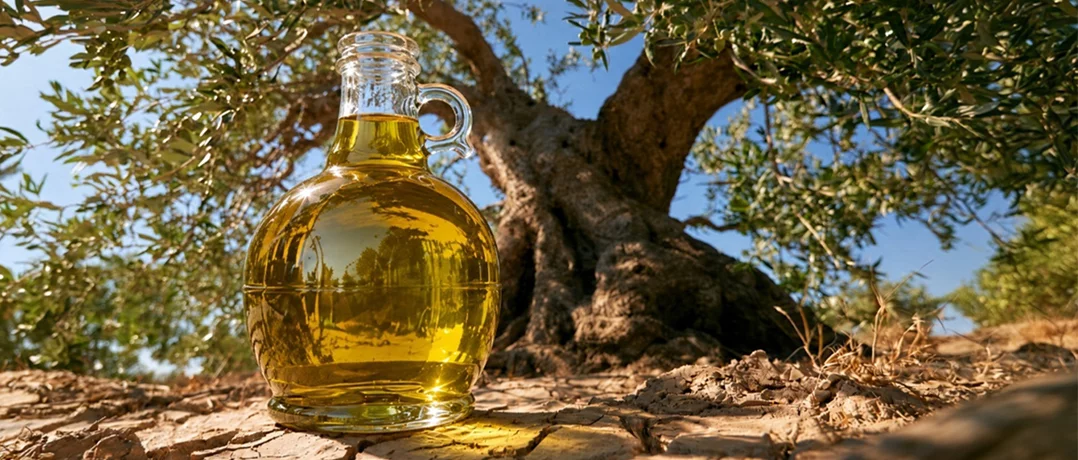
From the hills of the North to the groves of the South, Lebanon’s olive oil industry is facing one of its most difficult seasons in decades. War damage, destroyed agricultural infrastructure, restricted access to farmland and water shortages are putting pressure on a sector that is deeply rooted in the country’s economy, food culture and rural communities.
For Lebanon, olive oil is far more than an agricultural product. It is a major rural industry, an important export product and a source of income for thousands of families. But as the 2026 harvest approaches, the country's olive sector is facing a critical question: How much of Lebanon’s olive oil production will be lost because of the destruction in the South?
A sector worth watching
Lebanon has approximately 590 square kilometers of land planted with olive trees, equivalent to around 9% of the country's agricultural land. About 70% of Lebanese olive trees are dedicated to olive-oil production, while the remainder are used for table olives. Only around 8% of Lebanon's olive-growing area is irrigated, meaning that most production depends on rainfall. The geographical distribution of olive-oil production is highly concentrated.
According to Lebanon's Investment Development Authority, the North accounts for approximately 41% of national olive-oil production, followed by Nabatieh at 21%, the South at 15%, the Bekaa at 13% and Mount Lebanon at 10%.
That means the South and Nabatieh together traditionally account for approximately 36% of Lebanon's olive-oil production.
The North, however, remains the country's largest production area and provides an important buffer when production in the South is disrupted.
The South is paying a heavy price
The scale of agricultural damage in southern Lebanon is becoming increasingly clear. A 2026 assessment by the Lebanese Ministry of Agriculture and its partners found that approximately 56,264 hectares of agricultural land were affected, with 18,559 hectares suffering direct damage. Around 6,600 hectares of olive groves were among the areas affected. The impact goes beyond damaged trees.
Farmers have faced destroyed or damaged irrigation systems, agricultural infrastructure, difficulties reaching their land and prolonged displacement.
Agriculture Minister Nizar Hani said that damage had affected more than 22.5% of agricultural land in the affected southern areas, equivalent to more than 56,000 hectares, and stressed the need to enable farmers to return to their land and harvest their crops. The situation is particularly difficult because olive trees are perennial crops. Destroying an annual crop means losing one harvest. Destroying a mature olive tree can mean losing production for many years.
30,707 tons of olives: the production loss behind the headline
One of the most striking figures comes from the agricultural damage assessment released in 2026. The assessment estimated that approximately 30,707 tons of olive production were lost, representing an estimated $307.1 million in lost economic value. The affected area was estimated at approximately 24,936 hectares of olive-growing land. This figure refers to olives, not olive oil. However, it gives an indication of the potential impact on the oil market. Lebanon's olive-to-oil extraction rate is generally estimated at between 18% and 25%.
If the entire 30,707-tonne loss were assumed to be oil-producing olives, the theoretical equivalent would be approximately 5,500 to 7,700 tons of olive oil.
That should not be interpreted as an official forecast of oil production losses. It is an indicative calculation based on the country's typical extraction rate. The actual loss will depend on the share of affected olives destined for oil, the condition of the surviving trees and the ability of farmers to access and harvest their groves.
Nevertheless, the scale is significant.
What about white phosphorus
The environmental impact of the conflict adds another layer of uncertainty.
The use of white phosphorus in southern Lebanon has been documented, and Lebanon's National Council for Scientific Research reported that at least 173 hectares were burned by white-phosphorus strikes in 2026.
In September, Lebanon's Environment Minister said that Israeli attacks had ravaged approximately 16,000 hectares of land in southern Lebanon between 2023 and August 2026, with fires, uprooting of trees and earthworks affecting agricultural land, forests and soil. But an important distinction must be made.
Lebanon's Agriculture and Environment Ministries previously reported that initial testing of surviving olive crops in southern Lebanon found them safe for consumption, while warning that high phosphorus concentrations in soil could have implications for agricultural productivity and require soil rehabilitation.
So the immediate economic problem is not simply “phosphorus-contaminated olive oil”. The bigger issue is that trees have been burned or damaged, land has become inaccessible, irrigation infrastructure has been affected and farmers have been unable to maintain and harvest their groves normally.
Water could become the next major challenge?
Climate and water shortages are adding pressure to a sector that is already overwhelmingly rain-fed.
Lebanon's Agriculture Ministry has highlighted drought and water scarcity as major challenges for the agricultural sector. In one recent season, rainfall fell to approximately half its normal level, before conditions improved in the following season.
The problem is particularly serious in damaged areas where irrigation infrastructure has also been affected.
A World Bank assessment found that the conflict caused approximately $356 million in damage to the water, wastewater and irrigation sector, including damage to pumping stations, reservoirs and irrigation infrastructure. The assessment also found that 77 kilometers of irrigation canals, around 10% of the total assessed canal network, had been destroyed.
For olive trees, which are naturally drought-resistant, this does not necessarily mean an immediate collapse in production.
But prolonged drought combined with damaged trees, poor access to farmland and disrupted irrigation can reduce yields and weaken trees over several seasons.
Will olive oil prices rise?
Pressure on prices is likely, but the size of any increase remains uncertain.
A smaller domestic harvest generally means less locally produced oil available for the market. At the same time, farmers face higher production costs, while damaged infrastructure and restricted access can increase harvesting and transport costs.
Recent reporting has already pointed to higher prices. One 2026 report cited prices of around $200 for an 18-litre tin of Lebanese olive oil.
However, prices will depend on several factors: the final 2026 harvest; how much production is recovered in the North, Bekaa and Mount Lebanon; the amount of oil carried over from previous harvests; domestic consumption; export demand;
international olive-oil prices; and whether Lebanon needs to increase imports to compensate for the shortfall.
The North could therefore play an increasingly important role in stabilizing domestic supply.
What happens to Lebanon’s exports?
Olive oil is also an important export product for Lebanon.
According to the World Bank's WITS trade database, Lebanon exported 6.22 million kilograms of virgin olive oil worth approximately $40.2 million in 2024. The largest destination was the United States, which accounted for approximately 1.85 million kilograms worth $12 million.
Canada followed with around 854,000 kilograms, while Qatar imported approximately 511,000 kilograms, Kuwait around 494,000 kilograms and Australia around 350,000 kilograms.
The broader Lebanese olive-oil export market also includes other types of olive oil. In 2024, Lebanon exported an additional 3.18 million kilograms of non-virgin olive oil and fractions, worth approximately $28.9 million.
This means the olive-oil trade represents a meaningful source of foreign-currency revenue for Lebanese producers.
Where does Lebanese olive oil go?
Lebanese olive oil has traditionally had a strong presence in both North American and Arab markets.
Older sector data from IDAL showed the United States and Kuwait as the two largest markets, followed by Canada and the United Arab Emirates. In 2019, Arab countries collectively accounted for around 50% of Lebanon's olive-oil exports, while North America represented approximately 30%. The latest trade data show that the United States and Canada remain particularly important markets, alongside Gulf destinations such as Qatar and Kuwait.
This export network could become increasingly important if domestic production falls. But it could also face pressure if the available surplus for export becomes smaller.
A potential squeeze between local demand and exports
This creates an interesting economic dilemma. If production falls significantly, Lebanese producers will face a choice between maintaining export contracts and supplying the domestic market. Higher domestic prices could make exports more attractive in dollar terms. At the same time, a shortage of locally produced oil could reduce Lebanon's export volumes and market presence.
For a country trying to increase agricultural exports and generate foreign currency, maintaining the competitiveness of its olive-oil sector will therefore be important.
A sector larger than the bottle on the supermarket shelf
The olive sector supports far more than farmers. It includes olive mills, agricultural suppliers, packaging companies, transporters, exporters, cooperatives, retailers and rural communities. This is why the damage to olive groves has a multiplier effect.
When an olive tree is lost, the economic impact is not limited to the value of the olives that would have been harvested that year.
It can affect the mill that would have processed them, the worker who would have harvested them, the transporter who would have moved them and the exporter who would have sold the final product abroad.
The Lebanese Ministry of Agriculture has therefore identified olive oil as a strategic sector and is working on a national roadmap covering quality, production, processing, packaging, marketing and exports.
The 2026 olive harvest: what happens next?
The coming harvest will provide one of the clearest measurements yet of the economic consequences of the conflict.
The North, with approximately 41% of national olive-oil production, will be particularly important in compensating for losses elsewhere. The South and Nabatieh, however, traditionally represent approximately 36% combined, meaning that prolonged disruption there cannot easily be absorbed indefinitely.
And the challenge is not limited to one harvest.
An olive tree can survive fire or drought and still produce again. But severely damaged or uprooted mature trees may take years to replace.
That means the consequences of the conflict could extend well beyond the 2026 harvest.
From a traditional crop to an economic priority
Lebanon's olive oil sector now stands at a crossroads. The country still has a significant production base, an established export reputation and access to valuable international markets. But the sector is being squeezed by three forces at once: war damage, water scarcity and rising production costs.
The numbers tell the story:
590 km² of olive-growing land.
41% of production in the North.
36% in the South and Nabatieh combined.
6,600 hectares of olive groves affected in the South.
30,707 tons of olive production estimated lost.
Up to 7,700 tons of potential oil equivalent based on typical extraction rates.
$40.2 million of virgin olive-oil exports in 2024.
The real question is no longer simply how much olive oil Lebanon will produce this year.
It is whether the country can protect its remaining olive groves, restore water and agricultural infrastructure, bring farmers back to their land and preserve the export markets that have made Lebanese olive oil an increasingly valuable agricultural product.
For a crop whose oldest trees can survive for centuries, the decisions made today could shape Lebanon's olive industry for generations.
