



Children’s bedtime battles are often a normal part of development, but persistent sleep resistance, disrupted sleep and daytime effects can signal deeper sleep problems requiring attention.
The bedtime battle: Understanding children’s sleep resistance
The bedtime battle: Understanding children’s sleep resistance
By Maya El Khoury | October 04, 2026

Reading time: 4 min
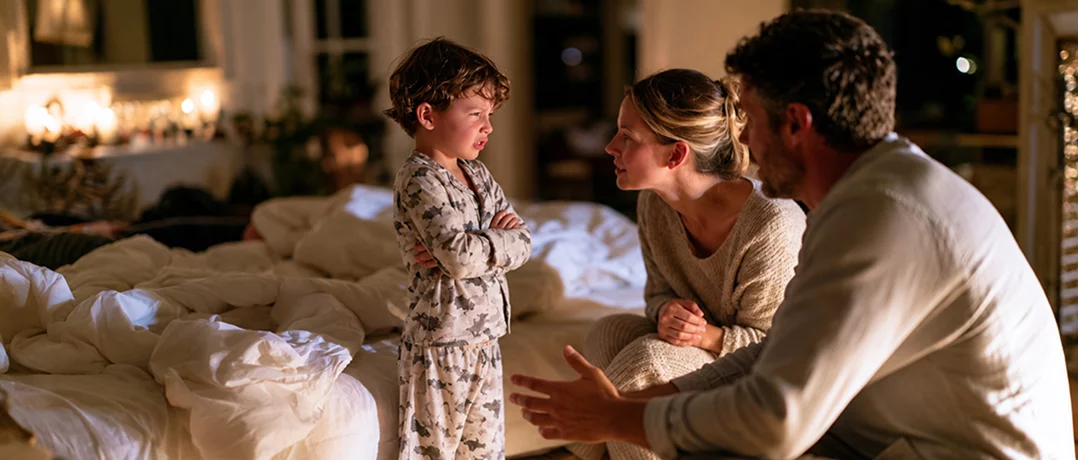
It is bedtime: resistance and stubbornness, crying and bargaining, with almost endless requests between going to the bathroom, drinking water and asking for a story. These behaviours that turn the house upside down at night usually fall within the scope of a normal behavioural issue. But when do we start talking about a disorder? How can we distinguish it from normal resistance?
The reasons behind children’s bedtime resistance vary depending on their age. Younger children resist sleep to seek independence, test boundaries, ask for attention or express separation anxiety. School-aged children may delay sleep because of extreme fatigue, irregular naps, exposure to screens or stimulants before bedtime. For teenagers, the reason is often a delayed biological clock combined with early school schedules.
Dr. Farid Tleih, a specialist in psychiatry, sleep medicine and addiction at the Faculty of Medicine at the American University of Beirut, explains that occasional resistance to sleep is very common among children, especially when certain changes occur, such as introducing a new routine or giving them more independence. This resistance is usually considered normal if it occurs inconsistently, does not reduce total sleep hours and does not cause daytime problems.
“However, when it becomes frequent, long-lasting or affects daily life, we are then talking about a sleep disorder. This is especially the case if it is accompanied by difficulty staying asleep, daytime sleepiness, behavioural problems, attention deficits or hyperactivity, which requires medical evaluation.”
On how parents can distinguish between normal resistance and a disorder, he says:
They should look for several indicators, including repeated difficulty falling asleep, very disturbed sleep or clear insomnia, loud or regular snoring, pauses in breathing, gasping or difficulty breathing during sleep, and repeated unusual nighttime behaviours. Other signs include daytime sleepiness, morning headaches or difficulty waking up, as well as noticing hyperactivity, attention problems and difficulties with academic performance.
Regarding whether snoring, talking during sleep or bedwetting are signs of sleep disorders, he says: “Not necessarily. Temporary snoring is common during colds, while loud and regular snoring accompanied by breathing pauses or gasping requires medical evaluation to check for sleep apnea. Talking during sleep is usually harmless. As for bedwetting, it is a common behaviour that often disappears with age. However, it requires medical consultation if it returns after a long period of nighttime dryness or is accompanied by daytime urinary symptoms, excessive thirst or constipation.”
Dr. Tleih stresses that electronic screens close to bedtime affect sleep quality and keep children awake. He points to the recommendation of the American Academy of Pediatrics to keep screens out of bedrooms and turn them off about an hour before going to bed, explaining that the issue is not only blue light, but also games, videos and notifications that keep children alert.
Asked whether a parent lying next to a child to help them fall asleep is healthy, he answers:
It depends on the child’s age. Having a parent nearby may be reassuring for a short period for older children, but if the child cannot sleep without their presence, it may become a habit that makes independent sleep more difficult. The goal is to teach children to sleep on their own.
Regarding how parents should deal with crying and anger at bedtime, he advises maintaining calm, consistency and clarity, avoiding lengthy negotiations, and offering children small choices such as selecting their pyjamas or a book while keeping a fixed bedtime. He stresses that children should not be punished for struggling to fall asleep, as the goal is to build healthy habits rather than create fear. He notes that persistent sleep resistance can become a bigger problem if crying, bargaining and leaving the bed result in gaining attention or delaying bedtime. It can also become reinforced if the child becomes dependent on parents or watching television, as these behaviours can become established habits. Lack of sleep may lead to behavioural and mood problems during the day.
Academically, sleep improves attention, learning, memory and mood, while insufficient sleep can cause poor concentration, hyperactivity and declining academic performance.
Dr. Tleih also emphasises that there is no single perfect sleep routine, but that the basic principles remain the same: maintaining consistent sleep and wake times, calming the home environment 20 minutes before bedtime, avoiding screens for an hour before sleep, lowering lighting and choosing calm activities such as bathing and reading. The bedroom should be comfortable, dark and quiet, and the routine should be short and predictable. Caffeine should also be avoided among older children and teenagers.
Finally, he recommends consulting a doctor if sleep problems continue despite following a consistent routine, if the child takes an unusually long time to fall asleep or wakes up feeling unrested, if snoring is loud or regular, or if breathing pauses or gasping are noticed. Medical advice is also recommended in cases of severe daytime sleepiness, difficulty paying attention, or when sleep affects school performance, mood or family life. Parents should also seek help if repeated unusual nighttime behaviours appear or if bedwetting suddenly returns after a long period of dryness.
-
-

-
Maya El KhouryWriter
-
