



Lebanon’s dollar rate remains near 89,500 lira, but rising prices expose the limits of exchange-rate stability and the challenges facing Banque du Liban and the Ministry of Finance.
What is keeping the Lebanese Lira at 89,500?
What is keeping the Lebanese Lira at 89,500?
By Carmen Haidar | October 07, 2026

Reading time: 7 min
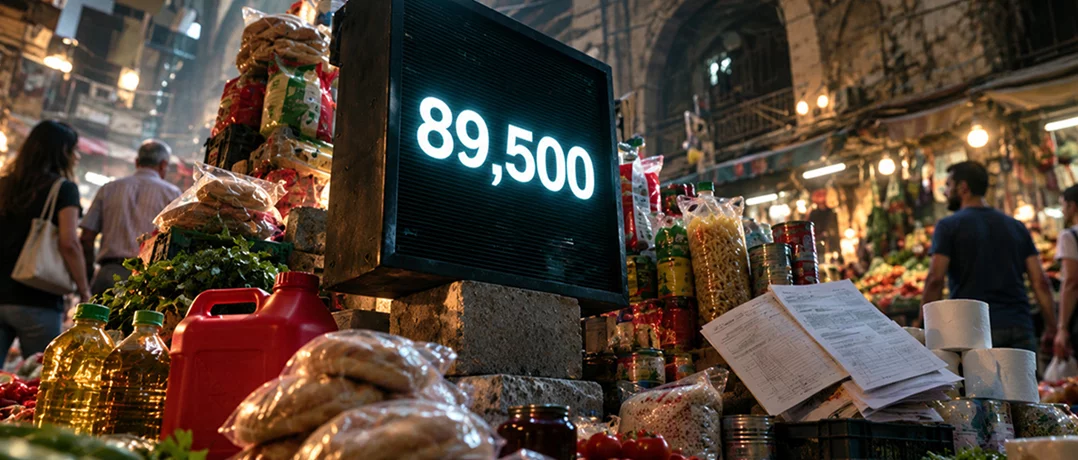
There was a time when checking the Adde Dollar app felt almost as routine as checking the weather. Now the number is so familiar that many of us hardly look: about 89,500 lira to the dollar, month after month.
The supermarket bill has not been nearly as steady. So what has kept the dollar rate near the same number? And what have Banque du Liban and the Ministry of Finance done to help keep it stable?
Their roles are connected. Banque du Liban, or BDL, manages the supply of lira. The Ministry of Finance collects taxes and fees and manages the money the government uses to pay salaries, pensions and other bills. If the government cannot cover its spending with what it collects, the way it finds the rest can affect the exchange rate.
How we got to 89,500
Before the crisis, the official rate was 1,507.5 lira to the dollar. After the banking collapse began in 2019, that rate stayed in place for years. But people buying cash dollars in the market had to pay much more.
The official rate eventually changed to 15,000 in February 2023. That still did not match what people paid in the market. After moving sharply for years, the market rate settled near 89,500 in July 2023. BDL adopted 89,500 for its monetary accounts in early 2024, reflecting a rate that people were already paying.
For years, Lebanon relied on dollars flowing into its banks to help support the old rate. Those inflows decreased, and BDL’s foreign reserves fell. As banks restricted access to deposits, confidence in both banks and lira broke down. More people wanted cash dollars. Government financing through BDL added pressure while the old system was already failing.
What BDL changed
Think of the state’s accounts. Taxes and fees bring money in; salaries, pensions and other bills take money out. For years, the government spent more than it collected, and BDL helped cover some of the extra spending. That could add lira to the economy. If people used some of it to buy dollars, it put further pressure on the exchange rate.
In August 2023, under acting governor Wassim Mansouri, BDL stopped financing the government. It discontinued the Sayrafa platform and began managing lira liquidity more tightly. This happened after the market rate had already settled near today’s level. The change helps explain why the rate has held, but it did not set the rate at 89,500.
So BDL kept a close hold on how much lira is available in the market. By then, more businesses were pricing and accepting payments in dollars, so fewer everyday purchases needed lira. When people need less lira, supplying much more of it could send them looking for dollars instead.
BDL still issues lira. Its figures show that cash outside the central bank reached 71.5 trillion lira at the end of 2025, up from a year earlier and worth about 800$ million at 89,500 to the dollar. Keeping a close hold on the lira does not mean never issuing more. It means paying attention to how much people actually want to use and hold.
There is a dollar side as well. BDL can use its foreign-currency reserves when the market comes under strain. Selling dollars, for example, gives buyers more dollars and takes in lira. BDL reported about 12$ billion in foreign assets, excluding gold, at the end of 2025. That figure includes foreign securities; it does not mean BDL has the full amount readily available to spend. The World Bank says the use of reserves and tighter lira conditions have supported the rate during the 2026 conflict. But the dollars BDL can use are limited, particularly if fewer new dollars arrive.
The Ministry of Finance’s part
Once BDL stopped covering government shortfalls, the MOF had to rely on taxes, fees and money already available to pay the state’s bills. Collecting revenue became more important. One step was to update the exchange rate used to calculate customs duties. When an imported item’s dollar value was converted into lira at an outdated rate, the government collected less in customs duties. Using a rate closer to the market increased that revenue. Better VAT collection helped too.
In 2025, the MOF recorded more cash coming in than going out: a surplus of about 4% of GDP. The World Bank says public finances remained strong in the first half of 2026. The surplus reduced the need for new financing from BDL, easing one source of pressure on the lira.
That surplus counts cash received and paid. It does not tell us whether public services were adequately funded or needed repairs were made. Capital spending did rise in 2025, but it accounted for 7.2% of government payments, according to the Ministry of Finance. The government still needs to make room for repairs and investment without returning to BDL to cover its regular bills.
Why the supermarket bill still rises
The exchange rate is the price of a dollar in lira. It is not the price of everything we buy.
In August 2026, Lebanon’s Consumer Price Index was 16.66% higher than in August 2025. That means the basket of goods and services used to measure inflation cost more than it had a year earlier, even as the dollar rate remained near 89,500.
Consider a simple example. An imported item priced at 10$ costs 895,000 LBP at that rate, before transport and other charges. If its dollar price rises to 12$, its price in lira rises to 1,074,000 without any change in the exchange rate. Actual prices also depend on local costs, taxes and what sellers charge. The World Bank points to supply disruptions, shipping costs and oil prices as sources of pressure this year.
A steady exchange rate has spared households another source of price increases: needing more lira to buy the same dollar. It has not restored the purchasing power lost during the collapse. A person paid in dollars and someone whose lira wage changes only occasionally can face the same supermarket prices and feel them very differently.
What could test the rate?
Lebanon needs dollars from visitors and people abroad, while importers need them for fuel, food and other goods. Conflict can reduce tourism and make fuel costlier, even if weaker spending cuts some other imports. That makes the dollars coming into the country and how much BDL has to draw from its reserves important to the stability of the rate.
The government faces another test: paying public workers more and funding services without asking BDL to cover the difference. In September, the cabinet agreed to include a pay increase described as equivalent to six salaries in its proposed 2027 budget: three at the start of the year and another three at the end of August. This remains a budget proposal, not salaries already paid. It is separate from the wage and pension measure approved earlier in 2026. As of 18 September, the IMF said the planned VAT rise from 11% to 12%, intended to help fund that earlier measure, had not been implemented.
Paying public employees more would not automatically weaken the lira. The question is how to cover a lasting commitment. Higher taxes could bring in revenue, but may also raise some prices. If public spending repeatedly exceeds what the government collects and BDL again finances the gap, pressure on the dollar could return. If fewer dollars arrive from abroad at the same time, holding that rate would be harder.
That is what sits behind the stable number on the Adde Dollar app: BDL has stopped financing the state and has restrained lira liquidity; the government ran a cash surplus in 2025 and has kept spending tight this year; and dollars are still coming into the country. Keeping 89,500 steady while paying for wages, services and reconstruction is the test ahead.
-
-
-
Carmen HaidarWriterEconomist with a PhD in Economics, writing on financial systems, economic development, and regional economic trends.
-
