



A speech therapist explains how parents can identify speech and language delays in children, understand their causes, and support early intervention through communication, play and professional guidance.
When does a speech delay become a cause for concern?
When does a speech delay become a cause for concern?
By Maya El Khoury | October 11, 2026

Reading time: 4 min
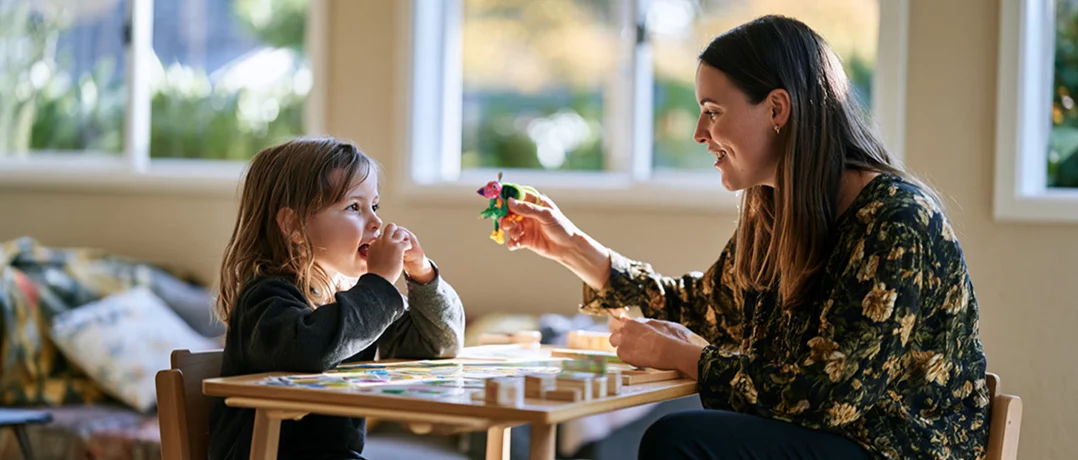
Every child has their own rhythm of development that makes them different from others. However, it is important not to overlook the signs associated with each age group to determine whether a child’s language development falls within the normal range or requires evaluation and intervention.
What are these signs? And what steps are followed when speech is delayed?
When discussing speech delay, three interconnected but distinct areas must be considered: language, speech and communication.
According to Celine Felfli, a speech therapist, speech refers to the child’s ability to produce sounds and words correctly and clearly. Language, on the other hand, includes the ability to understand words, sentences and meanings, known as receptive language, as well as the ability to express thoughts, needs and emotions through words and sentences, known as expressive language.
Felfli explains that some signs of language development can be observed in young children, such as calling their parents, responding when hearing their name, imitating sounds and movements, using gestures, gradually acquiring words, and using them to communicate and play with others.
She identifies the language skills that gradually appear according to age stages: "At six months, children begin babbling and producing sounds. At nine months, they produce short sound combinations such as ‘mama’ and ‘dada.’ At one year, they begin using meaningful words. After 18 months, we suddenly notice that they acquire more words, and as they approach their second and third birthdays, they begin combining words to form simple sentences, reaching the age of four when they become capable of forming longer sentences.”
While reminding that every child’s language development path is different, she explains that these milestones vary from one child to another. Therefore, assessment should consider the child’s overall and broader development, the environment in which they were raised, their surrounding community and the way people communicate with them.
Regarding how the causes of speech delay are identified, she answers: “Determining the causes of speech delay relies on a professional and scientific assessment to confirm whether it is due to limited opportunities for interaction and communication in the child’s surrounding environment, which prevented them from developing their language, or whether it is caused by a language disorder. To examine this accurately, a treatment phase lasting six months begins, during which we monitor the child’s development and whether they are able to approach the expected level, provided that the family follows the given instructions and provides the child with opportunities to achieve the desired development.”
Felfli advises consulting a specialist whenever any delay in a child’s development is noticed in order to identify the causes and ensure proper follow-up. She stresses that early intervention is important, especially because during the first six years of life, a child’s brain has a strong ability to adapt to new things, acquire them and modify them positively. This intervention may focus on simple guidance that parents can adopt to help develop the child and improve their language communication.
Regarding the common causes of speech delay, she points out that they are numerous, including hearing difficulties, overall developmental delays, and sometimes genetic or neurological causes, as well as environmental factors. She explains that children need many opportunities to communicate with others and play. She adds that growing up in a multilingual environment does not, by itself, cause language delay, but this factor should still be taken into consideration.
Asked whether screens contribute to speech delay, she says: “Of course, because children learn language and communication through dialogue, eye contact, interaction during play and opportunities to use language in real-life situations. Exposure to screens reduces the amount of conversation with parents and limits children’s experience of social life through playing with other children.”
Regarding treatment, she explains: “During the first speech and language therapy consultation session, we collect information related to the child’s development, whether they have experienced ear infections, and details about pregnancy and birth, their first words, how they interact with people, and their motor and physical development. We also ask about how they express themselves, play and interact socially, the languages spoken at home and the way parents communicate with them. The child is then assessed according to their age.
“After that, we speak with the parents to provide guidance on how to communicate with the child and respond to them at home, determining whether they need therapy sessions or a reassessment after six months.
“As for the duration of treatment, it cannot be determined because it depends on the child’s condition and environment, and whether they have a general developmental issue, a hearing problem or only a language difficulty. It is therefore important that parents follow the instructions we provide to support the child at home. The more they commit, the more they help their child. We encourage them to talk with their child, participate in play and engage in dialogue. We also recommend having age-appropriate books available, turning their pages together, pointing to pictures and naming them, while listening attentively to everything the child tries to say.”
She also calls for respecting each child’s individual path in motor, physical and language development, and avoiding pressuring them to repeat words, correcting their pronunciation constantly, or putting them in situations where they are tested on naming and describing objects.
-
-
-
Maya El KhouryWriter
-
